Discovery Zone and Leaps & Bounds were two of the biggest indoor-play chains of the 1990s, both targeted at young children rather than the pizza-arcade crowd. They eventually merged into a single operation and then collapsed together. The story is wild enough that the tokens are almost a footnote.
Discovery Zone was founded in 1989 by Ronald Matsch, Jim Jorgensen, and Dr. David Schoenstadt. The concept was indoor play space with games and elaborate indoor mazes for young kids. Expansion was rapid: 15 locations in the first 18 months. Then the money got interesting. In April 1993 Blockbuster Video invested $10.3 million for a 21% stake, and in June 1993 DZ went public on NASDAQ with a $55 million IPO that jumped 61% on its first day. In July 1994 the company acquired 45 Leaps & Bounds locations from McDonald's for $111 million, plus 57 franchised stores from Blockbuster for another $91 million.
Leaps & Bounds itself was launched by McDonald's in 1991, built around tube mazes with ball pits and arcade games that paid out tickets for prizes. Its slogan was "Play with Purpose." The merger with Discovery Zone in 1995 ended L&B's brief independent run.
The combined Discovery Zone empire didn't last. Viacom (which then owned Blockbuster) took management control in April 1995 and planned cross-marketing with Nickelodeon and Paramount. By March 1996 the company filed Chapter 11 with $366.8 million in debts. It emerged in July 1997 under Wellspring Associates, re-entered bankruptcy in April 1999, converted to liquidation in June 2000, and finally closed all 205 remaining locations across 39 states, Canada, and Puerto Rico by the end of 2001.
This catalog tracks 18 tokens across both brands.
Compositions, sizes, and "painted" tokens
Compared to the pizza-arcade catalogs, this one is short on metal variety. Brass is essentially the only composition for Discovery Zone tokens; Leaps & Bounds adds a single bronze strike (LB102B). No nickel, no copper, no anodized colors.
Two diameters: .900 inches and .984 inches. Both coin and medal orientations appear across the DZ types. The RWM mintmark shows up on most pieces, sometimes in a swapped location between catalog numbers (the "RWM under E in Value" detail is a real variant-tracking trap).
DZ also had painted control tokens (marked with a "p" in the catalog, like DZ104pB and DZ204pB) used to test machines for malfunctions. These were removed from circulation during collections and never counted toward tracked game revenue.
Discovery Zone Token Types
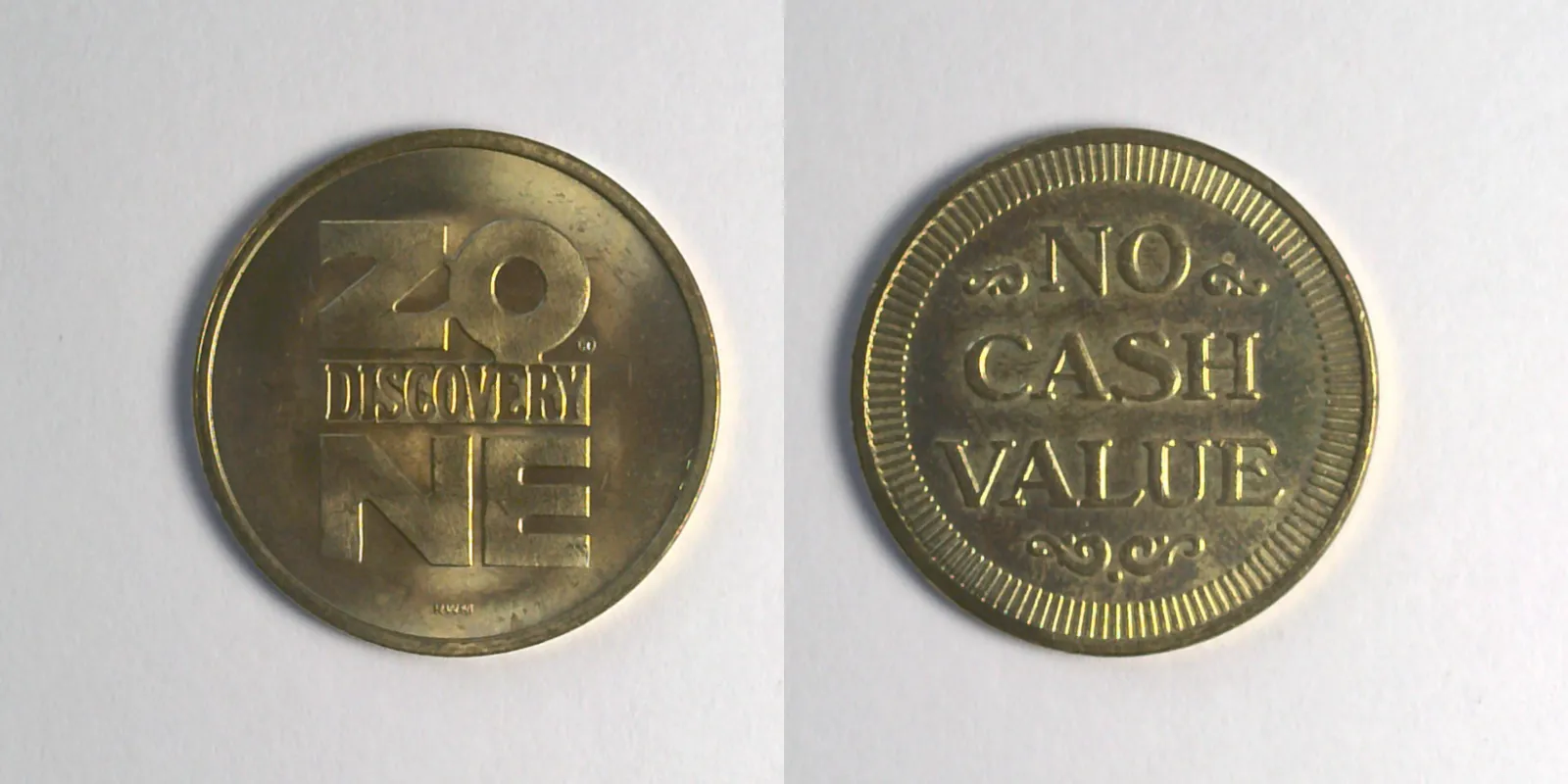
Type 1: "ZO / Discovery / NE" boxed logo (1991 to 1995)
The earliest Discovery Zone design uses a boxed layout: "ZO" stacked above the word "Discovery" with "NE" below, forming the word "ZONE" with the brand name spelling through the middle.
Front: Boxed ZO/Discovery/NE logo with the RWM mintmark.
Back: "No Cash Value", sometimes with an additional RWM mintmark on the reverse.
Type 2: Two-line "Discovery Zone" (1995 to 1997)
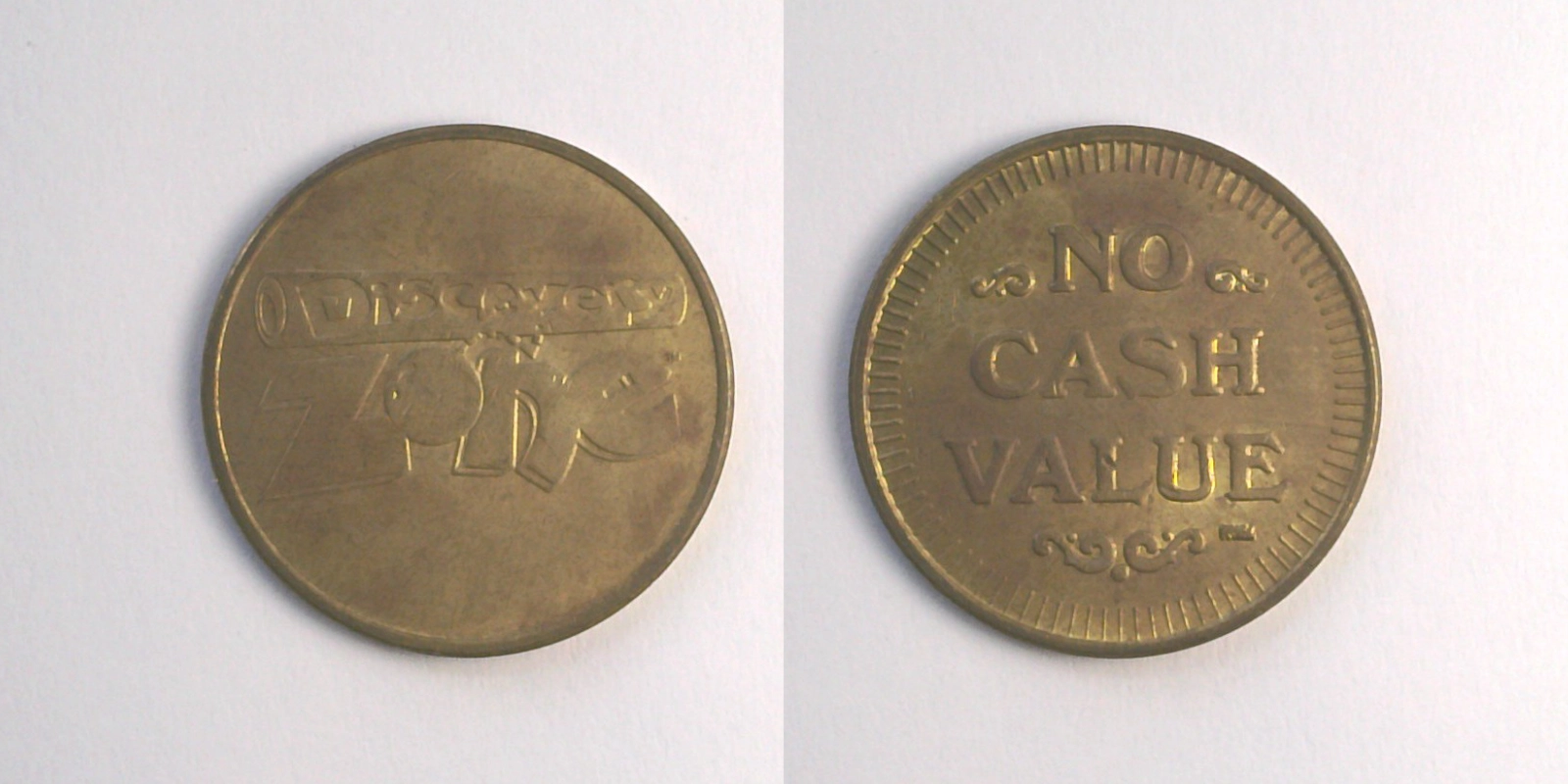
A cleaner, more readable redesign. The boxed logo is gone, replaced by "Discovery Zone" in two lines.
Front: Two-line "Discovery Zone" wordmark.
Back: "No Cash Value" with RWM, sometimes positioned under the E in "Value" (a positioning quirk that creates several catalog variants).
Type 3: "DZ / Discovery Zone" final design (1997 to 2001)
The last design. Pairs a stylized "DZ" above a single line of "Discovery Zone" text. Produced from 1997 until the chain's collapse at the end of 2001.
Leaps & Bounds Tokens
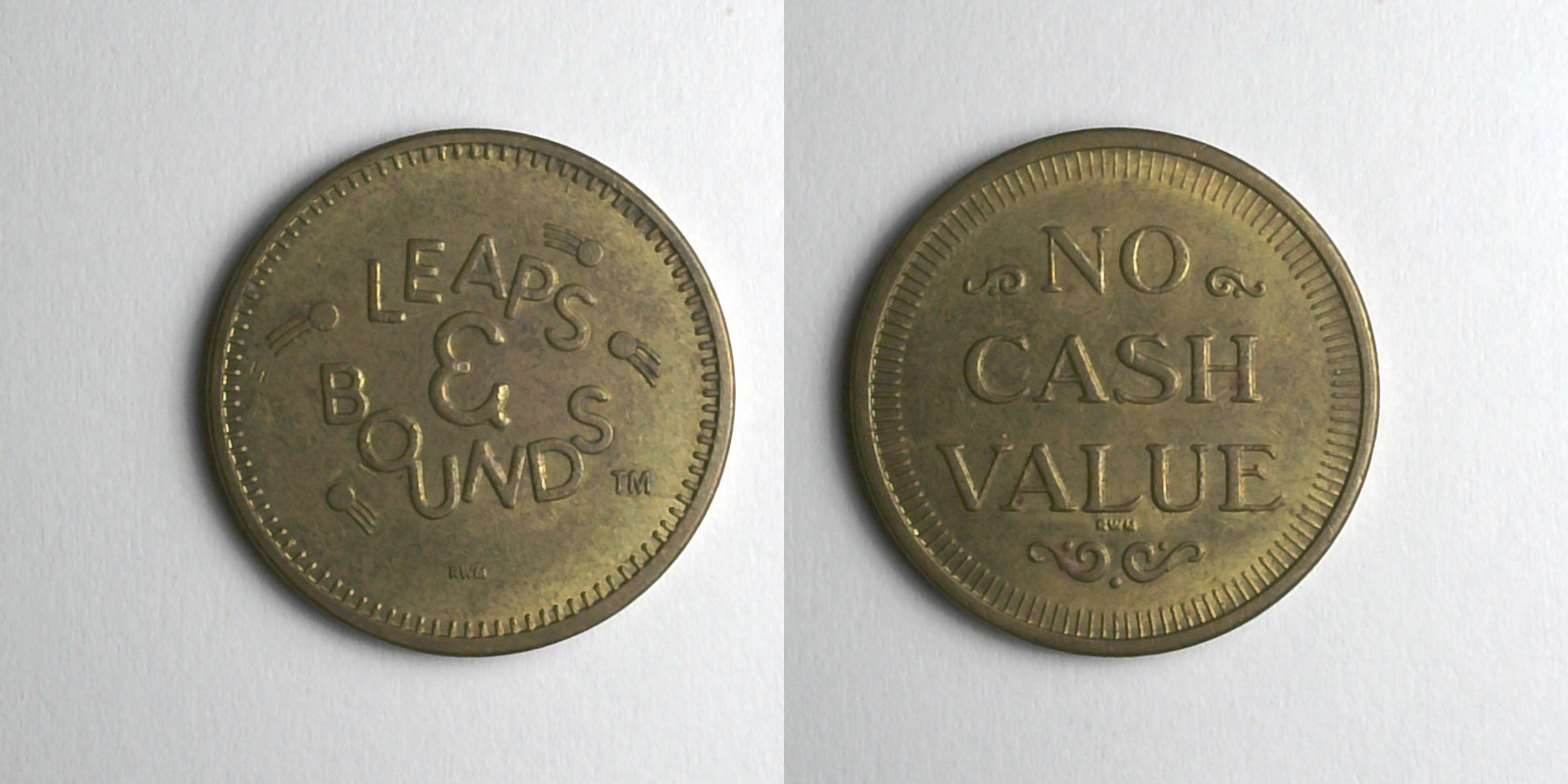
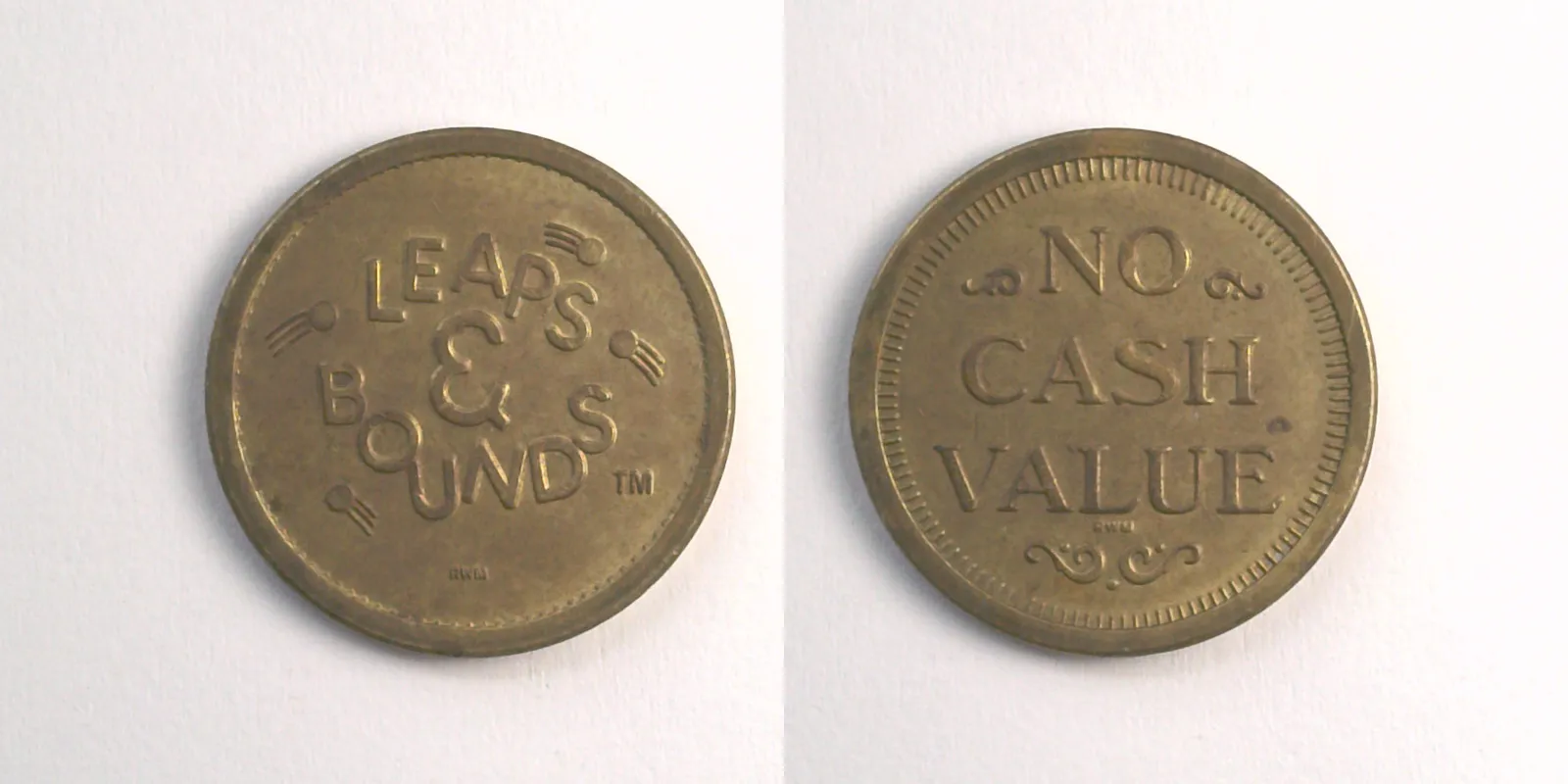
Leaps & Bounds has a single token type in the catalog. Both pieces (LB101B and LB102B) read "Leaps & Bounds" on the front with "No Cash Value" on the back. LB102B is the bronze strike and is also notable for the absence of obverse denticles (the small rim dots that normally border the design).
Top 4 by fair value
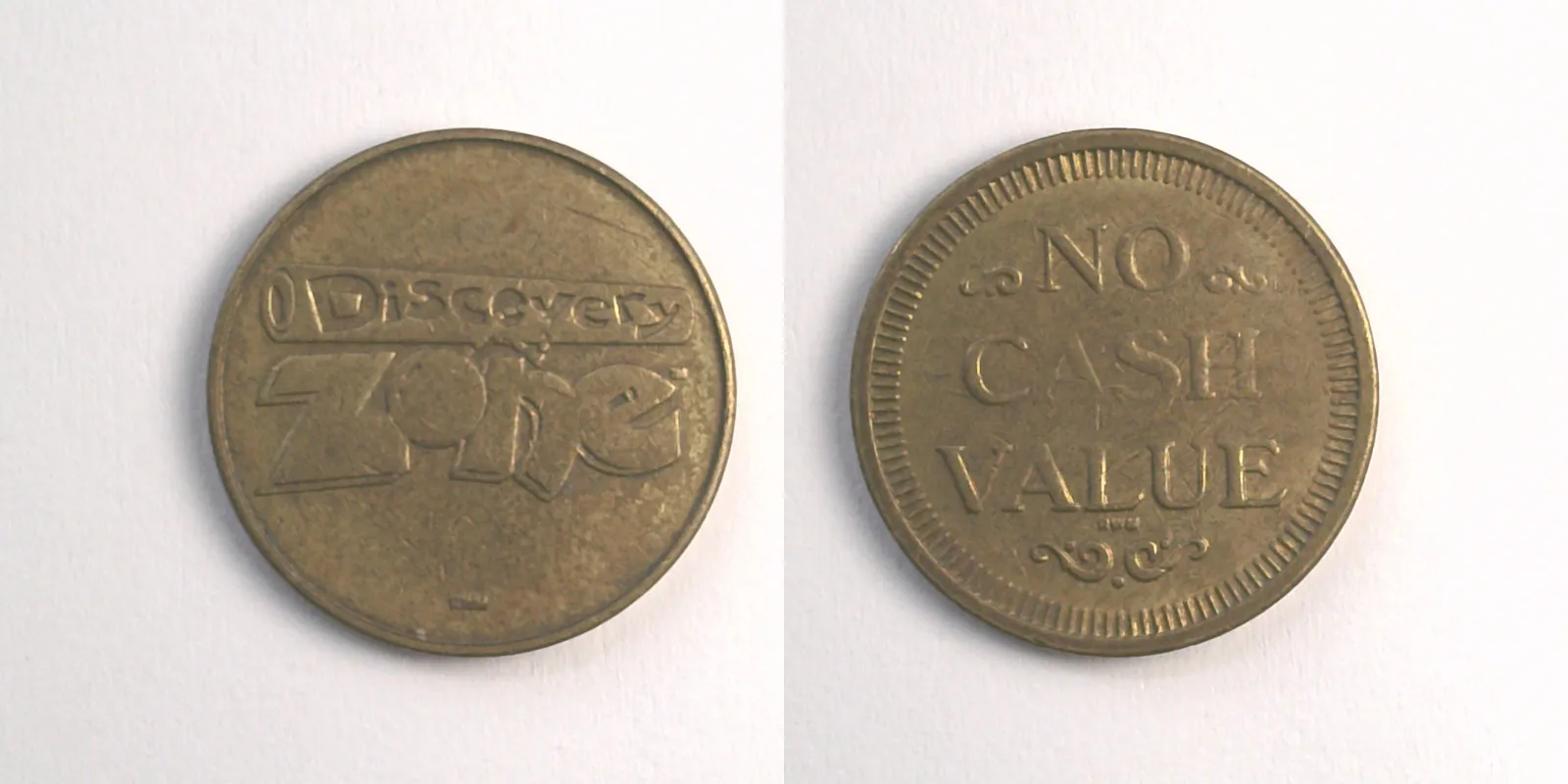
Discovery Zone Token (DZ201B)
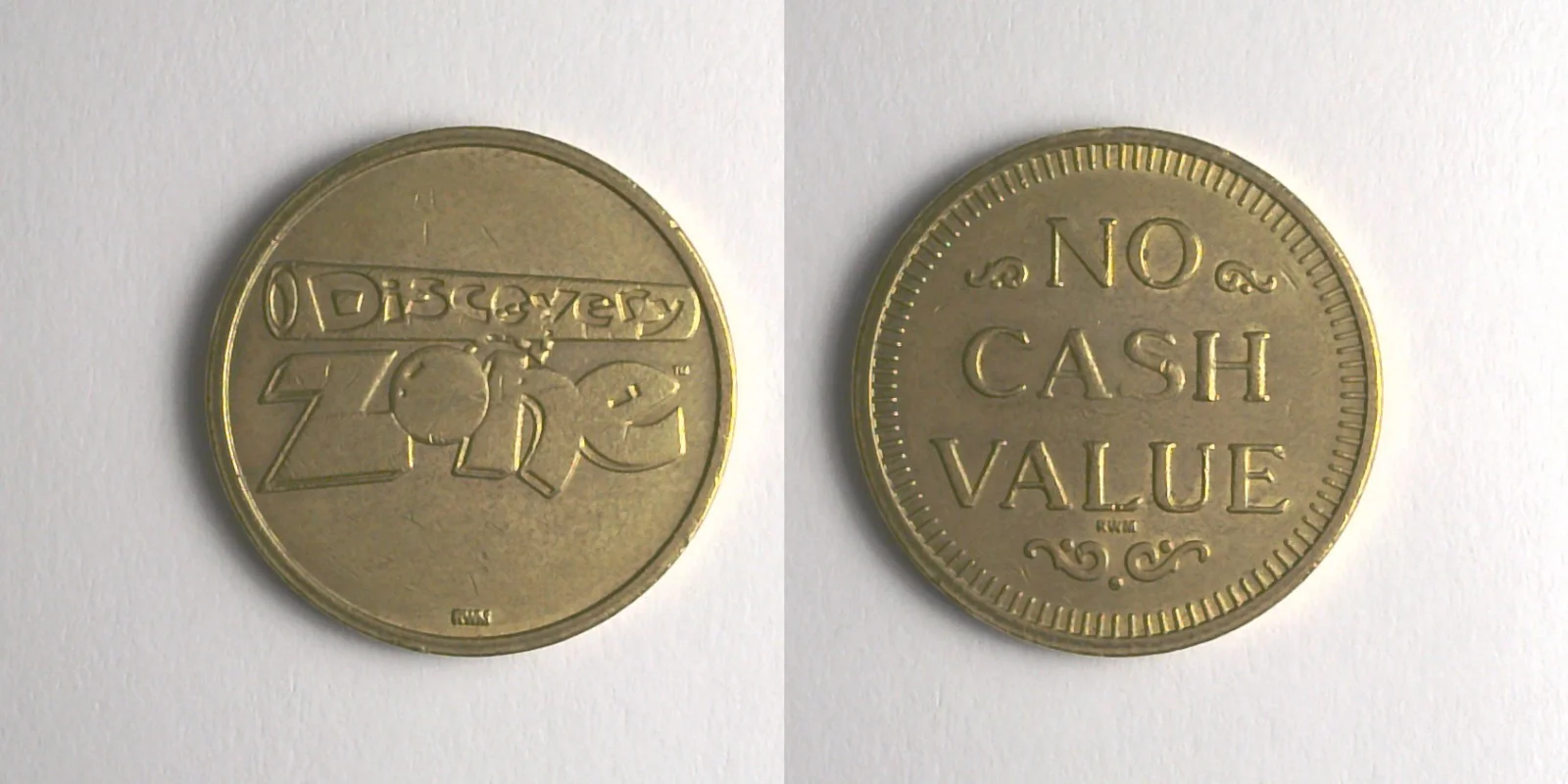
Discovery Zone Token (DZ206B)
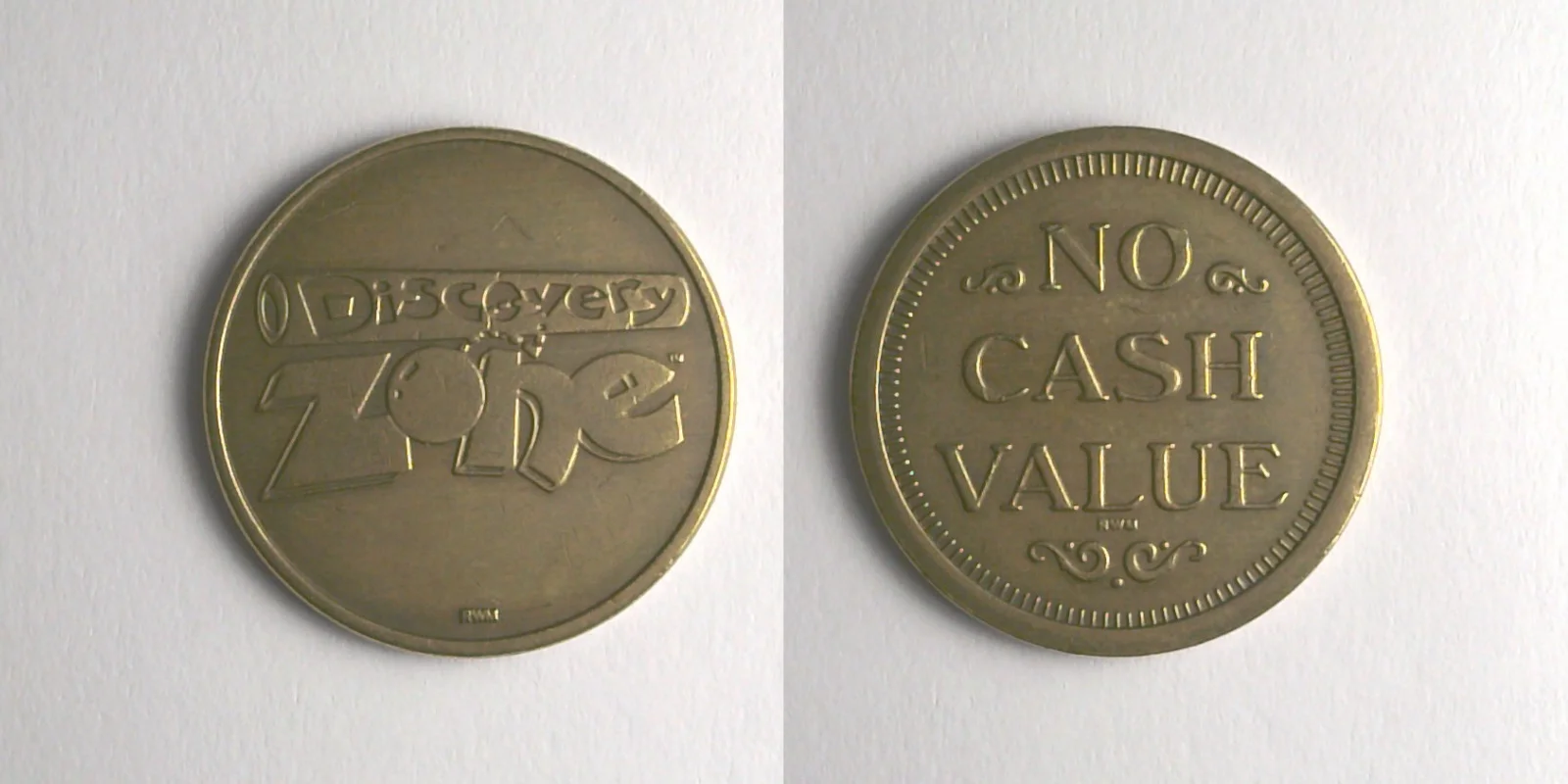
Discovery Zone Token (DZ208B)
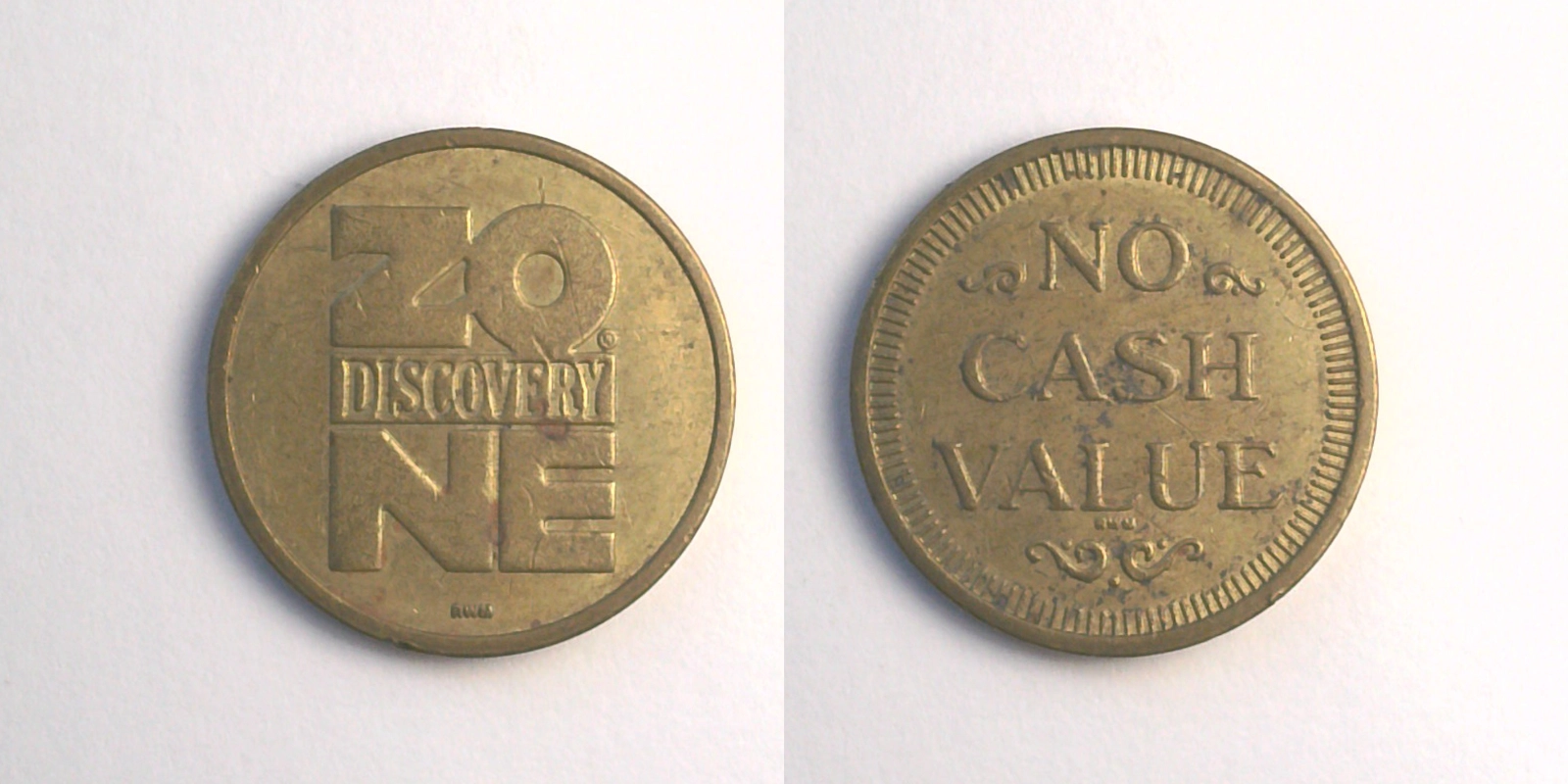
Discovery Zone Token (DZ105B)
A note before you go hunting
This is one of the more compact corners of the catalog, with just a few types across both brands, very few composition variants, and a relatively short production window before everything collapsed. That tightness is also what makes it appealing: a roughly complete Discovery Zone / Leaps & Bounds collection is achievable in a way that the bigger CEC and SPP catalogs simply aren't.