Token rarity isn't a single number; it's a story about how often a piece actually surfaces in the market. This guide covers what the catalog's rarity rankings mean, how to find the rarest pieces in each brand group, and what currently sits at the top of the catalog's value rankings.
What "rarest" actually means
The cectoken catalog assigns each token a rarity tier from R1 (very common) to R5 (very rare). Tiers are assigned based on how often pieces surface in the market and in known collections, not just original mintage numbers. The single most valuable piece in the catalog currently has a fair-value estimate of $2,062.60.
But "most valuable" and "rarest" aren't the same thing:
- A R5 piece with limited collector demand can have a low fair value even though it's technically as rare as anything in the catalog.
- A R3 piece in a heavily-collected series can carry a high fair value because the demand pool keeps prices firm.
- A piece with no recorded sales has no fair-value estimate at all, regardless of its rarity tier.
The rarest-and-most-valuable pieces are the ones that combine high rarity with strong collector interest.
Where to find the rankings
The catalog browser at /items has a sort option called Fair value that lists items by their estimated value descending. Pair it with the brand-group filter to see the top-value pieces within each brand group.
To find the rarest pieces by tier (regardless of value), sort by Rarity ascending or use the rarity filter to narrow to R4 and R5 specifically.
Across 914 items in the catalog, only a few dozen pieces sit at R5.
What you'll find at the top
The top-value lists are heavily concentrated in a few categories.
Chuck E. Cheese
The most valuable CEC pieces come from a few specific places:
- Type 1 Rat Heads in non-brass compositions. A 1977-era token in nickel or with an unusual mintmark is dramatically rarer than its brass counterpart.
- City tokens in rare cities or rare compositions. The Type 1b city tokens span 44 cities, and not every city is equally common. Some cities had short franchise runs and few tokens to begin with.
- Control tokens from any era. Spray-painted brass and rarer compositions used internally for testing rarely escaped into circulation.
- The earliest Type 5 Rockstars in unusual compositions. Less established as rare, but quietly building.
Showbiz Pizza
The Showbiz top-value list is dominated by:
- Type 1 Pizza Show Biz pieces. Only two catalog entries (S01B and S01N), both predating the brand's main run.
- The Roger Williams Mint "No Cash Value" prototype (S18B). A bid-sample piece that never went into circulation. Detailed in the Showbiz Pizza overview.
- Anodized nickel color variants in the rarer colors (dark blue, olive, certain reds). The most common anodized colors (pink) have decent populations; the unusual colors are scarce.
- Type 3 Fiesta pieces (the Juarez, Mexico variants). The whole category has only three catalog entries.
- Type 4 UK and UAE pieces. Two catalog entries total.
CEC Related Brands
Highest-value pieces in this group come from:
- Early Peter Piper Type 1 pieces with rare mintmark variants. The HM and HH mintmark variations create catalog rarities not visible in the design.
- The Randy Johnson promotional set complete. Individual pieces are not exceptional, but a complete four-piece set (two-seam, four-seam, split-finger, slider) carries a collector premium.
- Pistol Pete pieces from the cowboy-era types. The chain produced fewer total pieces than Peter Piper, and surviving examples concentrate the value.
SPP Related Brands
This category trades thinly, which means individual sales swing prices dramatically. Highest-value lookups typically include:
- Billy Bob's tokens from the lesser-known sub-brands (Pizza Circus, Pizzatron).
- Rock-afire Bar and Rock-afire Pizza pieces. The animatronic-legacy connection drives modest premiums.
- International tokens (Tokyo Summerland, Italpark, Fantasilandia, Club Hotel Eilat). Geographic scarcity in the US collector market is the key driver.
Other Brands
The Other Brands group includes Discovery Zone, Leaps & Bounds, Jeepers, Bullwinkle's, and the long tail. Top-value pieces here:
- Leaps & Bounds LB102B (the bronze strike with no obverse denticles).
- Discovery Zone painted control tokens (DZ104pB and DZ204pB if they have canonical entries).
- Bullwinkle's pieces.
What moves a piece up the rankings
A R4 piece becomes a R3 when:
- A hoard surfaces and multiple examples enter the market over a short window.
- A previously-isolated collector's estate breaks up.
- A reproduction is identified and traceable to a specific source (which raises questions about catalog rarity in the affected piece).
A R3 piece becomes a R4 when:
- The known supply chain dries up. (Stops getting listed for sale, stops surfacing in collector inventories.)
- A flagship collector takes long positions and removes pieces from active circulation.
Tier changes are not made casually. The catalog reflects them as the market reveals new information.
Reading the fair-value estimate
Every item page shows a fair-value figure. For top-rarity pieces, the figure can be:
- Reliable if there have been enough recent sales to anchor the estimate.
- Stale if the piece hasn't sold in many months. The estimate persists at the last-anchored value.
- Absent if the piece has never sold in the data window (the system requires at least some sales to compute fair value).
For absent fair-value pieces, the best price reference is the sales-history table at the bottom of the item page, even if those sales are old. Use them as a baseline and adjust for time.
Top 10 by current fair value
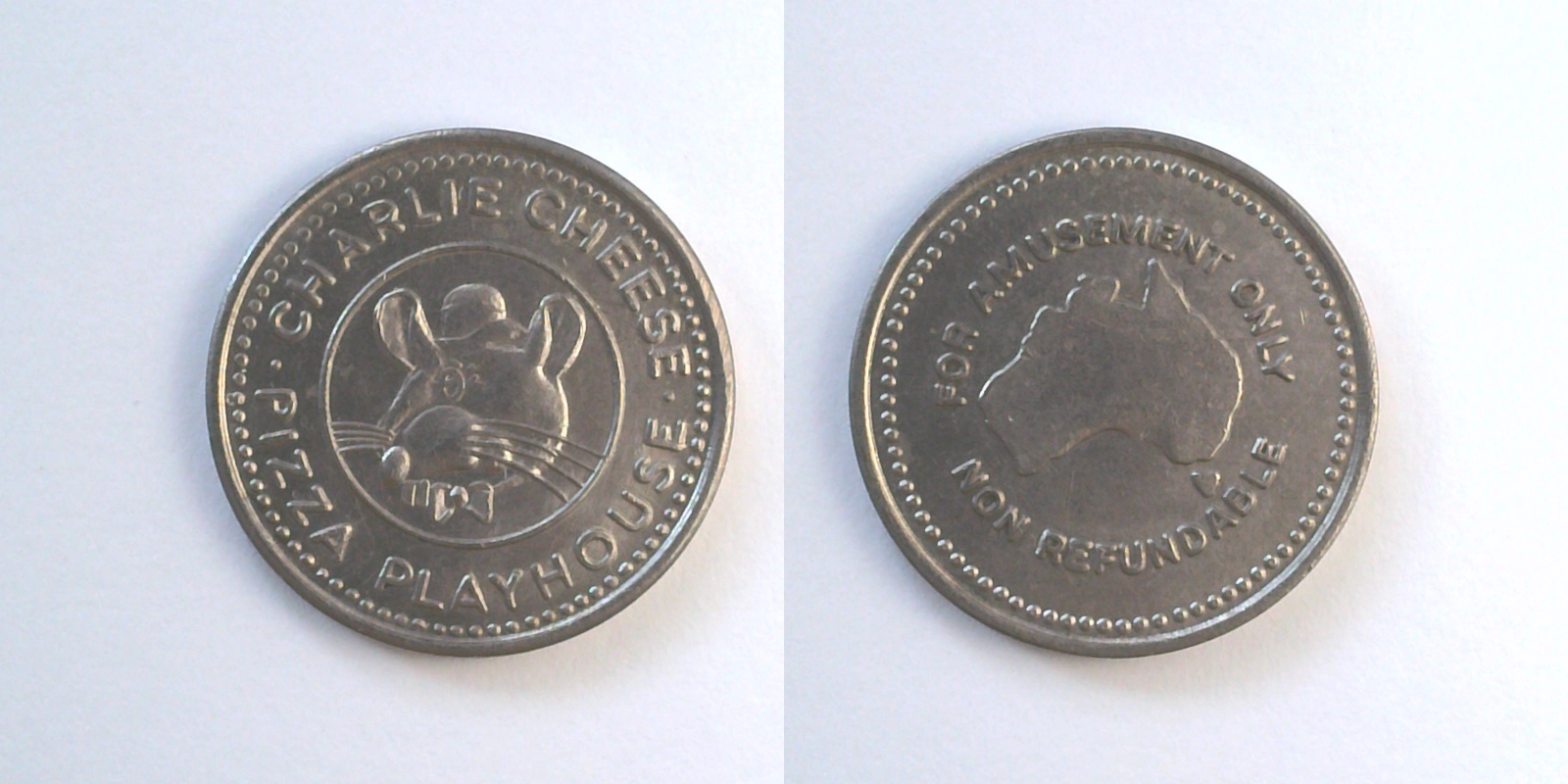
Australian Charlie Cheese Pizza Playhouse Token (122N)
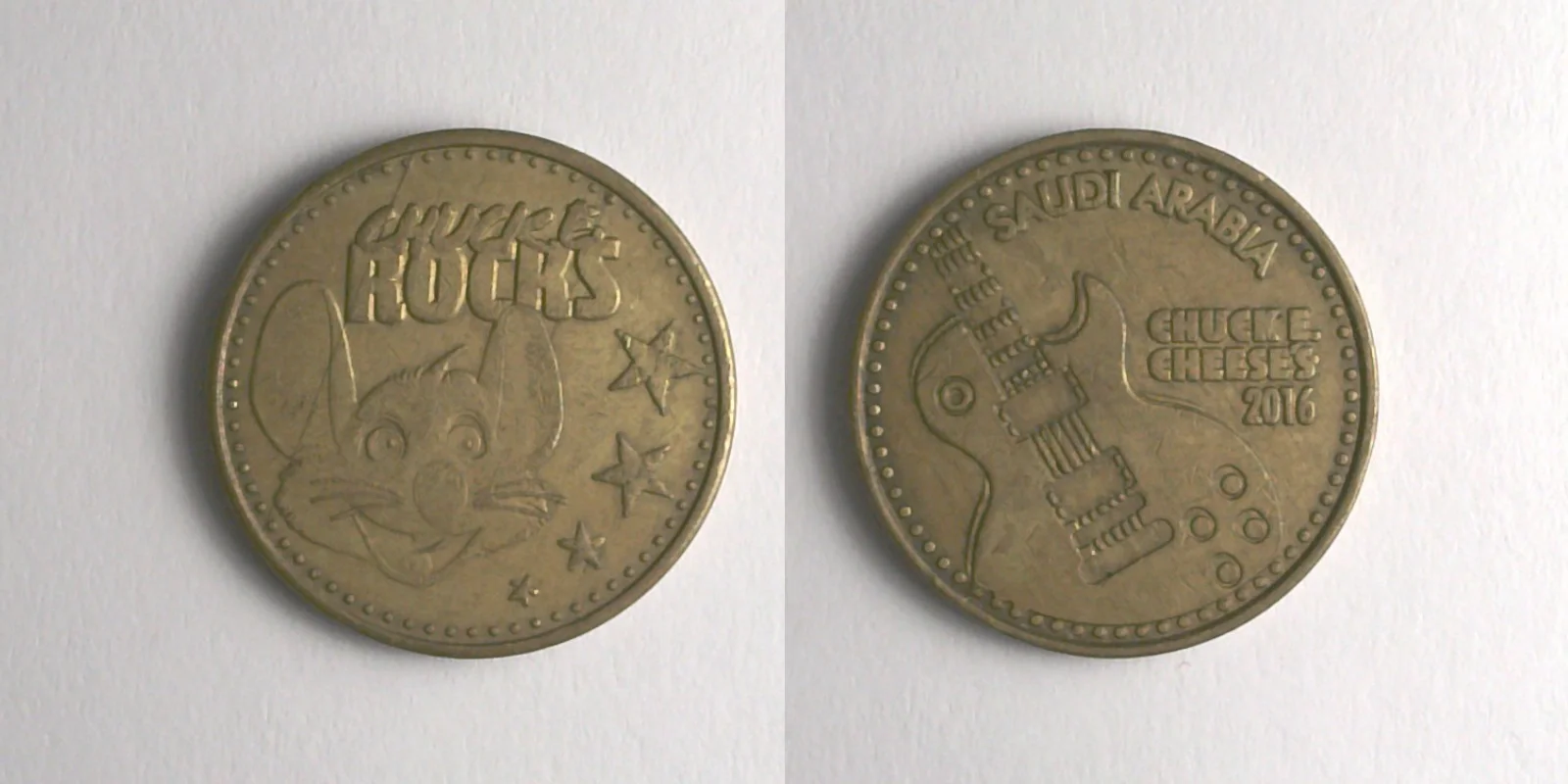
2016 Saudi Arabia Chuck E Cheese Token (509B)
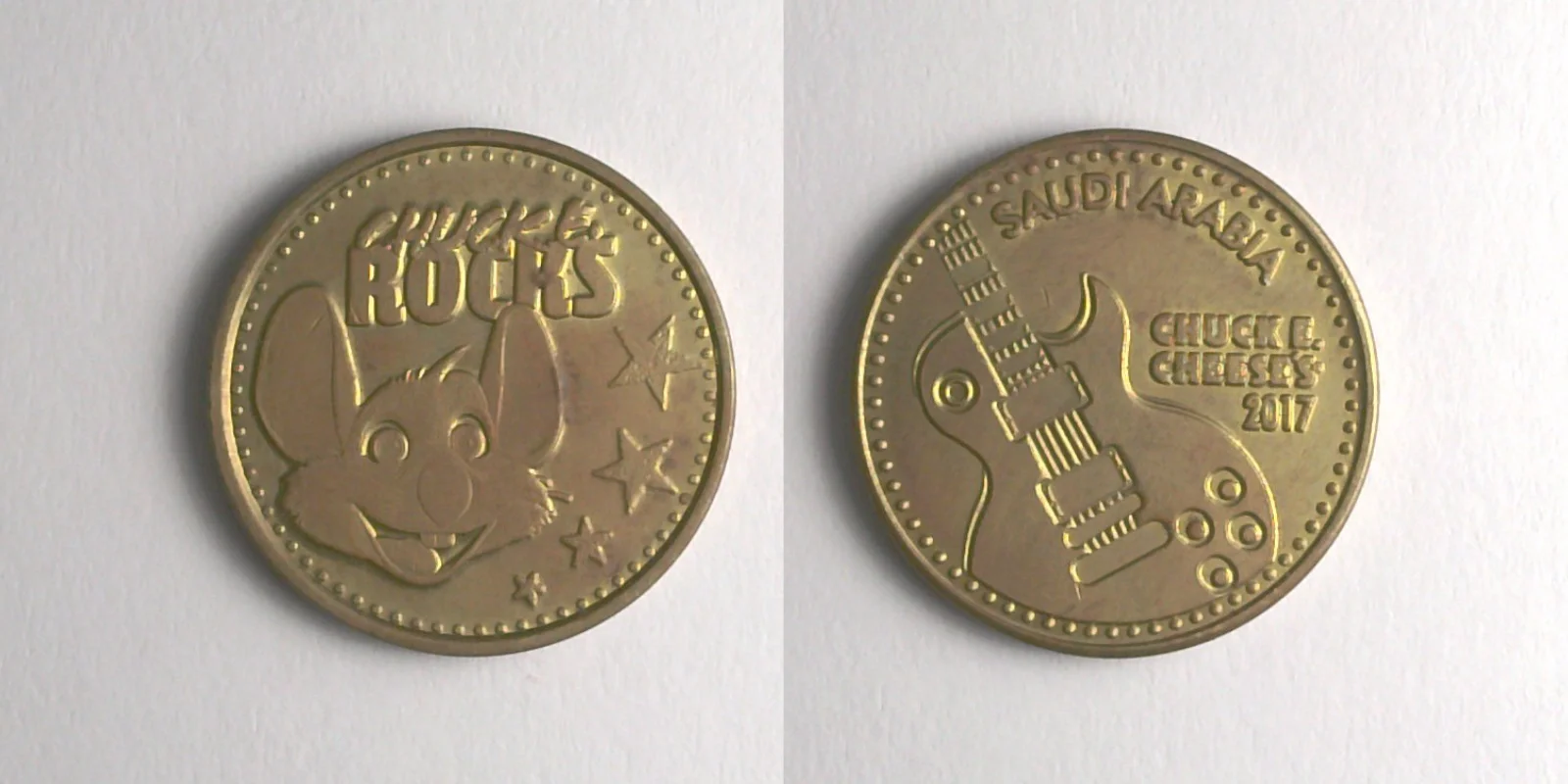
2017 Saudi Arabia Chuck E Cheese Token (513B)
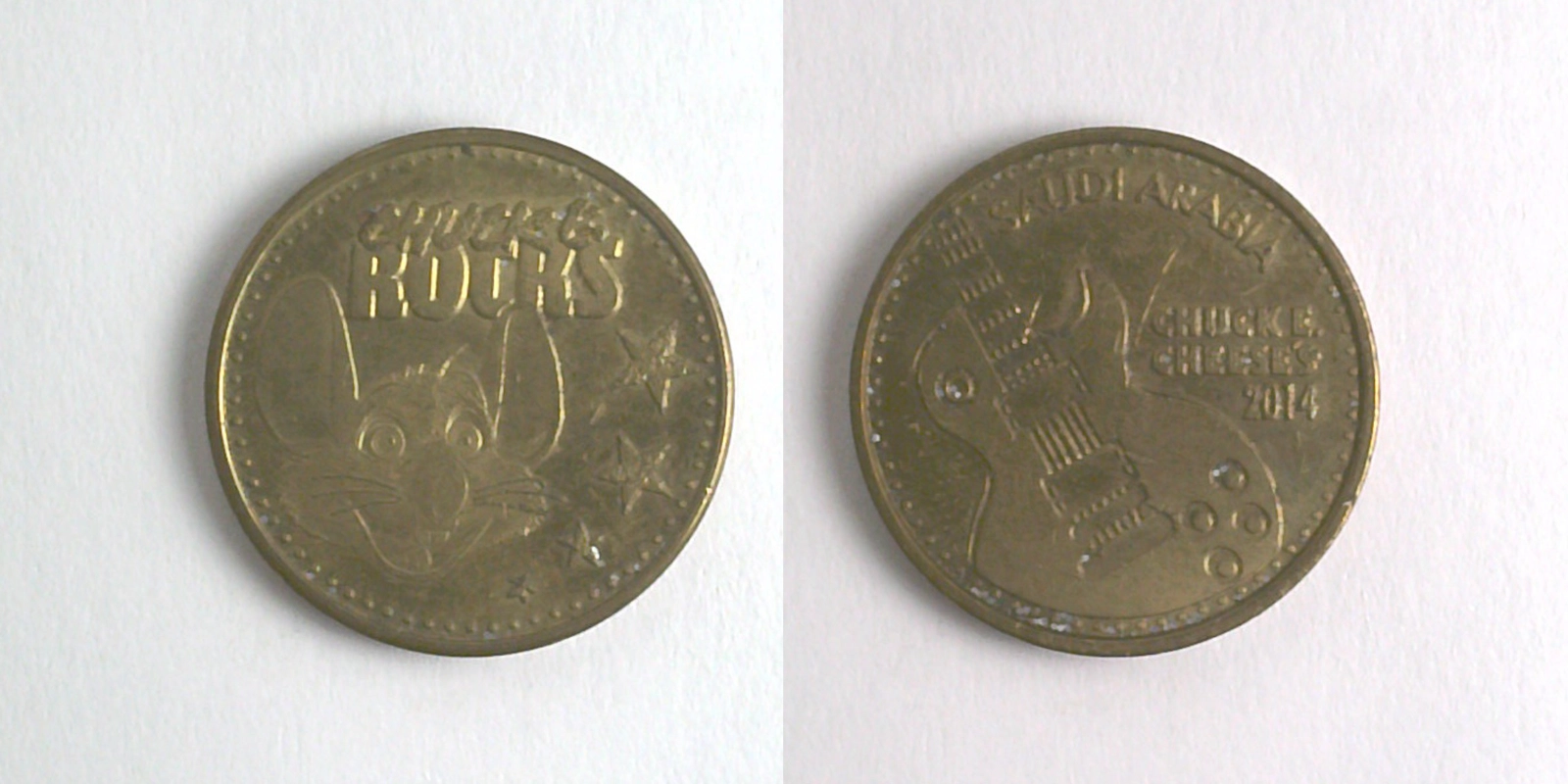
2014 Saudi Arabia Chuck E Cheese Token (503B)
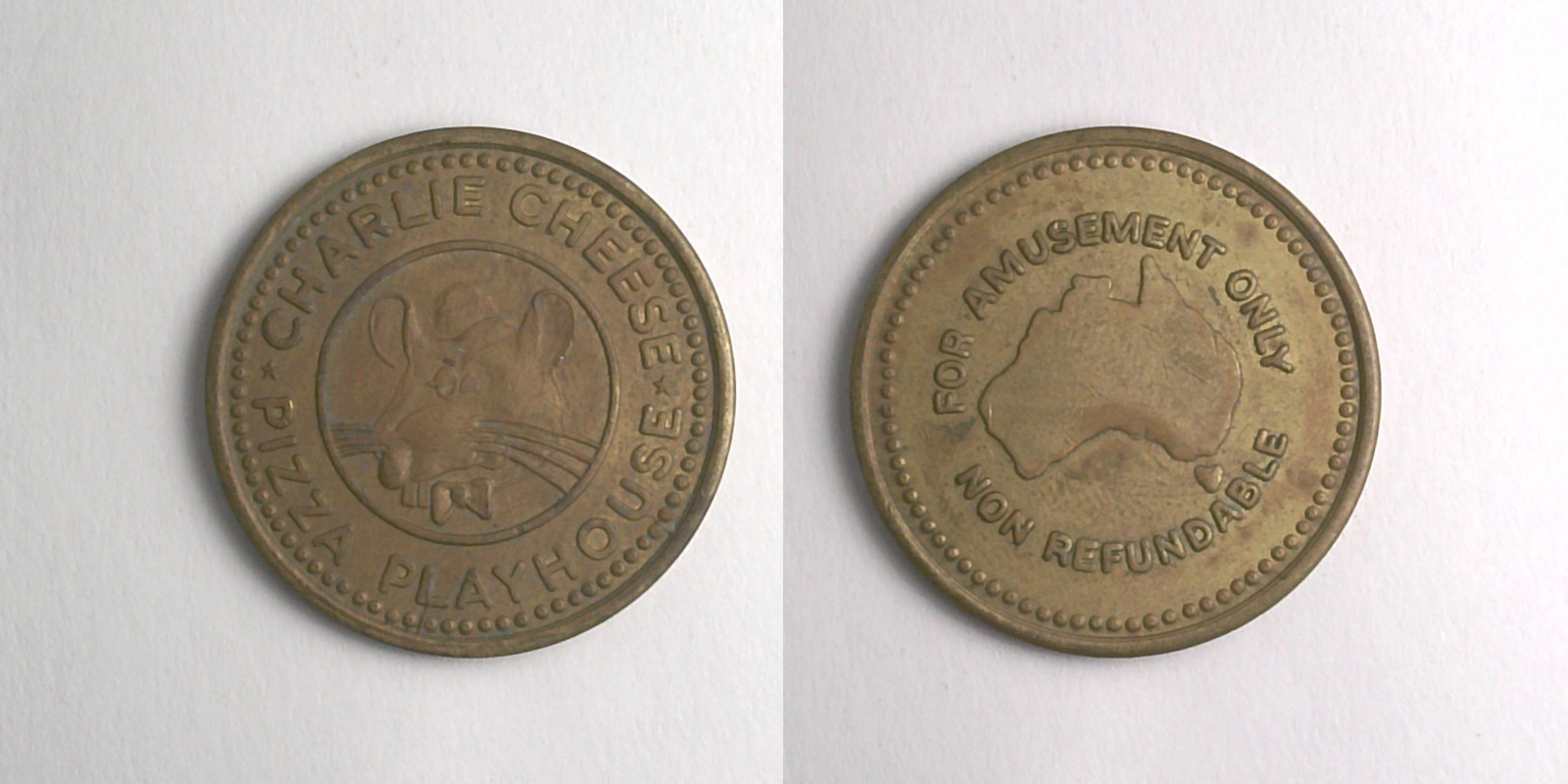
Australian Charlie Cheese Pizza Playhouse Token (123B)
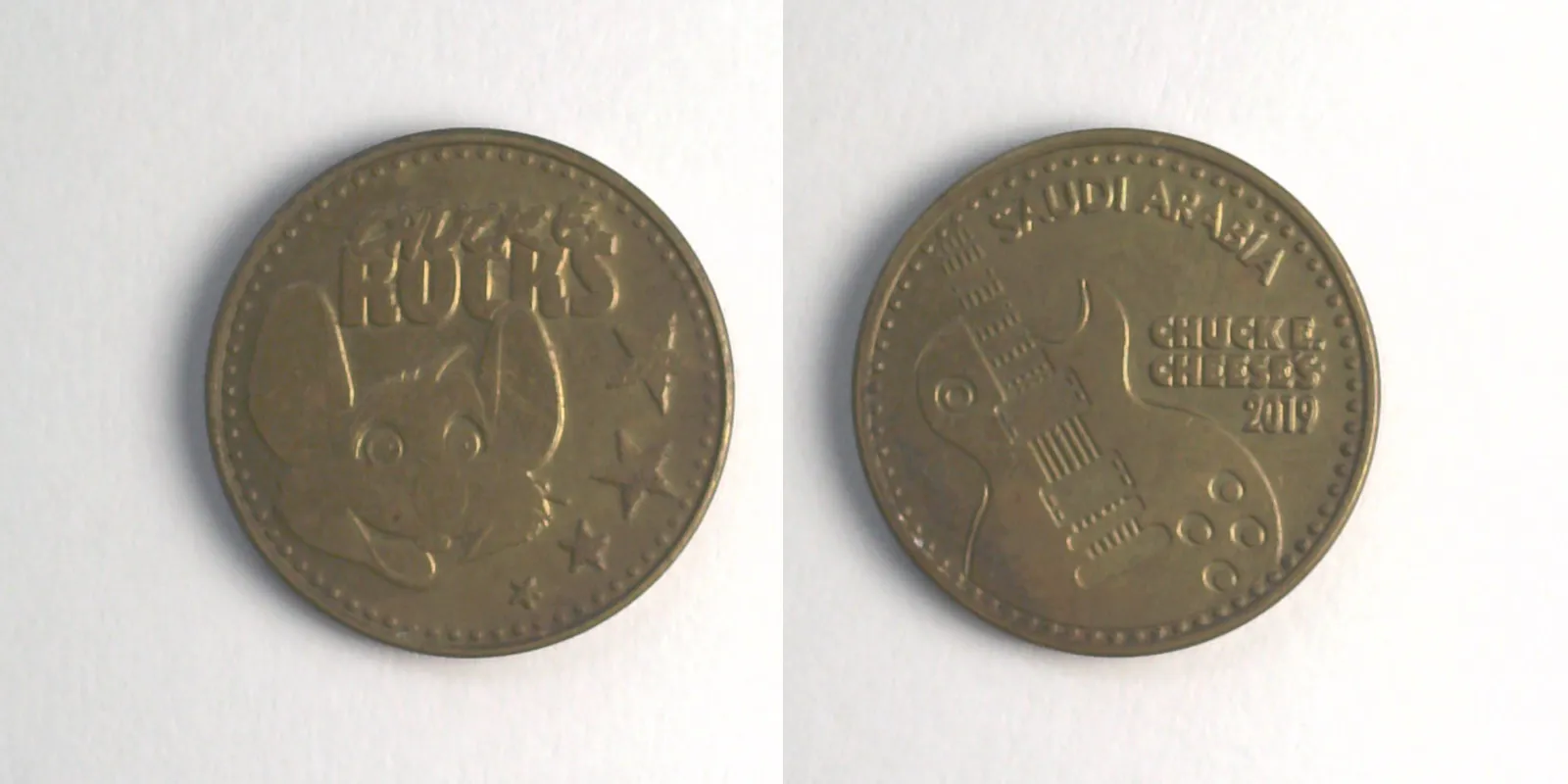
2019 Saudi Arabia Chuck E Cheese Token (512B)
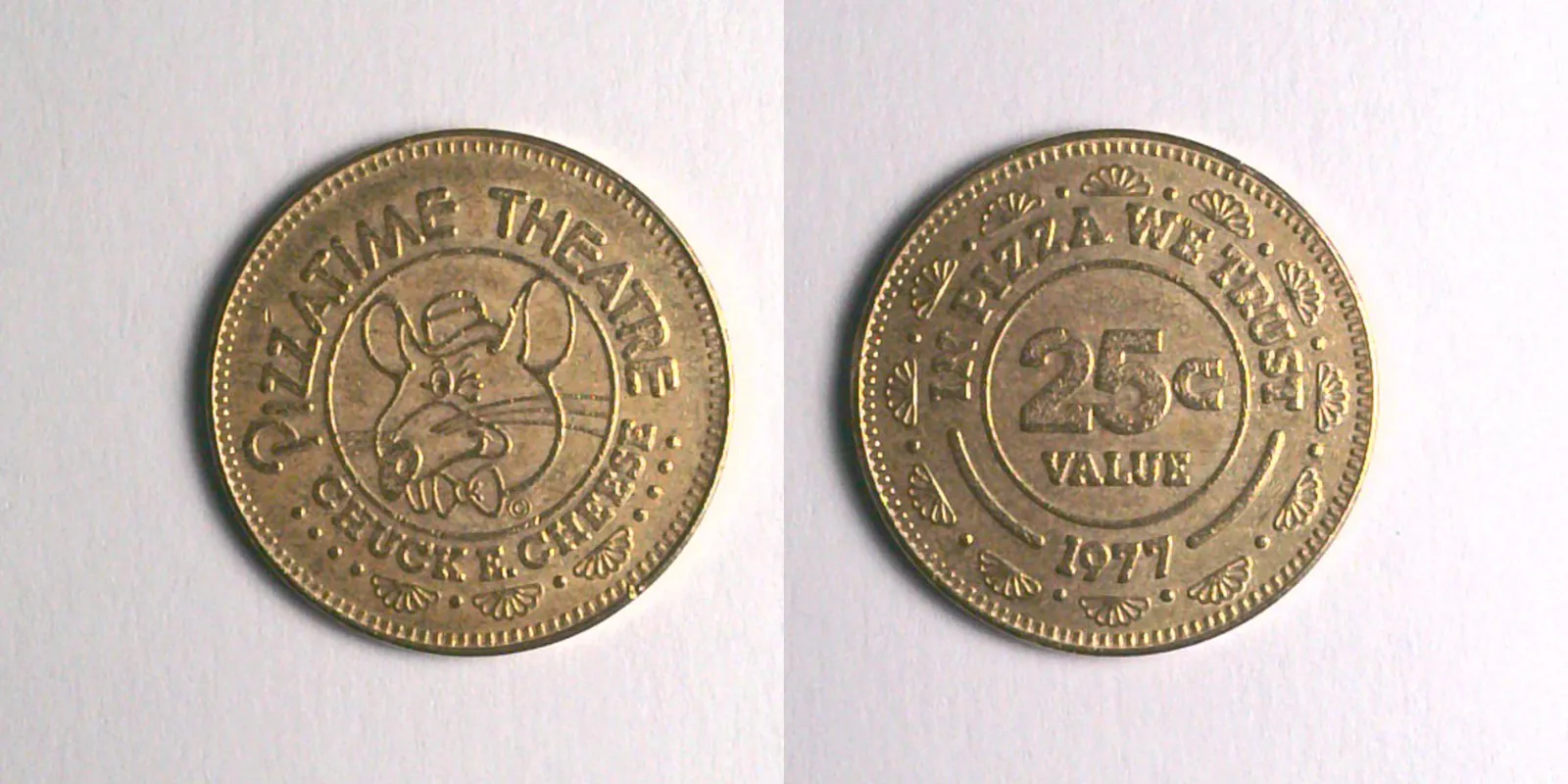
1977 Chuck E Cheese Token (101B)
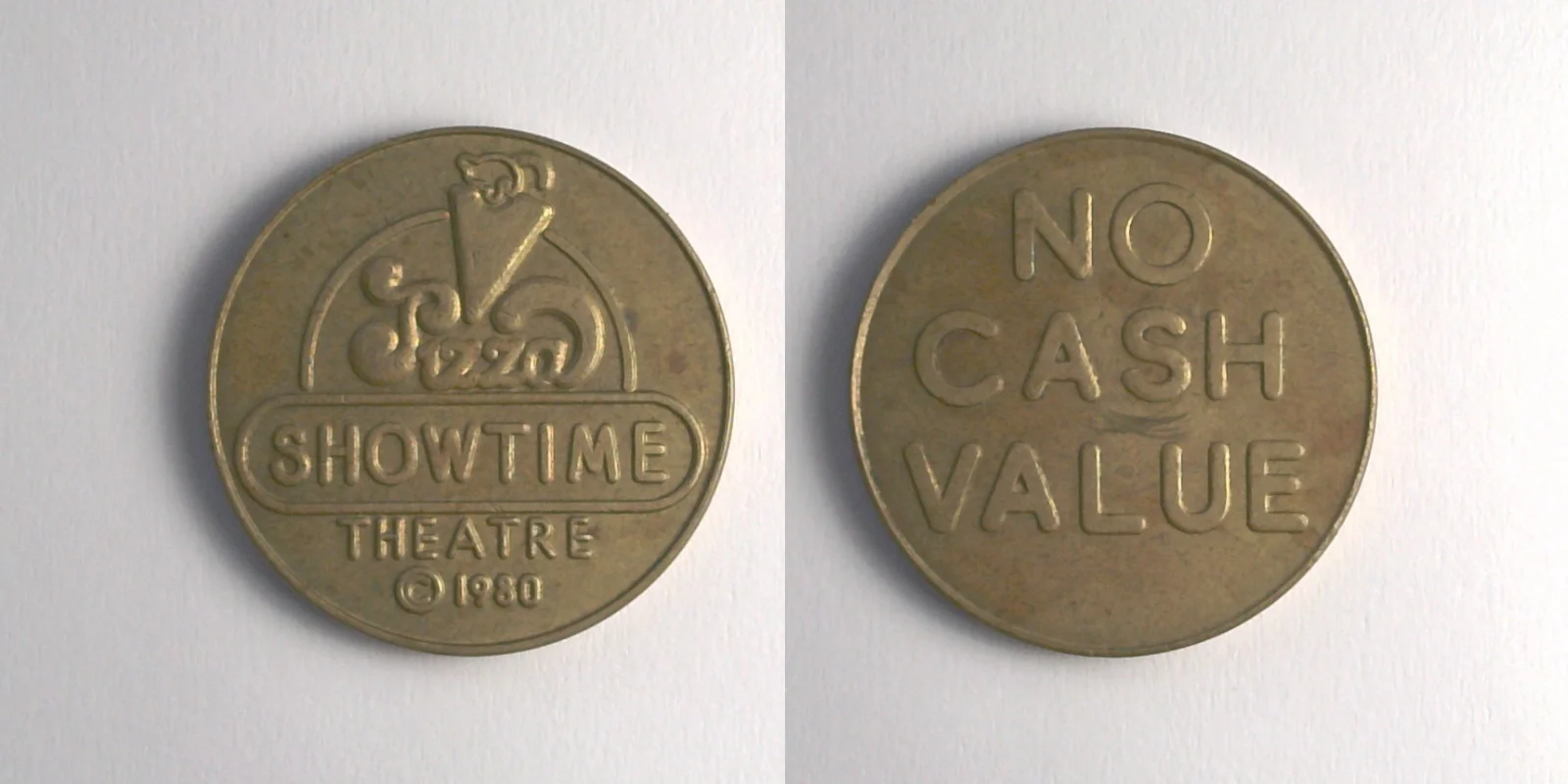
Pizza Showtime Theatre Token (PST101B)
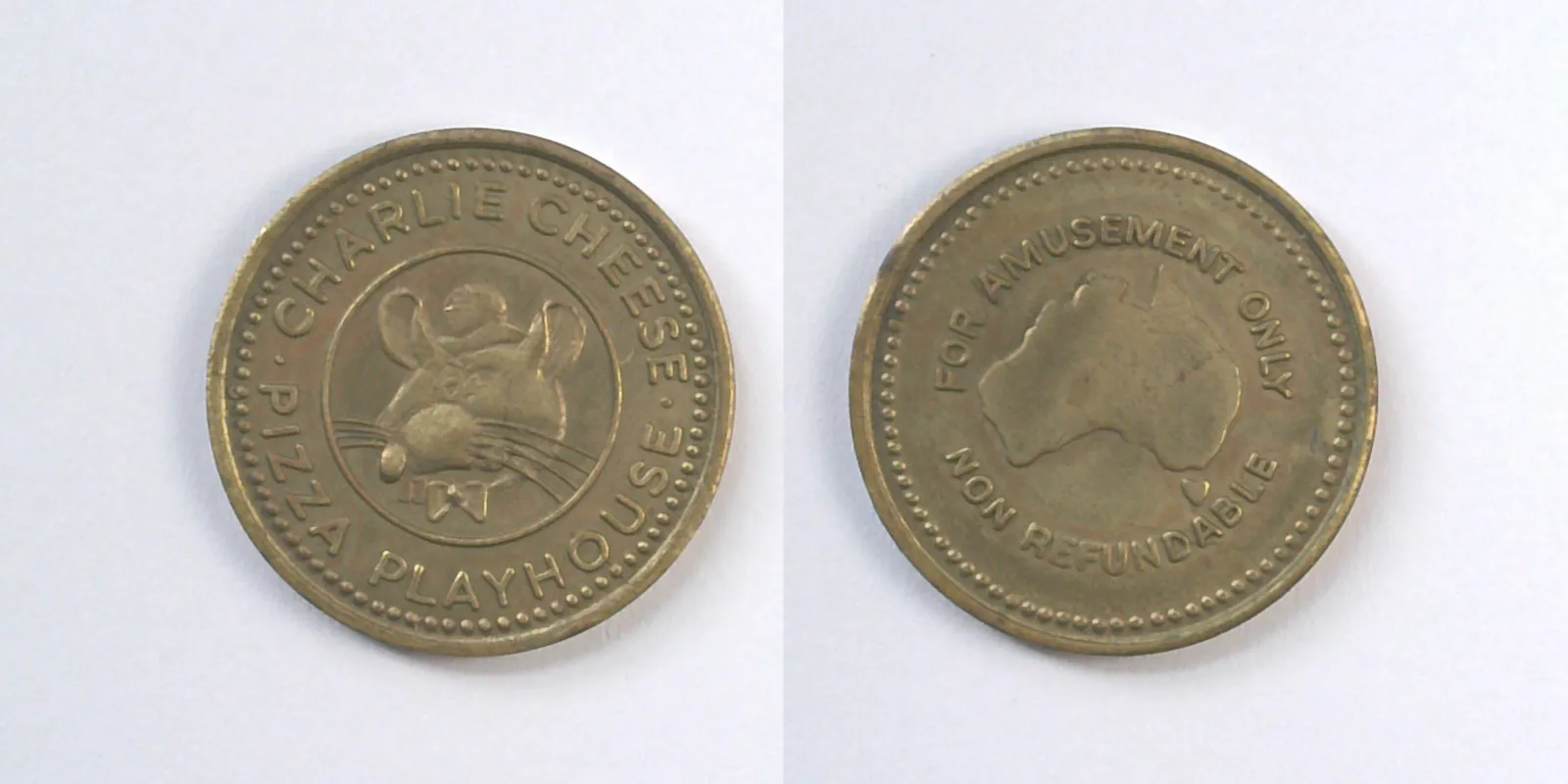
Australian Charlie Cheese Pizza Playhouse Token (122B)
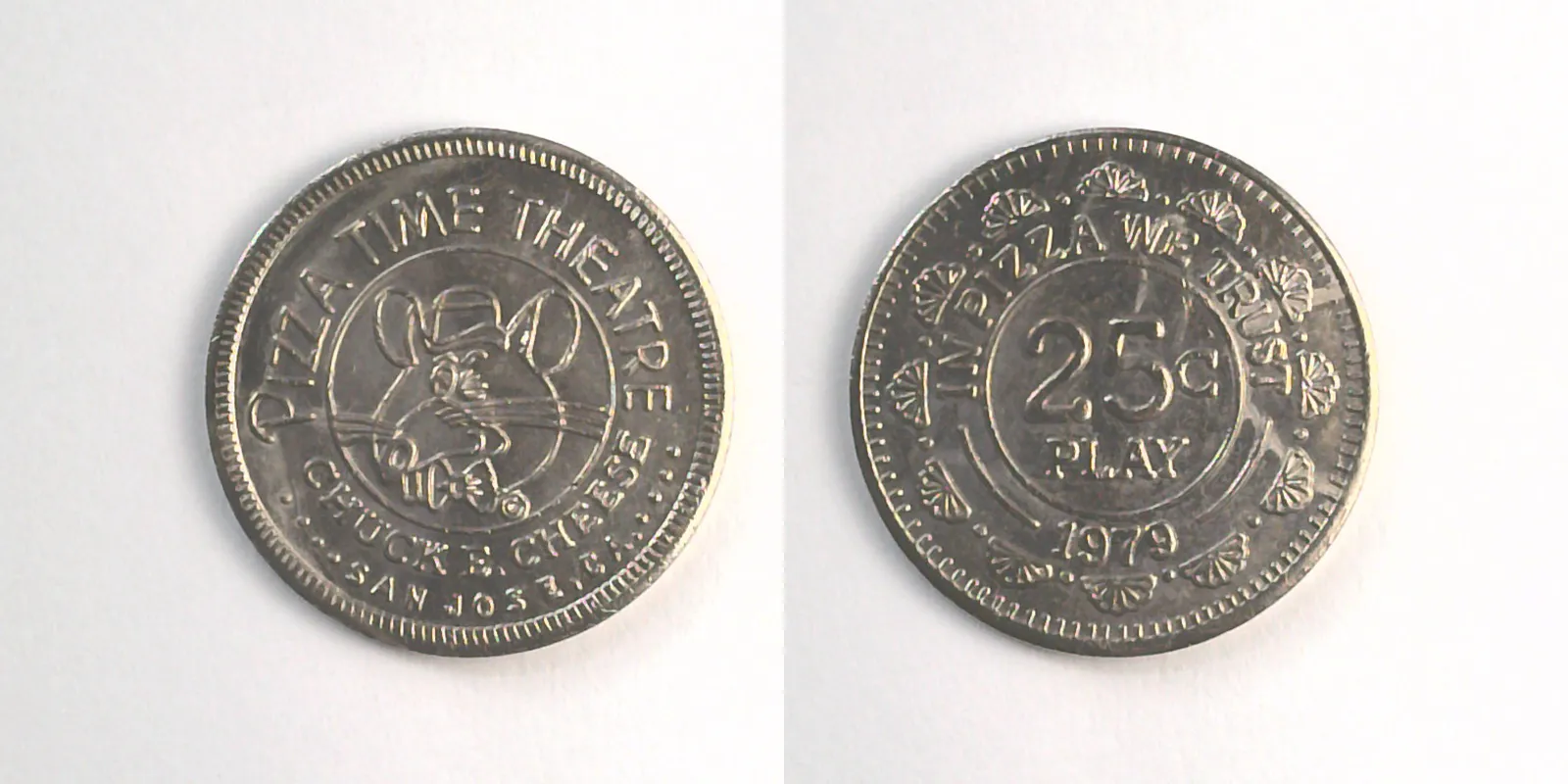
1979 San Jose Chuck E Cheese Token (132N)
Where to go next
- What drives token values covers the underlying factors behind the rankings.
- Pricing trends over time covers how the rankings change at the macro level over years.