Arcade token prices look noisy from the outside. The same token can sell for $8 one month and $80 the next; two pieces with identical catalog codes can trade at very different prices on the same week. The noise has a structure, and once you know what's driving it, you can read prices more accurately and time your buying and selling better.
Four things move arcade token prices in roughly this order of impact:
1. Rarity tier
The single biggest price driver. A token's rarity tier (R1 through R5 in the cectoken catalog) is the market's collective judgment about how often the piece surfaces. R1 pieces show up constantly and command low prices; R5 pieces almost never appear and command the premiums.
The catalog currently rates the rarest piece at a fair-value estimate of $2,062.60.
A few things worth knowing:
- Rarity is not the same as mintage. The original print run doesn't matter if every piece is still floating around or if a controlled stash dominates the market. What matters is how often pieces actually trade.
- Rarity tiers move slowly. They're updated as the market reveals new information, but a token's tier doesn't fluctuate week to week. If you see a tier change, it usually reflects a genuine change in the supply (a hoard surfacing, a long-dormant cache breaking up).
- R5 is the unusual tier. R5 means functionally unique or near-unique. There are very few of these. R4 covers most of what collectors think of as "real rarities."
2. Completeness and series desirability
Collectors don't just buy individual pieces. They build sets. A token's value rises when collectors are actively trying to complete the set it belongs to.
- Anchor pieces in popular sets (the city tokens for someone building the 44-city Type 1b collection; the brass-and-nickel pair for Showbiz Type 2 completionists) carry a premium because they're "needed" rather than just "wanted."
- Final pieces (the last one or two pieces a completionist needs) often go higher than their fair-value estimate would suggest.
- Orphan pieces (singles from sparsely-collected series) trade at discounts, even when they're objectively rare. Nobody wants a R4 piece from a series almost no one collects.
3. Brand desirability
The brand affects baseline pricing independent of any specific token's attributes:
- Chuck E. Cheese has the broadest collector base and the most consistent pricing across all rarity tiers. 419 items in the catalog.
- Showbiz Pizza comes second in collector breadth. 187 items.
- CEC Related brands (Peter Piper, Pistol Pete, others) draw smaller but engaged collector pools. 118 items.
- SPP Related brands (Billy Bob's, Rock-afire, internationals) have niche followings. 124 items.
- Other Brands (Discovery Zone, Jeepers, Bullwinkle's, etc.) trade thinly with high price variance. 570 items.
A R4 Chuck E. Cheese piece reliably finds a buyer. A R4 Bullwinkle's piece might sit for months before the right collector sees the listing.
4. Market timing and noise
Even with all of the above accounted for, individual sale prices vary because of factors that have nothing to do with the token:
- Auction dynamics. Two motivated bidders can push a piece well above market. One bidder and a low reserve can leave a piece at a fraction of its fair value.
- Listing quality. A token with poor photos, an ambiguous title, or a vague description sells at a discount. The same piece with a well-lit photo and an accurate description sells higher.
- Season. Anecdotal but real: token prices tend to soften in summer and firm up in the lead-up to the holiday season.
- Cross-listings. A piece listed simultaneously on eBay, a collector forum, and a Facebook group sometimes triggers a bidding-war dynamic that pushes price.
How fair-value estimates work on this site
The site computes fair value from recent eBay sales. Specifically:
- The system continuously scrapes eBay sold listings.
- For each token, it computes a per-unit price (listing total divided by quantity).
- The fair-value estimate weights recent sales more heavily than old ones.
This produces a number that tracks the market with a lag of weeks to months, depending on sale frequency. For frequently-sold pieces, the fair-value moves quickly. For rarely-sold pieces, it can sit unchanged for long stretches because there's no new data.
The catalog-wide average sale price over the trailing 12 months is currently $10.59.
Putting it all together
For any given piece you're evaluating:
- Pull the rarity tier.
- Assess the condition honestly.
- Note the set it's part of and whether that set is actively collected.
- Factor in the brand.
- Compare the fair-value estimate against recent actual sales (visible in the sales-history table on every item page).
If the listing price is at or below fair value and the condition matches, you're looking at a reasonable buy. If it's above fair value, look at the recent sale history before paying the premium.
A real-world example
Here's the actual price history of one of the catalog's headline pieces, and the current top 5 most-valuable Chuck E. Cheese tokens:
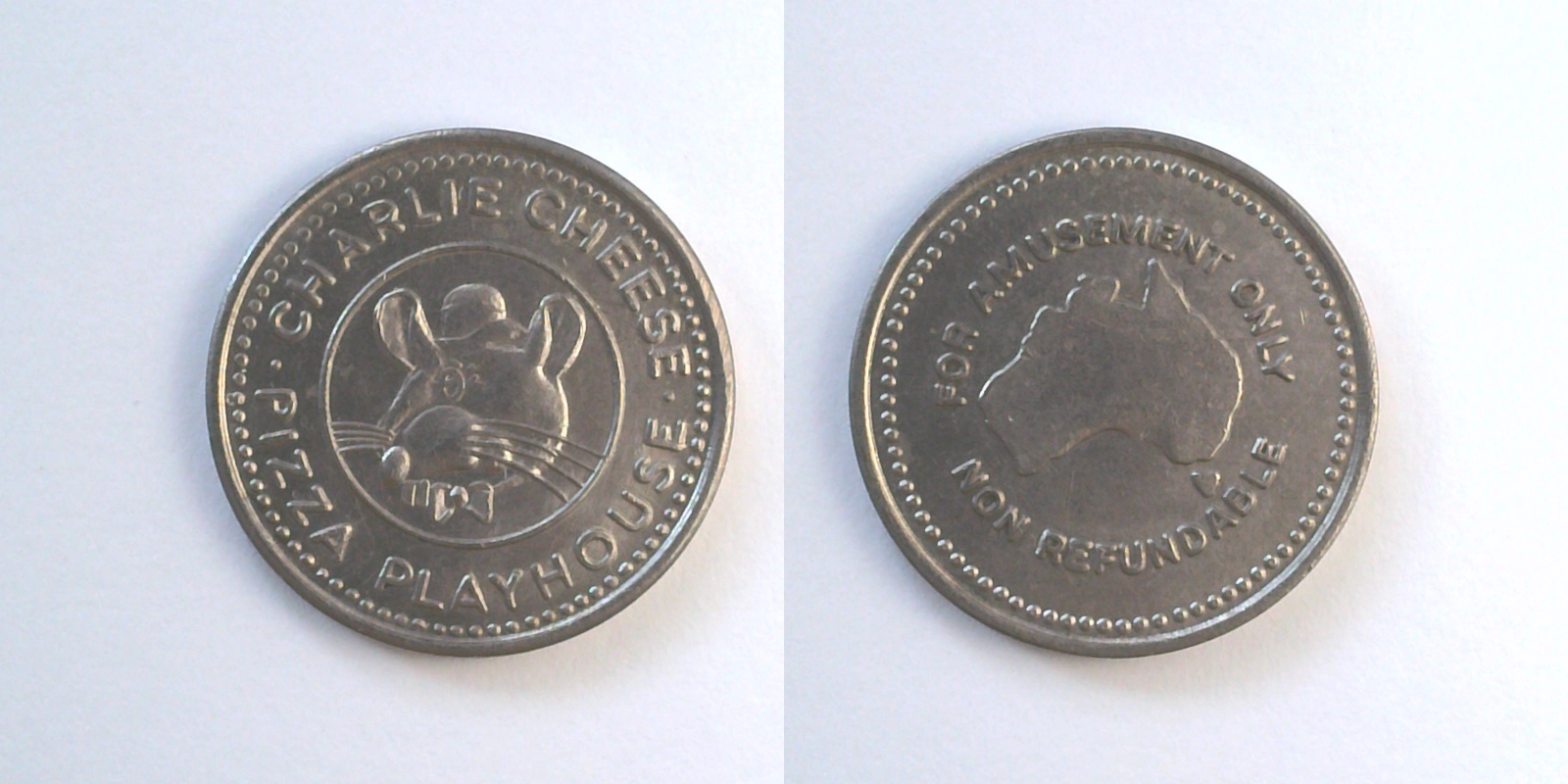
Australian Charlie Cheese Pizza Playhouse Token (122N)
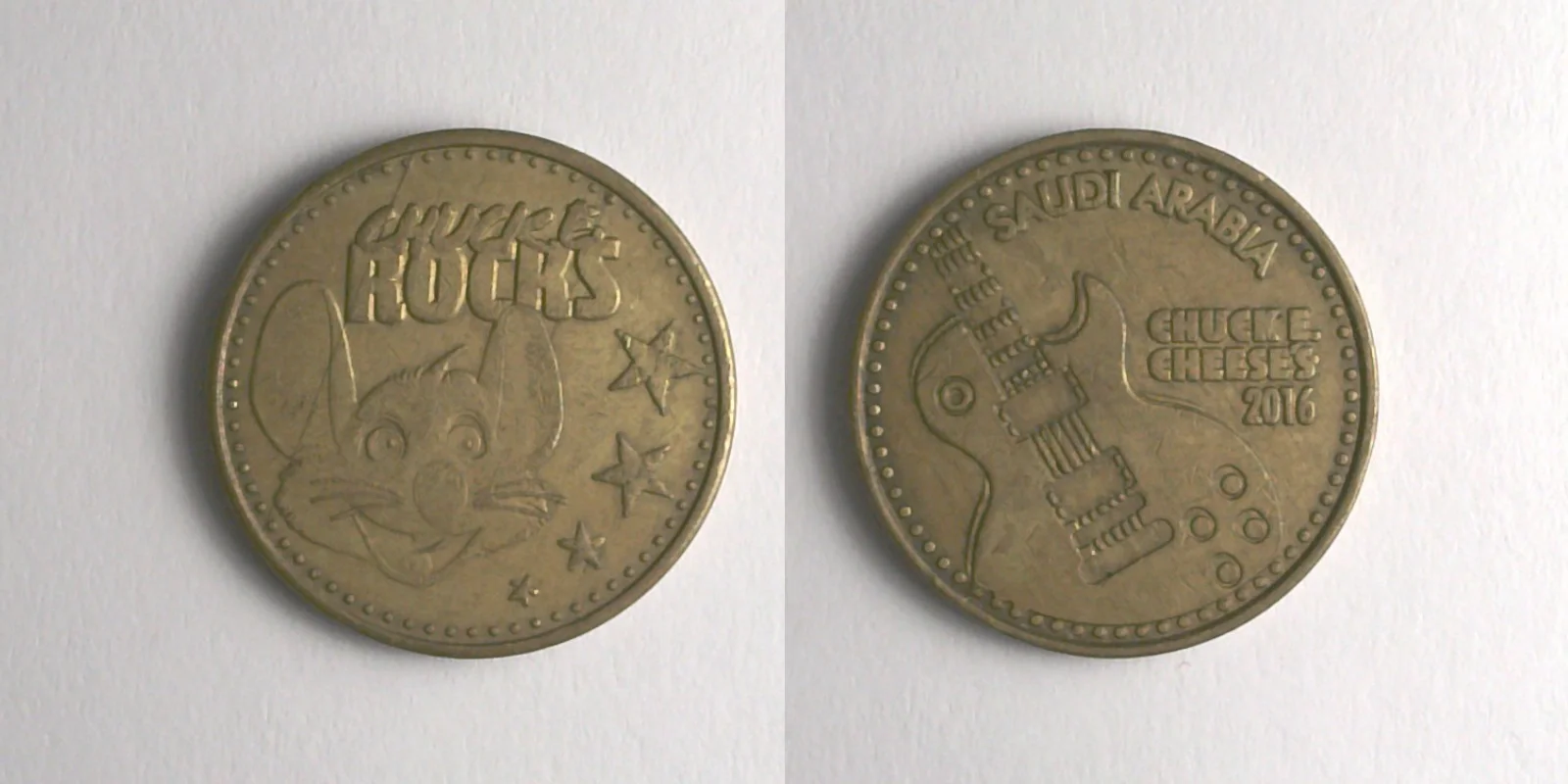
2016 Saudi Arabia Chuck E Cheese Token (509B)
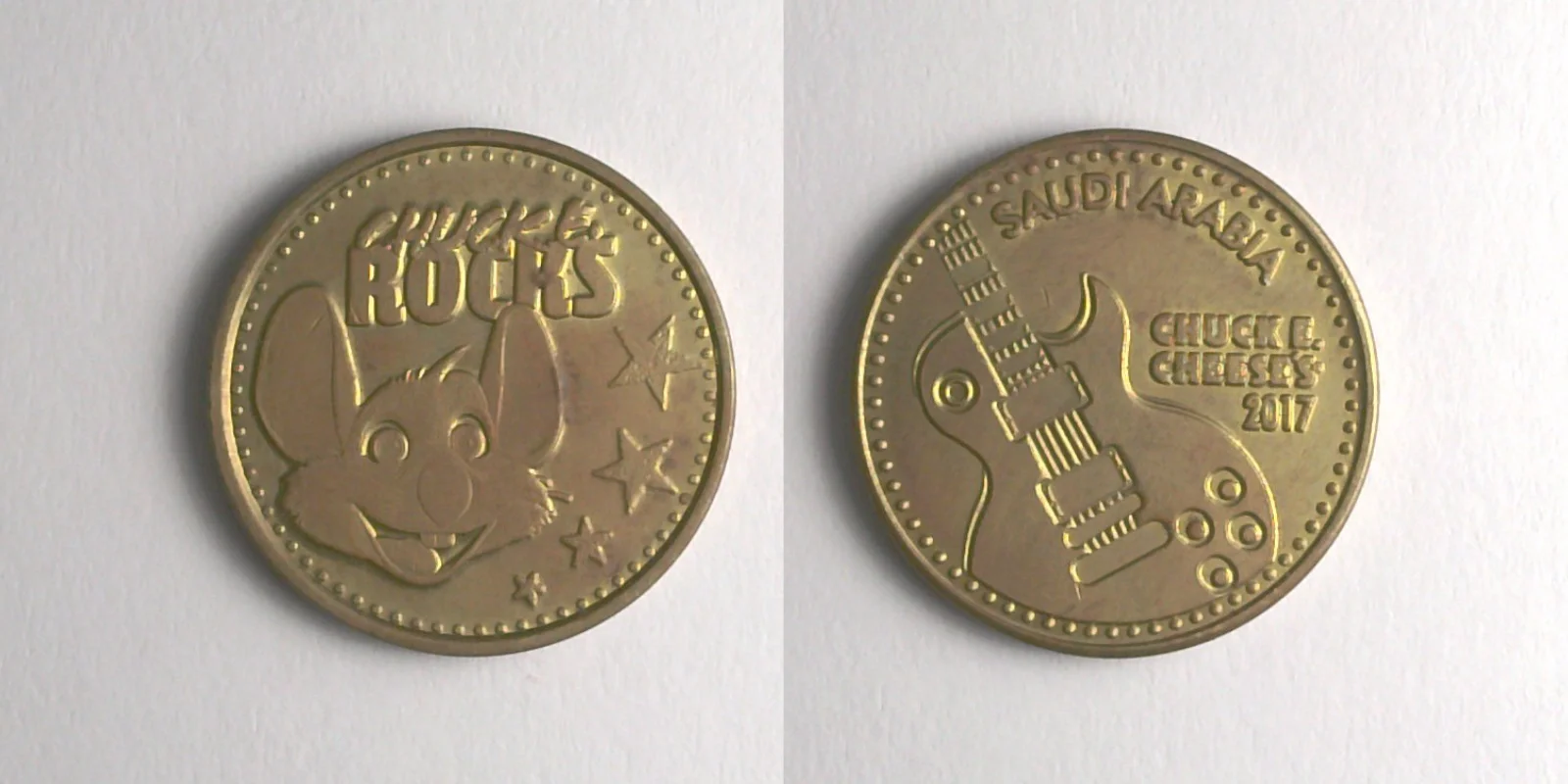
2017 Saudi Arabia Chuck E Cheese Token (513B)
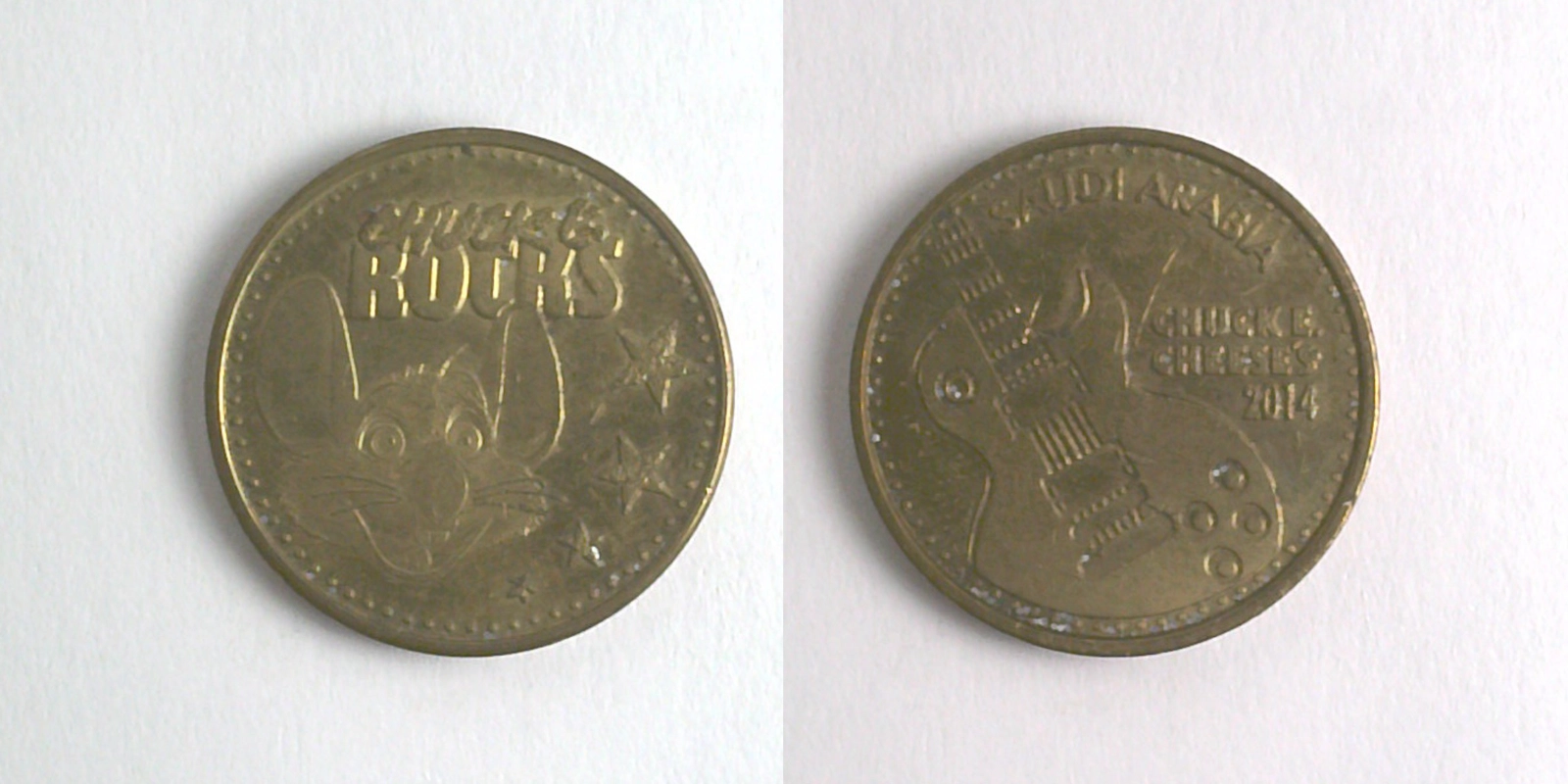
2014 Saudi Arabia Chuck E Cheese Token (503B)
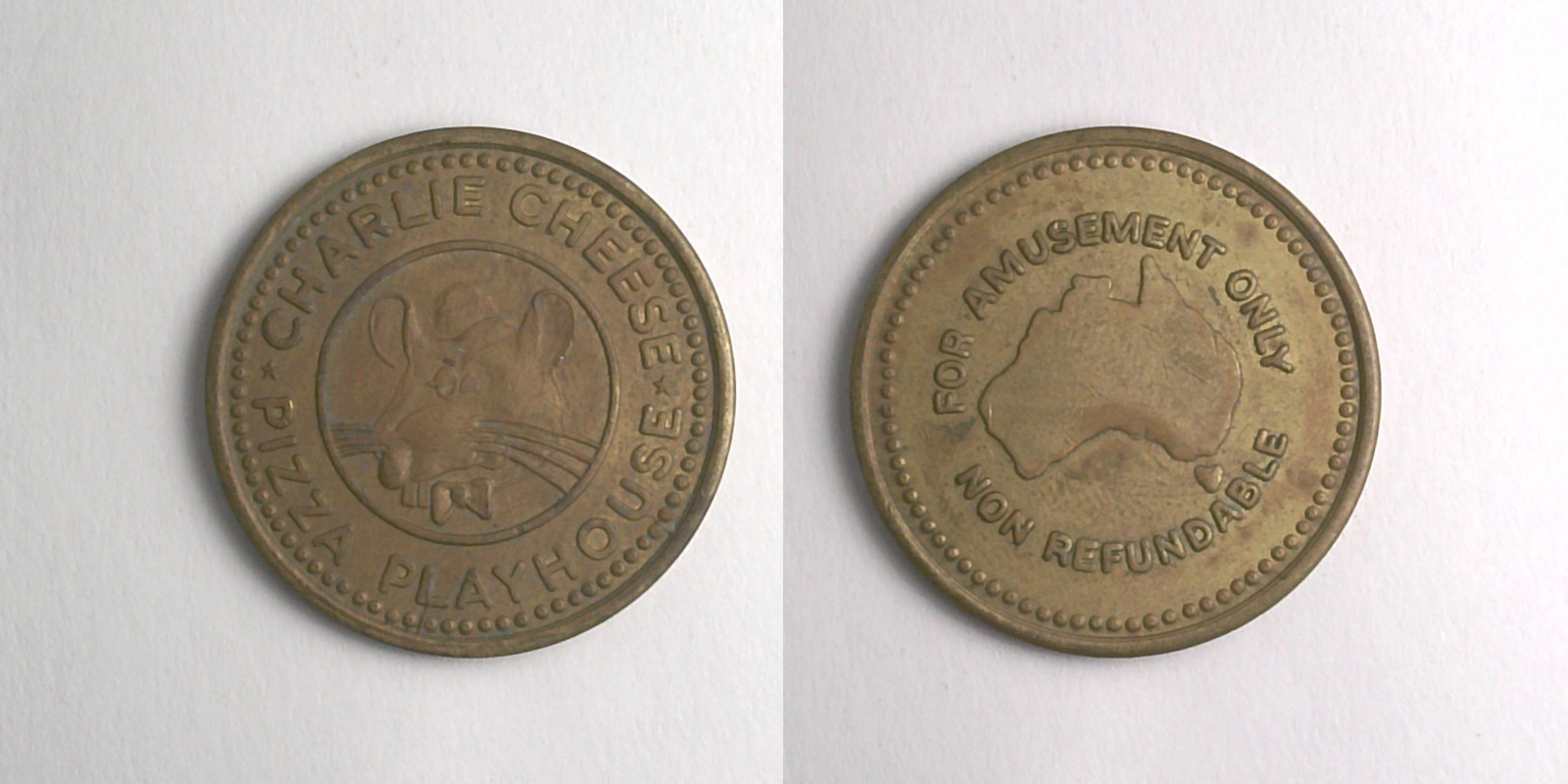
Australian Charlie Cheese Pizza Playhouse Token (123B)
Where to go next
- Pricing trends over time covers how prices move over longer windows.
- Sourcing tokens covers where to find pieces beyond the obvious eBay search.