The Showbiz Pizza Type 2 catalog is the catalog's biggest single sub-collection. Within that catalog sits a smaller, visually-distinctive sub-set: the anodized nickel color variants. These are pieces struck on nickel blanks with a surface anodization that takes on saturated colors, producing tokens that look like nothing else in the broader arcade-token universe.
This guide is the deep dive on what anodized nickel looks like, which colors exist, how rare each color is, and how the set fits into broader Showbiz Pizza collecting.
For broader context on Showbiz Pizza tokens, see Showbiz Pizza Tokens.
What anodization does
Anodization is an electrochemical surface treatment that grows a thin oxide layer on the metal surface. For nickel, that oxide layer can be tuned to refract light at specific wavelengths, producing color without paint. The color sits in the surface of the metal rather than on top of it, which means it doesn't chip or scratch off the way paint does.
The visual effect: a saturated color that has subtle metallic depth when viewed in good light. Anodized pieces feel like nickel in hand (same weight, same heft) but look like something completely different from any other token category.
The colors
The Showbiz catalog tracks anodized nickel pieces in these colors:
- Pink: the most common anodized color. Multiple Type 2 catalog entries carry pink anodization, making it the entry-point color for collectors getting into the anodized sub-collection.
- Light blue: distinct from medium and dark blue.
- Medium blue / blue: standard blue.
- Dark blue: deeper saturation than medium blue.
- Olive (green): the only green in the anodized palette.
- Red: warmer than pink, distinctly saturated.
- Black: the darkest anodization in the catalog.
Each color is treated as a distinct catalog entry, paired with the underlying Type 2 catalog code. A single Type 2 design might exist as both a brass piece (suffix B), a nickel piece (suffix N), and one or more anodized color variants (suffix aN with a color qualifier).
Catalog codes
Anodized variants use the format
- S02aN-pink: Type 2 catalog entry S02, anodized nickel, pink color
- S09aN-blue: S09, anodized nickel, blue
- S09aN-darkblue: S09, anodized nickel, dark blue (distinct from regular blue)
- S09aN-olive: S09, anodized nickel, olive
- S10aN-black: S10, anodized nickel, black
The full code-reading reference is in Reading catalog codes.
Which catalog entries appear in which colors
A pattern visible across the Type 2 catalog: the S09 design has by far the most color diversity, with pink, blue, dark blue, light blue, olive, red, and black variants all cataloged. S02, S03, S05, S10, S13, and S17 also have anodized variants but in narrower color sets.
This concentration on S09 suggests the design was used as a kind of canvas for the anodization process, with multiple color runs produced from the same dies. The other entries with anodized variants typically have one or two colors each rather than the full palette.
Rarity within the anodized sub-collection
Within the anodized sub-collection, rough rarity ordering (from most to least common):
- Pink: most common across multiple catalog entries
- Blue (medium): second most common
- Black: present on multiple entries
- Olive: present on a smaller subset
- Dark blue, light blue: more limited distribution
- Red: rare; present on a few entries
Color rarity within the same catalog entry can drive price differences of 2x to 5x. A common-color anodized piece at a moderate price might have a rare-color cousin at multiples of that price.
How anodized pieces fit in the broader catalog
The anodized nickel pieces are the visual signature of the broader Showbiz Pizza Type 2 collection. They serve a few collecting purposes:
- Display value: a tray of pink, blue, olive, and red tokens is one of the most photogenic small collections in the entire catalog. Anodized pieces show up in collector photos and listings disproportionately to their share of total catalog volume.
- The "rainbow" goal: collecting the full color palette across the catalog is a recognizable mini-completion goal. Even partial rainbows (the four most-common colors, the cool tones, the warm tones) make satisfying focused collections.
- The S09 rainbow: collecting all the S09 color variants specifically is one of the most popular sub-goals within the Showbiz catalog.
Production speculation
The catalog doesn't make definitive claims about exactly why the anodized variants exist or how widely they circulated. Likely explanations include:
- Control tokens: anodization made it easy to distinguish tokens that staff used for testing from regular play tokens. The variety of colors suggests different operational uses for different colors.
- Promotional runs: limited-run pieces for specific events or markets.
- Test runs: experimentation with surface treatments that didn't progress to wide adoption.
The pieces almost certainly were not standard play-token circulation at any individual Showbiz Pizza Place location. Surviving examples cluster in collector hands rather than appearing in general arcade-token finds, which fits the "limited operational use" theory.
Collecting strategy
For collectors approaching anodized Showbiz pieces:
- Start with S09 pink: it's the most common, the most photogenic, and the anchor of the broader anodized sub-collection.
- Build out S09: the S09 design is the most complete anodized palette in the catalog. Working through its colors is a focused goal.
- Branch to other catalog entries: once you have a working S09 set, expand to S02, S03, S05, S10 variants.
- Save rare colors for last: dark blue, light blue, red, and certain olive examples are harder to find. Treat them as a long-term hunt rather than an immediate target.
Expect pricing in the $40 to $200 range for common-color anodized pieces, scaling up significantly for rare colors and high-condition examples.
The color spectrum at a glance
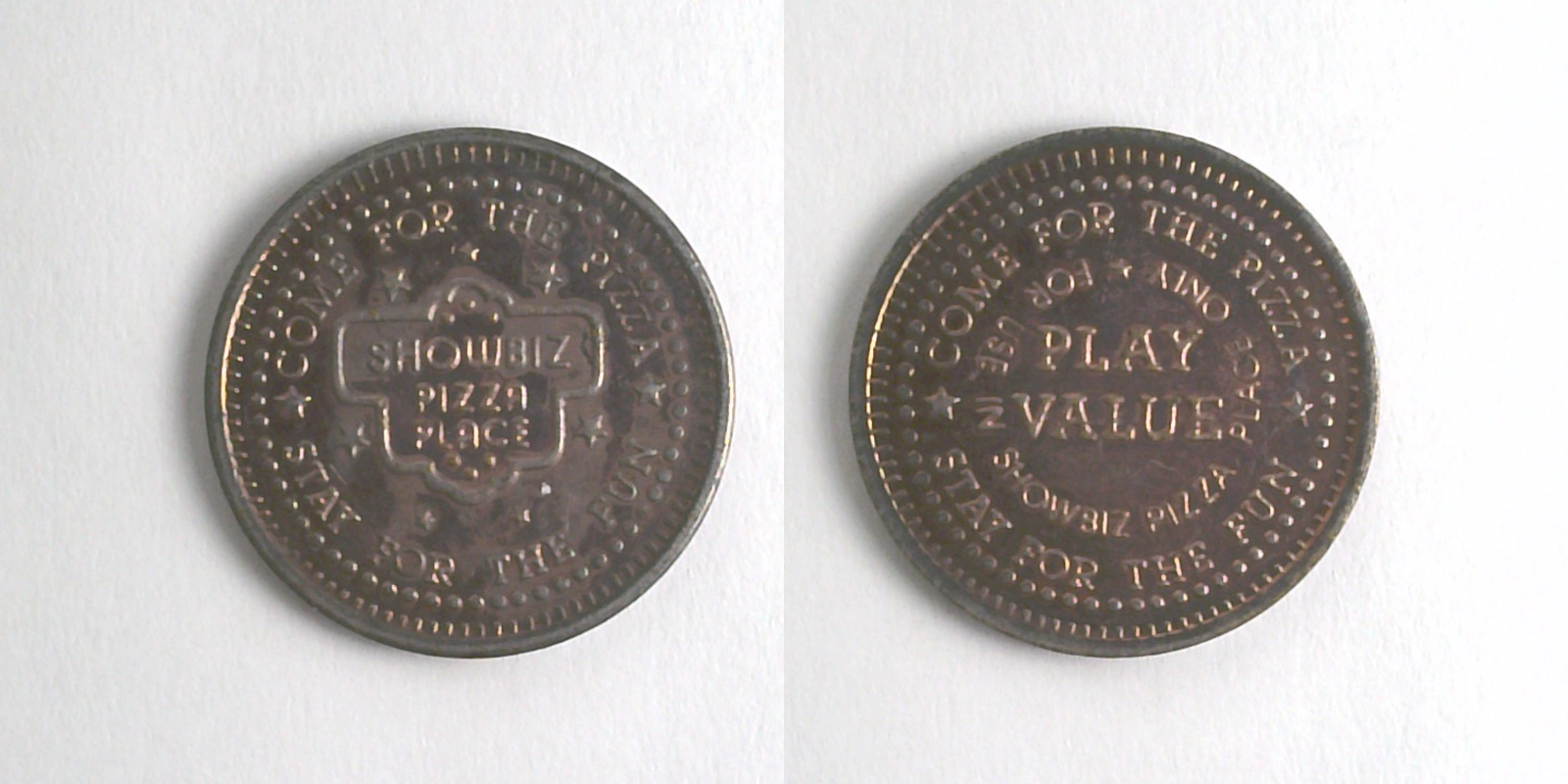
Showbiz Pizza Place Token (S03aN-pink)
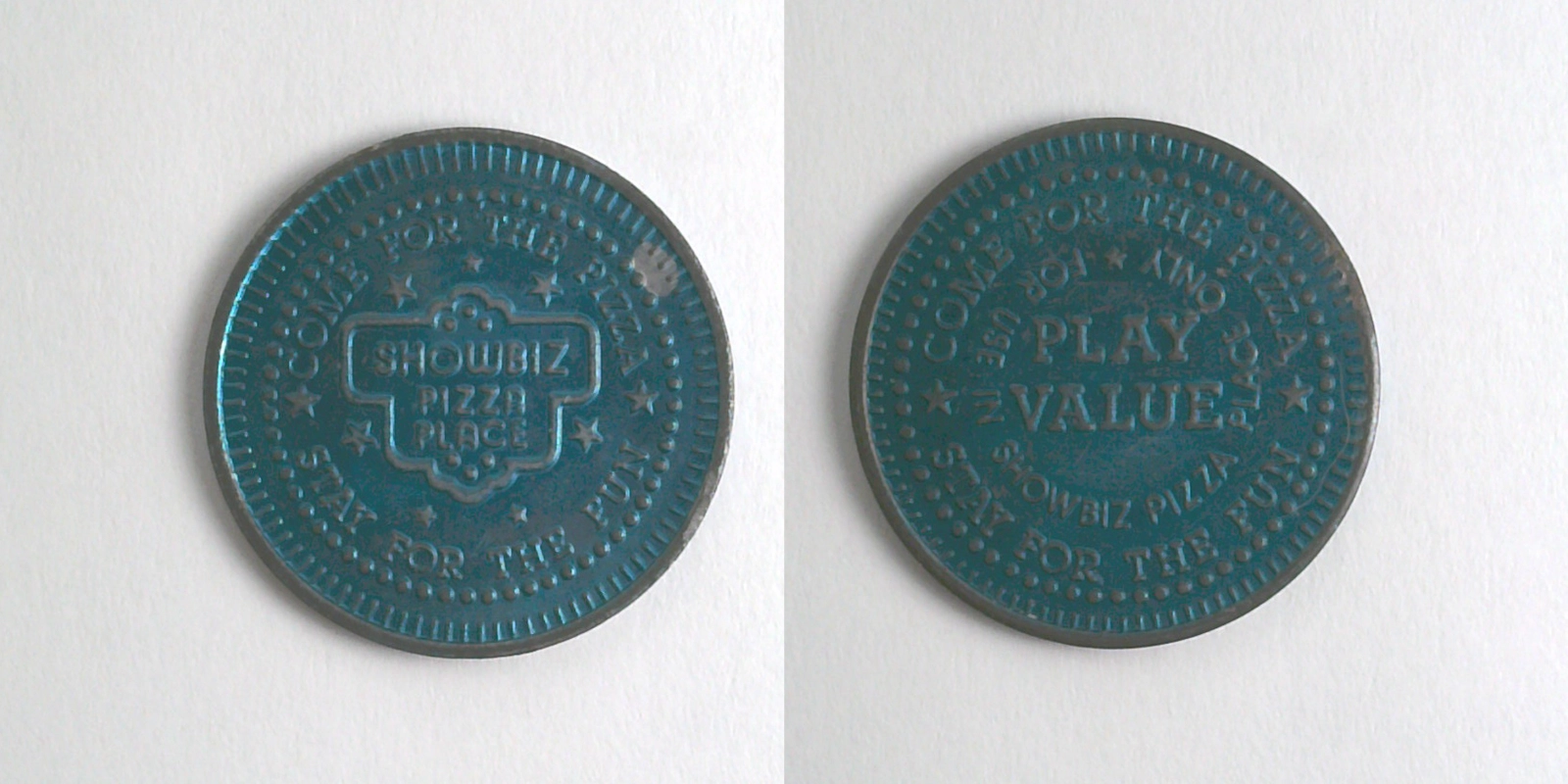
Showbiz Pizza Place Token (S09aN-blue)
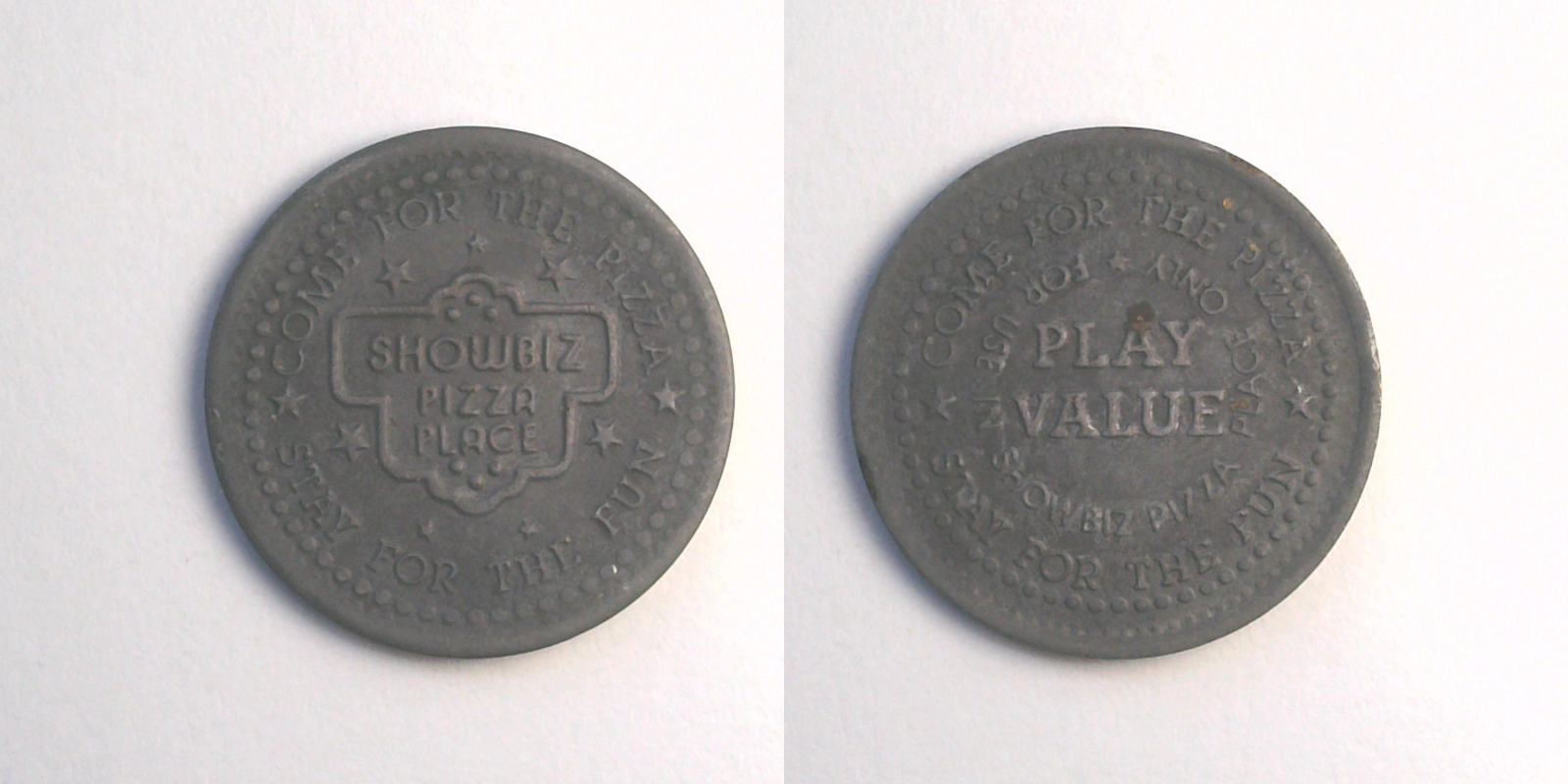
Showbiz Pizza Place Token (S09aN-olive)
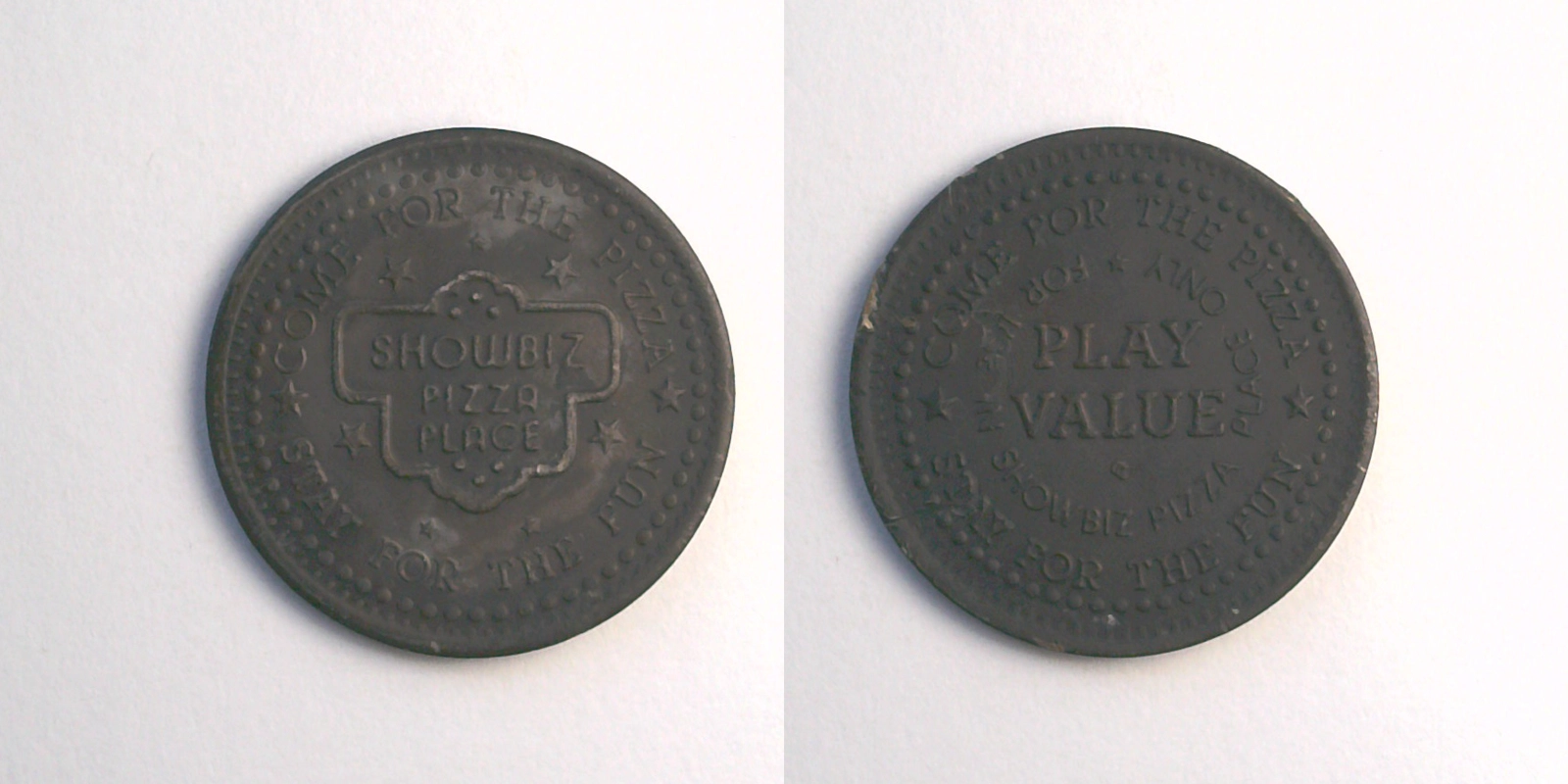
Showbiz Pizza Place Token (S10aN-black)
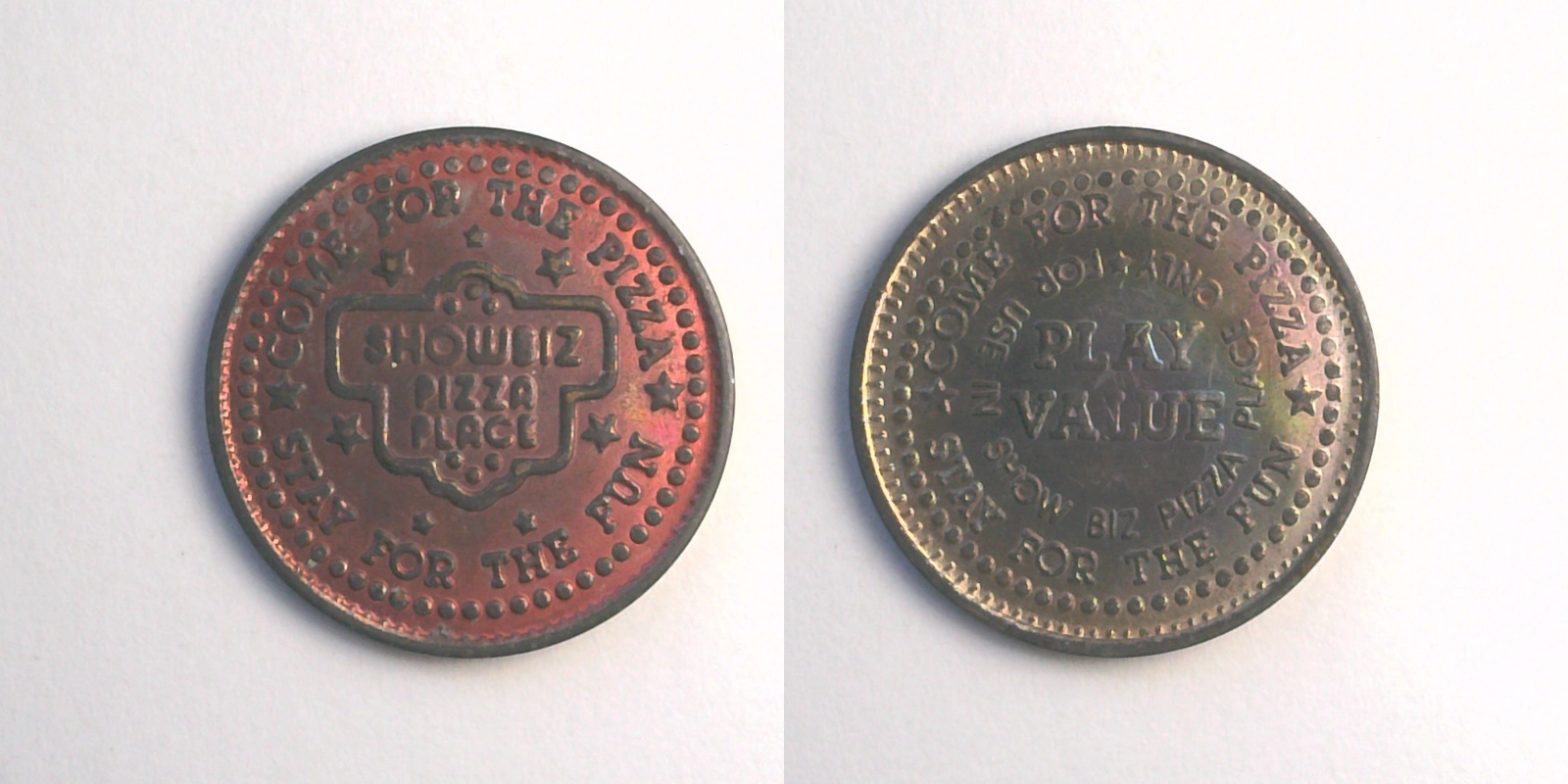
Showbiz Pizza Place Token (S13aN-red)
Where to go next
- Showbiz Pizza Tokens, the broader Showbiz overview.
- Identifying composition by sight, the cross-brand guide to recognizing anodized pieces.