Timeline Overview
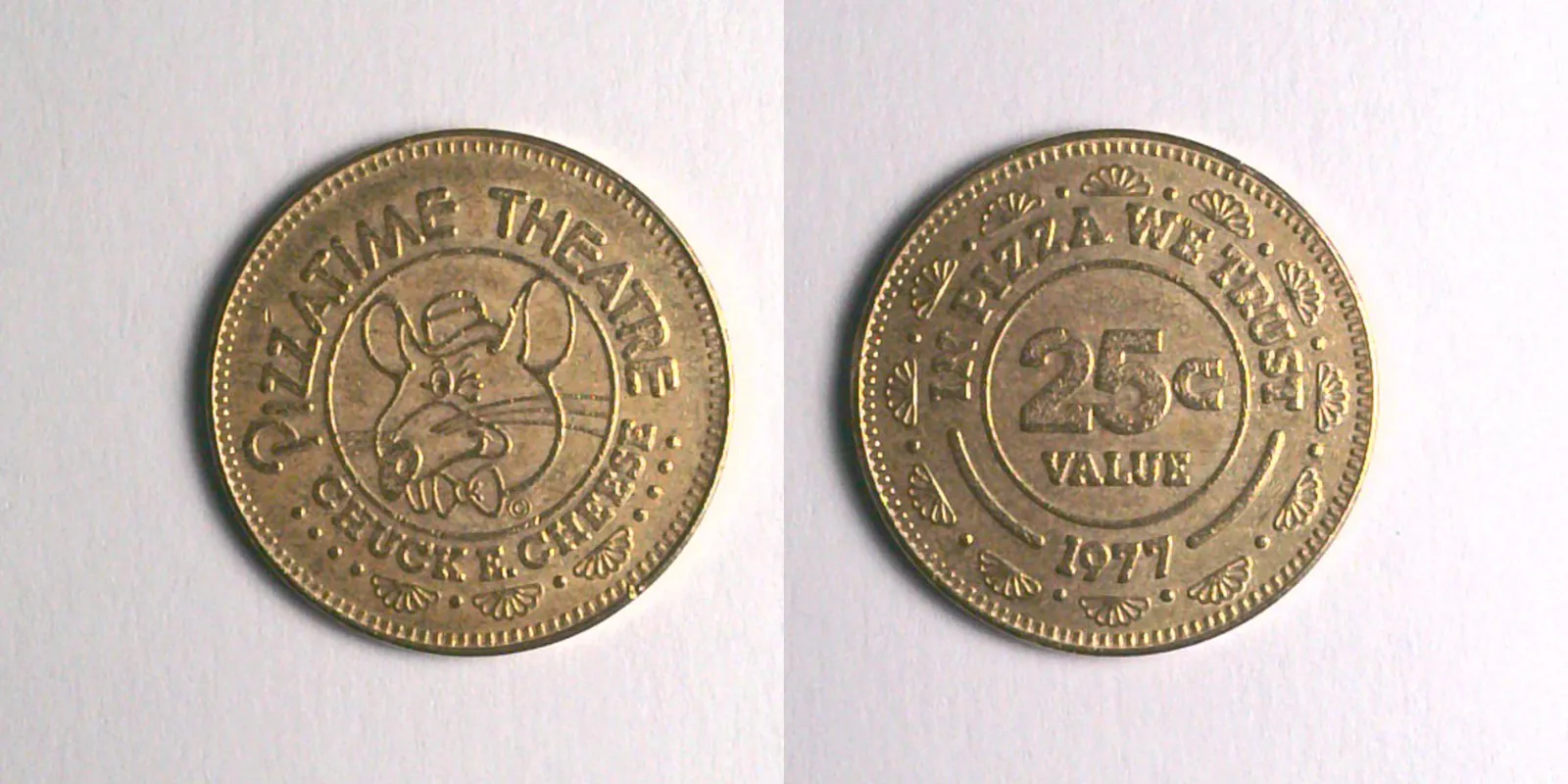
1977: Chuck E. Cheese's Pizza Time Theatre
Nolan Bushnell, co-founder of Atari, opened the first Chuck E. Cheese's Pizza Time Theatre in San Jose, California. The concept combined pizza dining with arcade games and animatronic entertainment, revolutionizing family entertainment. The original tokens from this era are among the most sought-after by collectors.
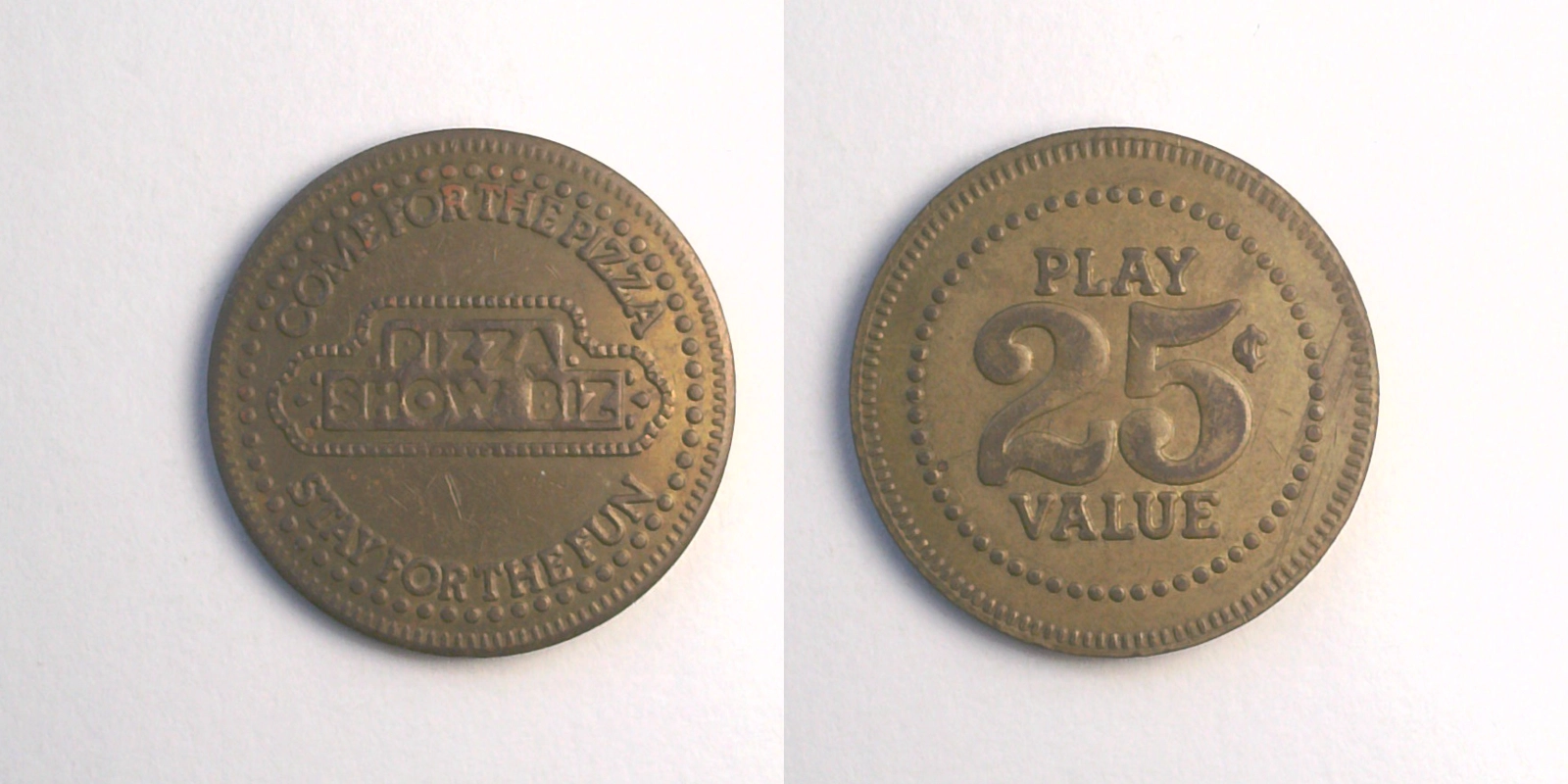
1980: ShowBiz Pizza Place Launches
Creative Engineering and businessman Robert Brock founded ShowBiz Pizza Place as a competitor to Pizza Time Theatre. ShowBiz featured the Rock-afire Explosion animatronic band and quickly expanded across the United States. ShowBiz tokens have their own distinct history and variations.
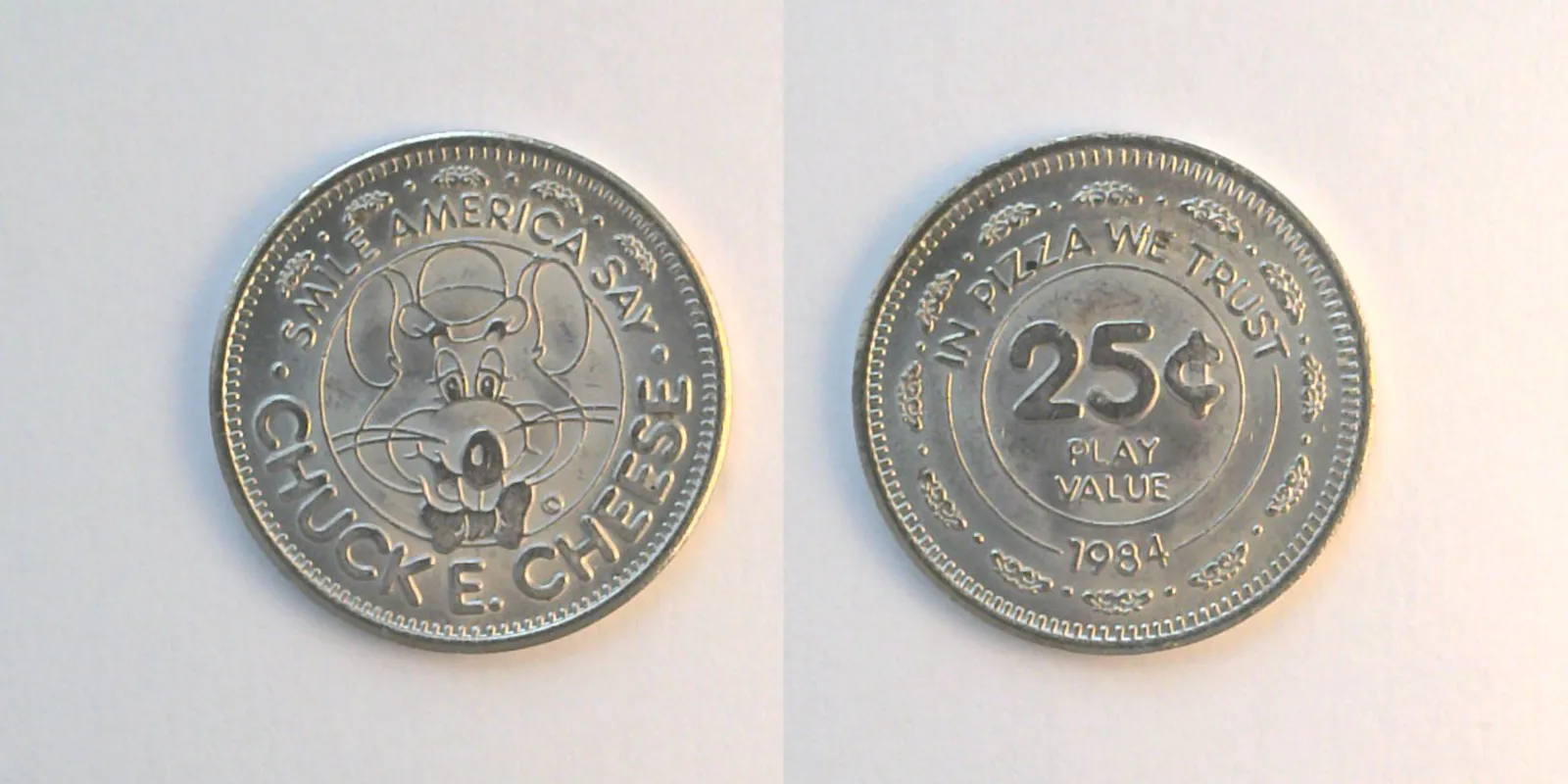
1984: The Merger
ShowBiz Pizza Time, Inc. acquired the struggling Chuck E. Cheese's Pizza Time Theatre chain. Rather than eliminating one brand, both continued to operate independently for several years. This period created interesting crossover opportunities in token production.
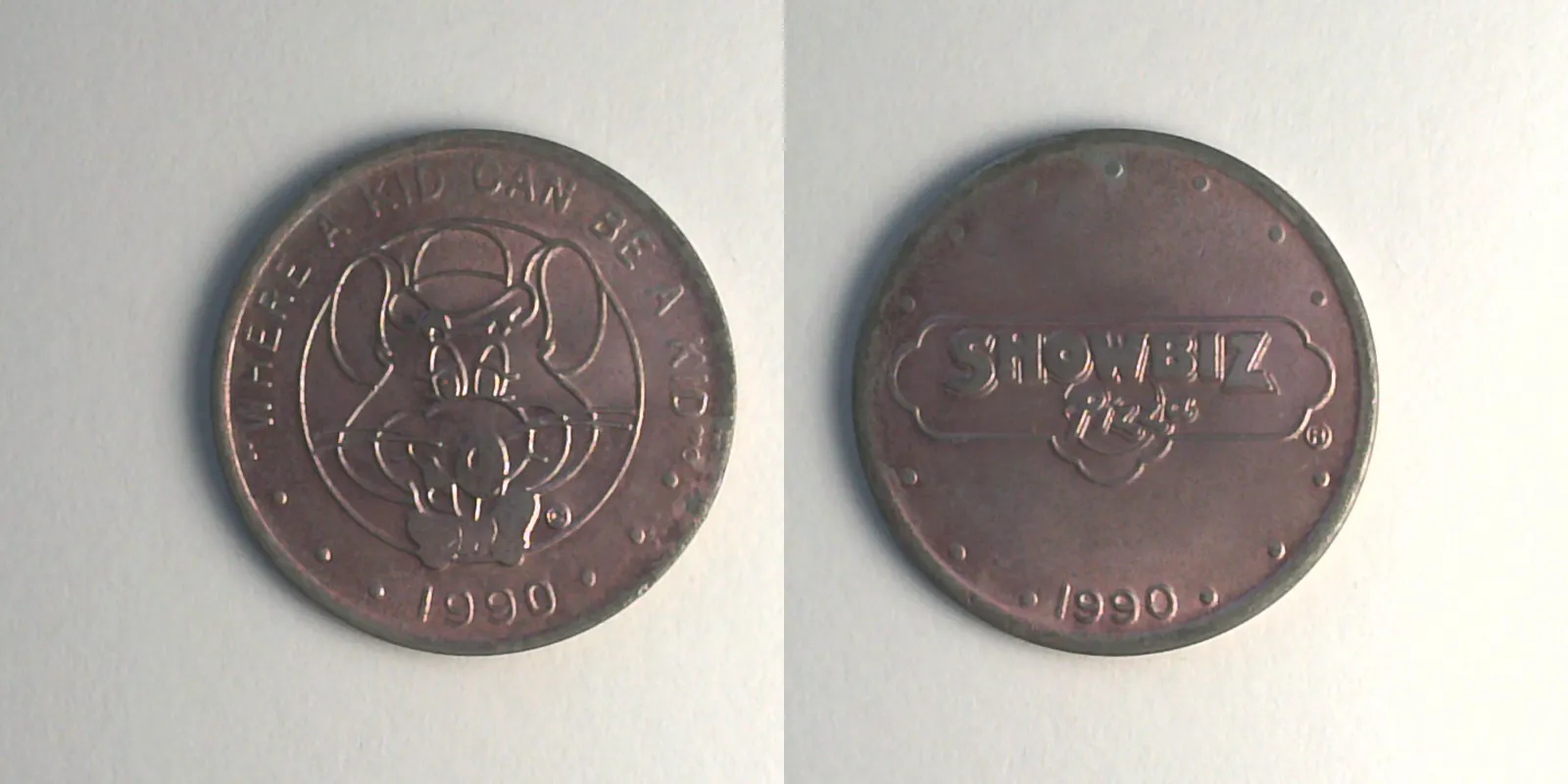
1990s: Concept Unification
Throughout the early 1990s, ShowBiz Pizza locations were gradually converted to Chuck E. Cheese's. The Rock-afire Explosion characters were replaced with Chuck E. Cheese characters through a process called "Concept Unification." By 1992, all ShowBiz locations had been rebranded.
2000s–Present: Modern Era
The unified Chuck E. Cheese brand continued to evolve, with significant changes to token designs, the introduction of play pass cards, and eventually a shift away from physical tokens in many locations. Modern tokens and the transition period pieces represent the latest chapter in CEC token history.
The Original Chuck E. Cheese: Pizza Time Theatre
The original Chuck E. Cheese was stranger and rougher than the brand most people picture today. When Nolan Bushnell set out to build the restaurant in the mid-1970s, the plan was a coyote mascot. The costume that arrived was a rat, so the character became a rat, and for a brief moment the working name was even "Rick Rat's Pizza" before the marketing team settled on Chuck E. Cheese.
That original Pizza Time Theatre was built around its animatronic stage show, the Pizza Time Players. The early cast paired Chuck E. with characters like Mr. Munch, Jasper T. Jowls, and Pasqually, performing for a room of kids playing games and eating pizza. Those old animatronics, more than the food, are what most people mean when they talk about old Chuck E. Cheese.
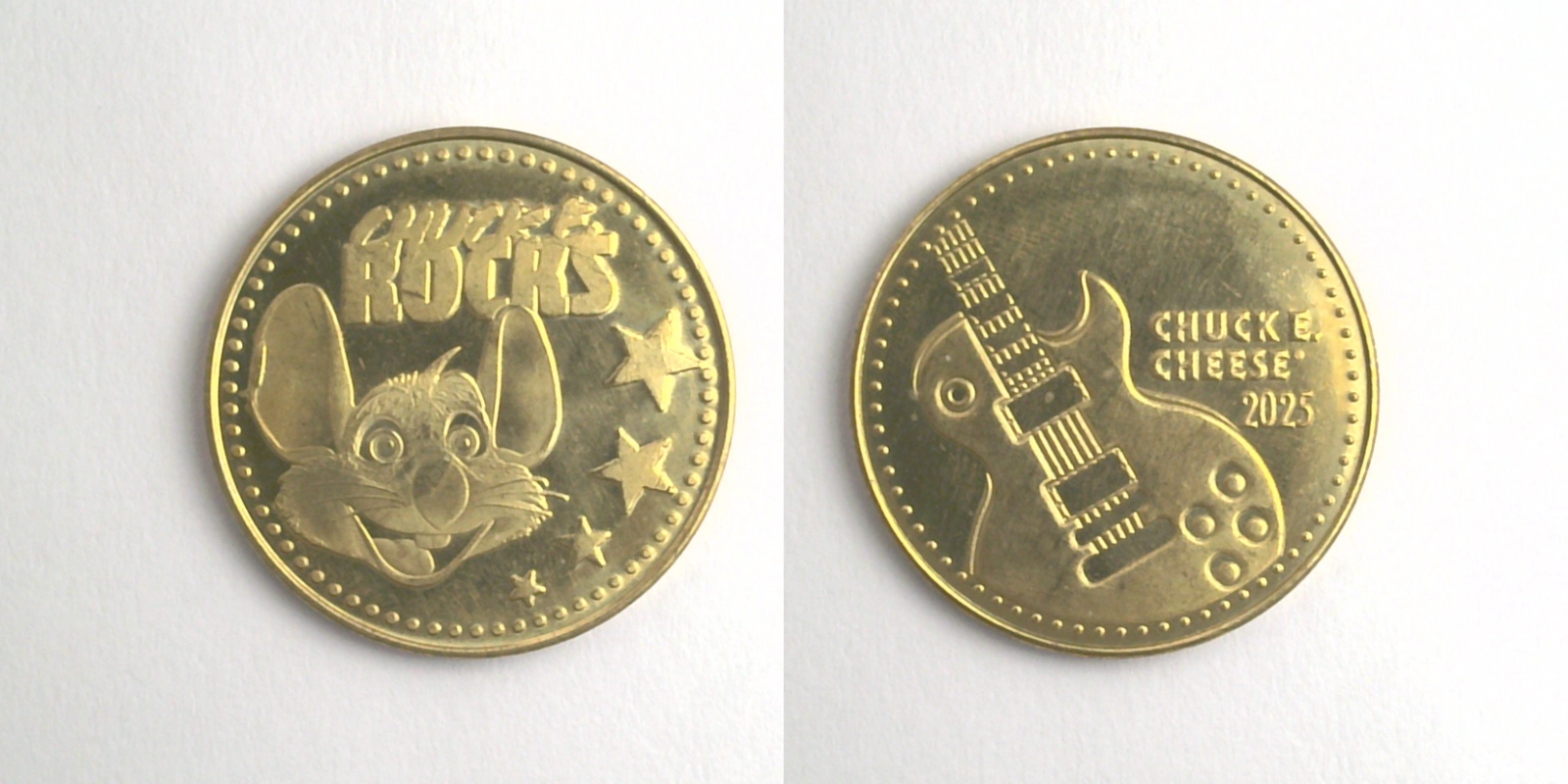
Most of that era is now gone. Chuck E. Cheese phased the animatronic bands out of all but a few locations by the end of 2024, which is exactly why nostalgia for the original restaurant has sharpened. The tokens are the surviving artifact: the oldest of them, the Rat Heads pieces of 1977 to 1982, were struck during these original Pizza Time Theatre years.
Why History Matters for Collectors
Franchise Variations
Both Chuck E. Cheese and ShowBiz operated franchise locations, leading to regional token variations. Some franchisees ordered custom tokens or used different suppliers, creating collectible variants.
Merger Period Anomalies
The years surrounding the 1984 merger and subsequent unification produced unique tokens as the companies integrated operations. These transitional pieces are particularly interesting to collectors.
Dating Tokens
Understanding the timeline helps collectors date their tokens. Design elements, manufacturer marks, and brand references can all be correlated with specific time periods when you know the company history.
Regional Variations
Different regions sometimes received different token designs based on local preferences, supplier availability, or franchise decisions. Historical context helps explain why certain tokens appear in specific geographic areas.
For more detailed brand history, visit showbizpizza.com and chucke.fandom.com.