The Chuck E. Cheese Type 1b city tokens are the catalog's most ambitious set: 44 different cities carry their own catalog entries during the franchise-attraction era of the early 1980s. This guide goes deep on what the city tokens are, why they exist, how to identify them, and what completing the set looks like.
[Item not found: 1978-chuck-e-cheese-token-125b]
For the broader context of where Type 1b fits in the Chuck E. Cheese token history, see the main Chuck E. Cheese Tokens overview.
Why city tokens existed
In the early 1980s, the original Chuck E. Cheese parent company was actively recruiting franchise operators to open new locations in regional markets. The city tokens were marketing artifacts of that franchise push: each new market that signed a franchise agreement got its own custom-engraved token with the city name added to the standard Type 1 Pizza Time Theatre design.
The tokens served two purposes:
- A marketing piece: a tangible item that signaled "Chuck E. Cheese is now in Phoenix" (or wherever) to operators and customers in that market.
- A franchise differentiator: tokens from the Modesto location were materially different from tokens from the Concord location, even though both were Chuck E. Cheese restaurants. The city designation gave each franchise a small piece of unique identity.
The result is one of the most distinctive collecting targets in the entire catalog: a geographically-ordered set spanning 44 different cities, mostly in California, with significant representation in Florida, the Midwest, and Texas.
What the tokens look like
The general design follows Type 1a Rat Heads:
- Front: Pizza Time Theatre-era Chuck E., with the city name and state typically along the bottom of the design.
- Back: standard Type 1 reverse, with "In Pizza We Trust" above, the vintage year below, and the center text typically "25c Value" or "25c Play Value."
The key visual difference between Type 1a and Type 1b is the city name. Type 1a is unspecific (just "Chuck E. Cheese" or "Pizzatime Theatre"). Type 1b adds the city and state.
The 44 cities
The catalog tracks 44 distinct city entries, mostly across these states:
- California: by far the largest concentration. Citrus Heights, Concord, Fremont, Fresno, Fullerton, Garden Grove, Hayward, Huntington Beach, Lake Forest, Long Beach, Modesto, Pinole, Sacramento, San Diego, San Jose, San Ramon, Santa Ana, Santa Rosa, Simi Valley, Stockton, Sunnyvale.
- Florida: Clearwater, Fort Myers, Jacksonville, Winter Park.
- Minnesota: Blaine, Burnsville, Maplewood, New Hope.
- Texas: Arlington, Memphis.
- Other states: Kansas City (Missouri), Maple Heights (Ohio), Mobile (Alabama), Ogden (Utah), Raleigh (North Carolina), Reno and Reno-Sparks (Nevada), Salt Lake City (Utah), Tucson (Arizona), Westland (Michigan), Westminster (Colorado).
- Ontario, Canada: Burlington.
- Curiosity entry: a "Somewhere, Delicious" piece that reads "HAV PIZZA" instead of a real city designation.
The catalog encodes the exact text as struck on each token, which sometimes differs from the modern city name (e.g., "Tuscon, Ariz" rather than "Tucson, AZ"; "Santa Anna, CA" rather than "Santa Ana, CA"; "Lake Forrest" rather than "Lake Forest"). These struck-text variations are part of the catalog identity and are reproduced exactly as the tokens read.
Compositions and variants
The bulk of city tokens are brass. A smaller number exist in nickel, which is the most common composition variation within the set.
Within each city, you may see:
- Composition variants: brass and nickel for the same city.
- Mintmark variants: small differences in mintmark presence or position.
- Vintage-year variants: some cities had multiple production years, captured as separate catalog entries.
- Text-position variants: small differences in how the city text is arranged on the design.
The catalog assigns each distinguishable variant its own row, so a single city can have multiple catalog codes.
What completing the set looks like
Completing the 44-city set is one of the more popular long-term Chuck E. Cheese collecting goals. A few practical notes:
The easy two-thirds
About 30 of the 44 cities surface regularly on eBay. The high-population California cities (San Diego, San Jose, Sacramento) and the major Florida cities (Jacksonville, Clearwater) are particularly common. Expect to source these for $5 to $25 each in average condition.
The harder dozen
About a dozen cities are notably less common. These are typically:
- Cities with shorter franchise runs
- Smaller markets that produced fewer total tokens
- International or unusual cities (Burlington Ontario, certain Reno variants)
Pricing for these can stretch to $40 to $100 each, with higher condition examples going further.
The challenging few
A handful of city tokens are functionally rare. They surface infrequently and command real premiums when they do. The "Somewhere, Delicious" / HAV PIZZA novelty piece is the most distinctive curiosity in the set and one of the most-talked-about individual catalog entries.
Sub-collections within the set
For collectors who want to scope the city set into smaller chunks:
- California-only: roughly half the set. The most achievable sub-collection.
- Single-state focus: any state with multiple cities (California, Florida, Minnesota) makes a coherent sub-collection.
- Composition-paired: collect both the brass and nickel variants for each city you have.
- Major-market-only: just the cities with metropolitan populations over a million.
How the catalog references these
Every city token in the catalog has a catalog code following the 1xx-suffix convention (e.g., 125B, 139N). The numeric portion identifies the specific catalog entry; the suffix identifies the composition. Brass pieces end in B, nickel in N.
For the full discussion of how catalog codes work, see Reading catalog codes.
Sample of city tokens in the catalog
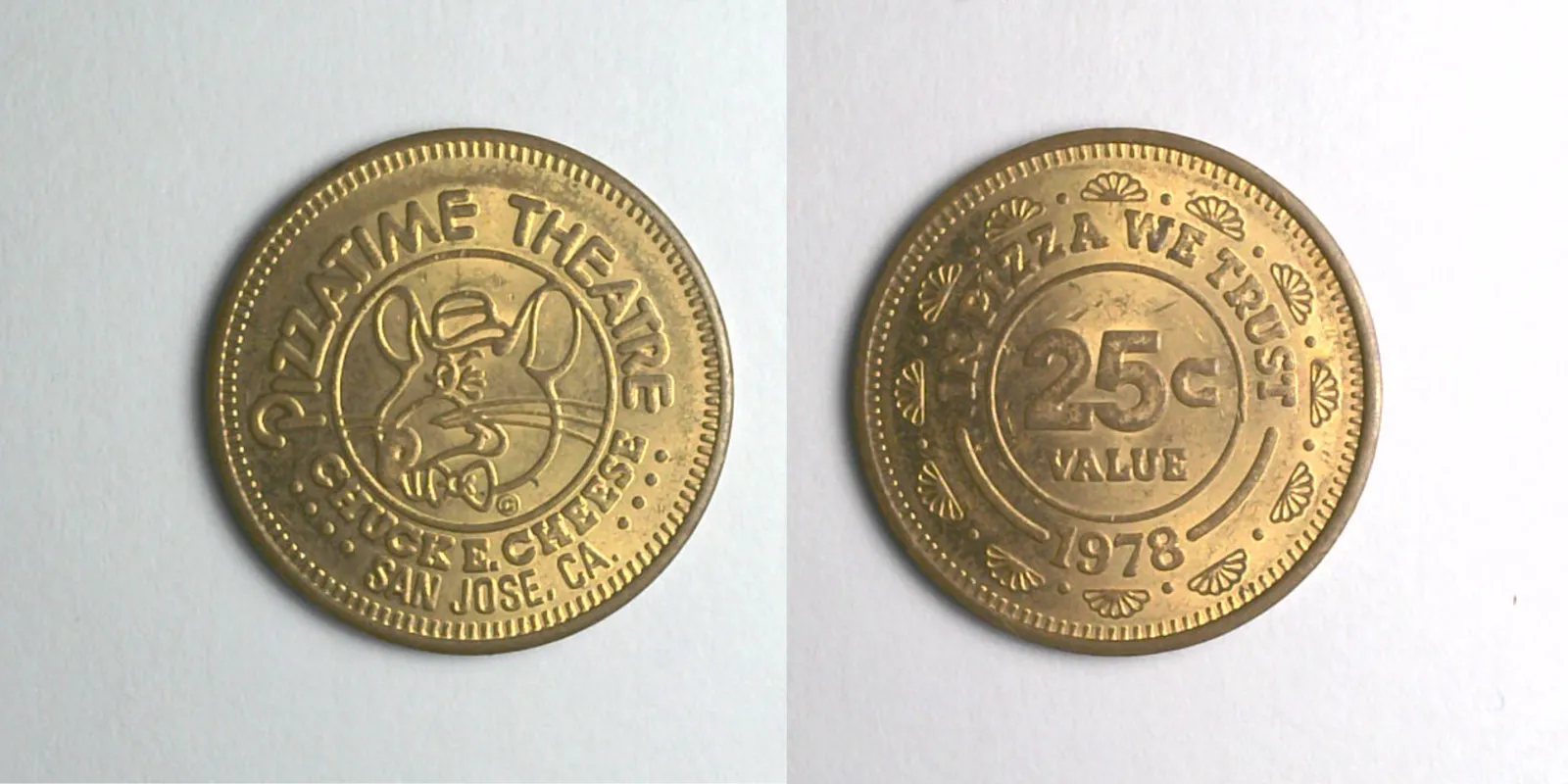
1978 San Jose Chuck E Cheese Token (125B)
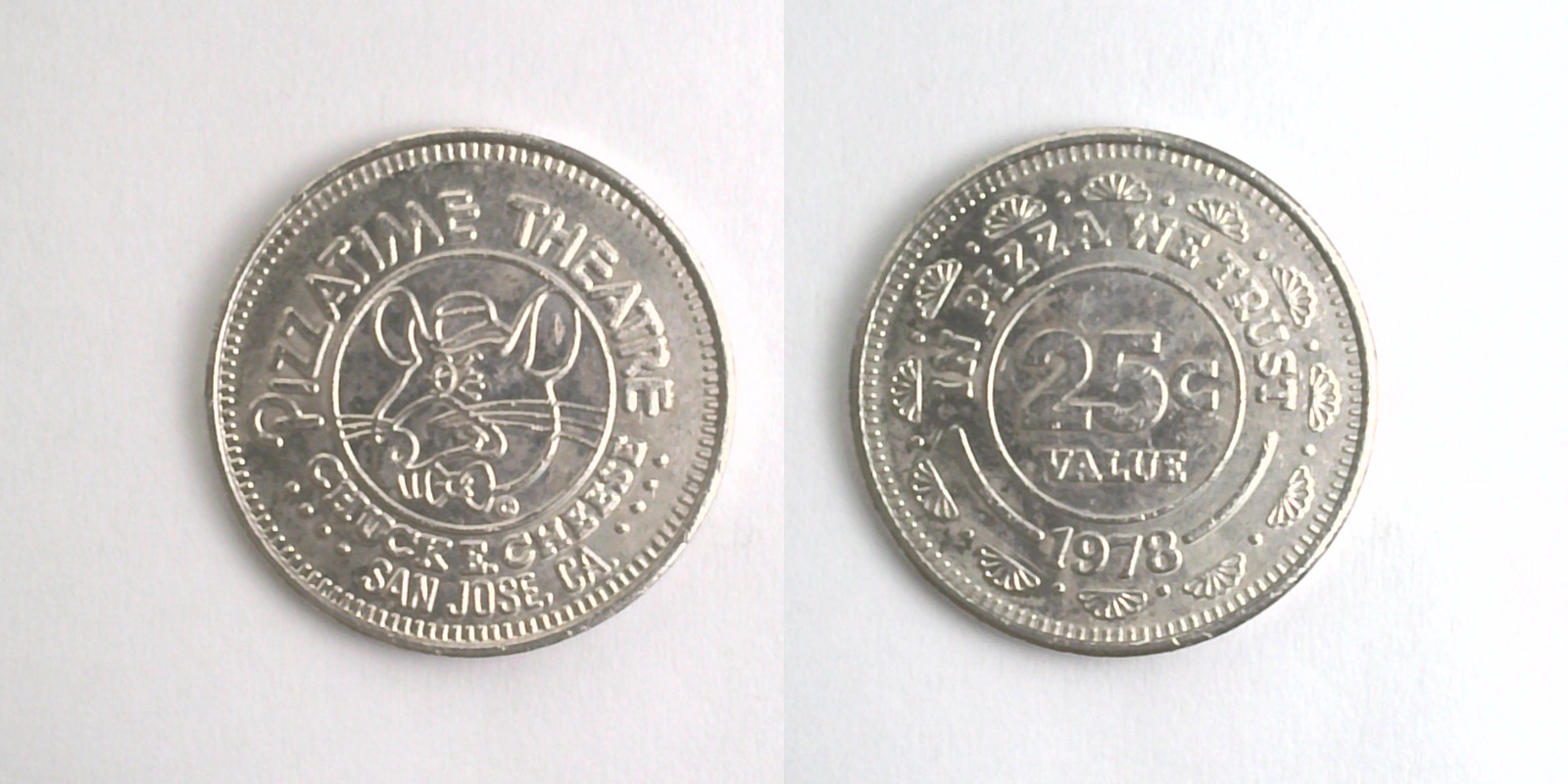
1978 San Jose Chuck E Cheese Token (125N)
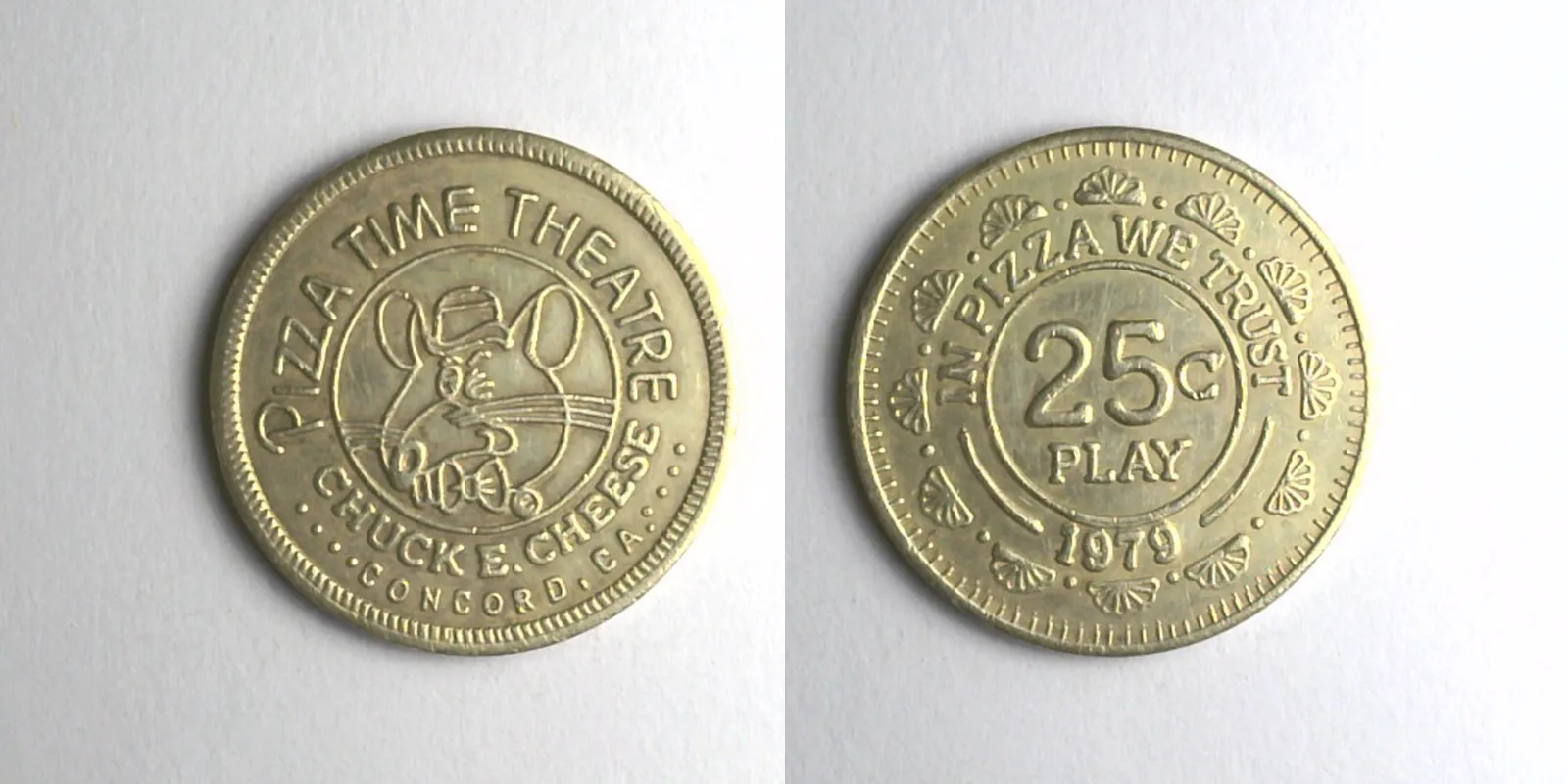
1979 Concord Chuck E Cheese Token (126B)
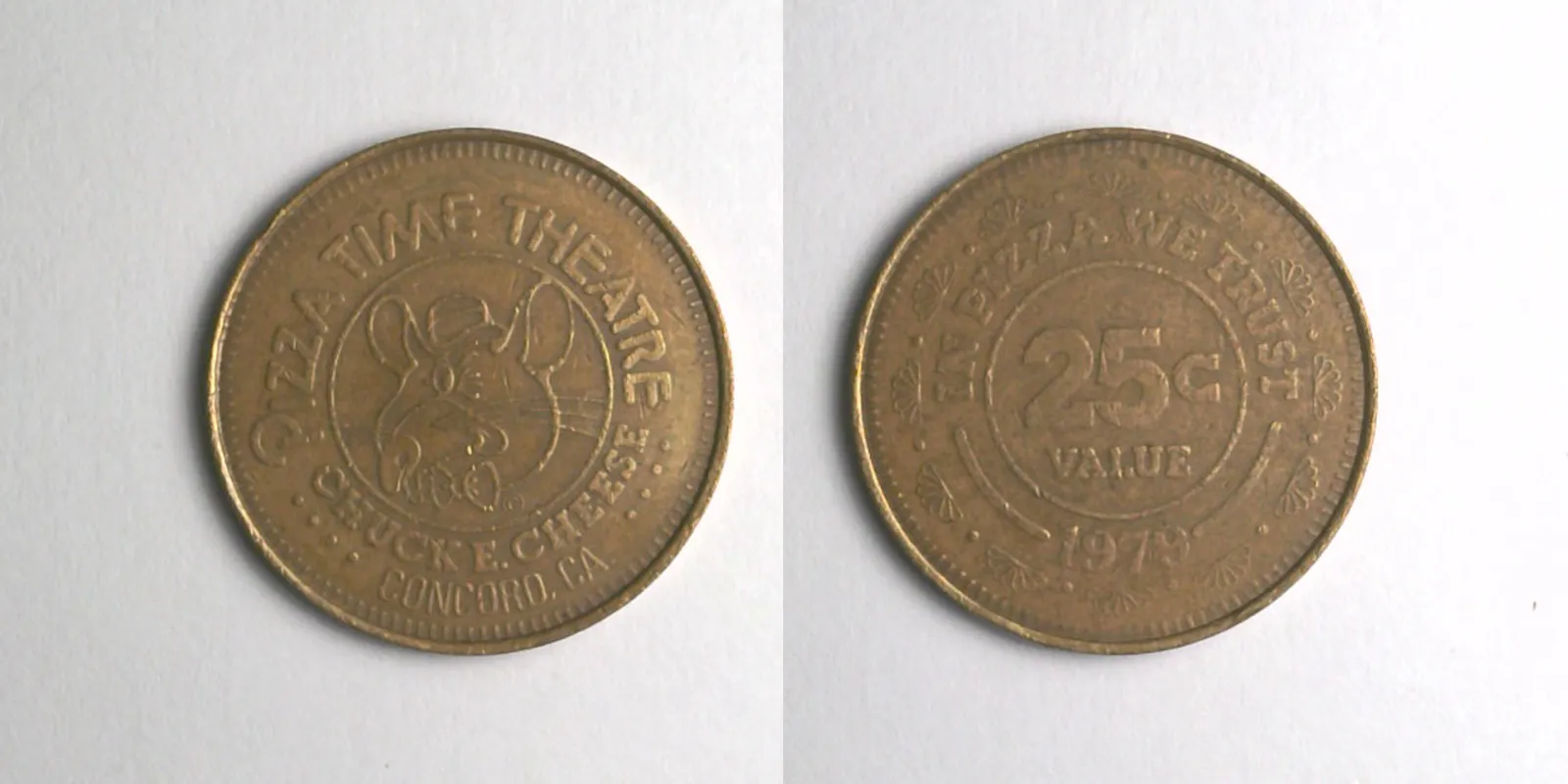
1979 Concord Chuck E Cheese Token (127B)
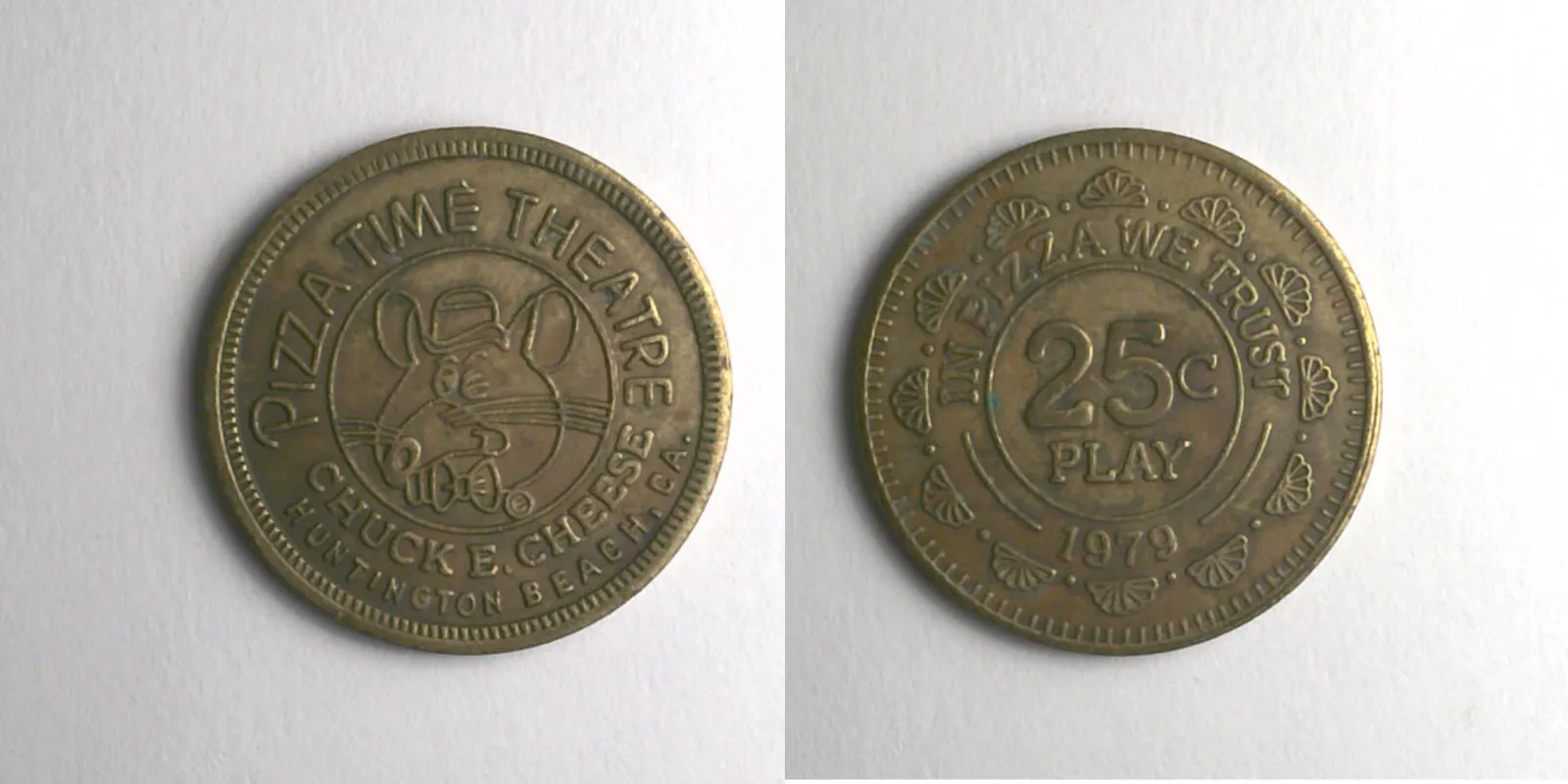
1979 Huntington Beach Chuck E Cheese Token (128B)
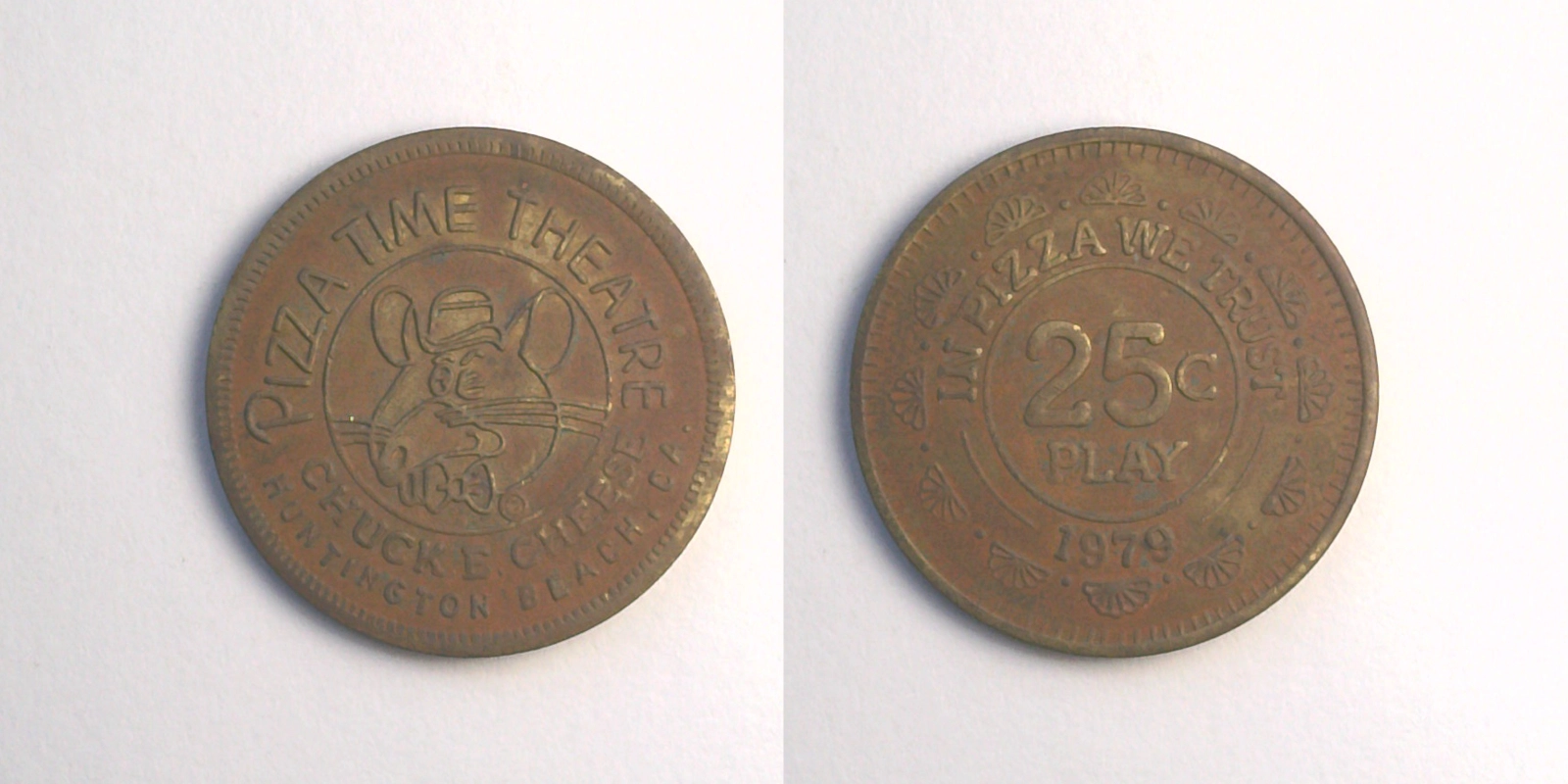
1979 Huntington Beach Chuck E Cheese Token (129B)
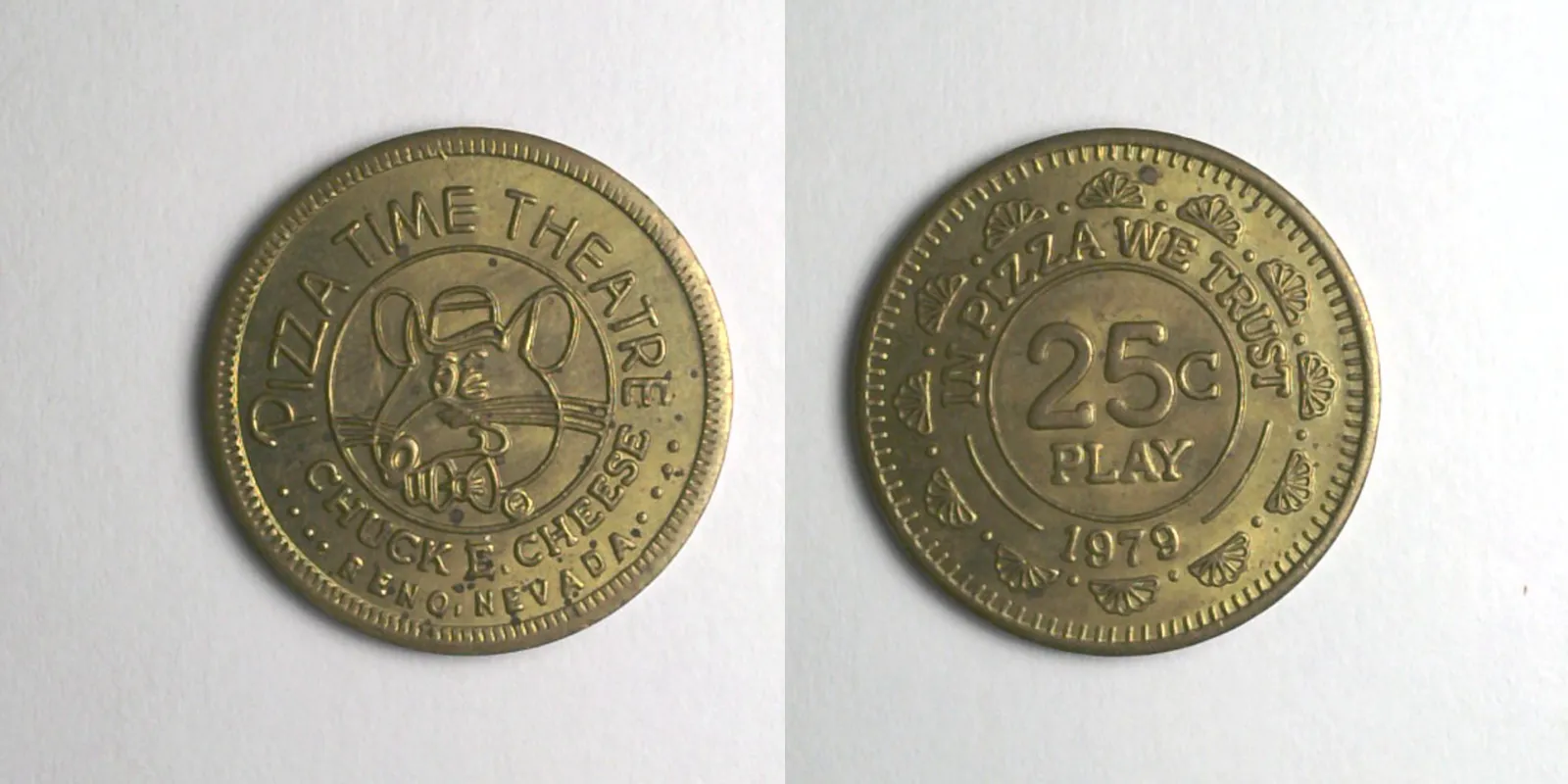
1979 Reno Chuck E Cheese Token (130B)
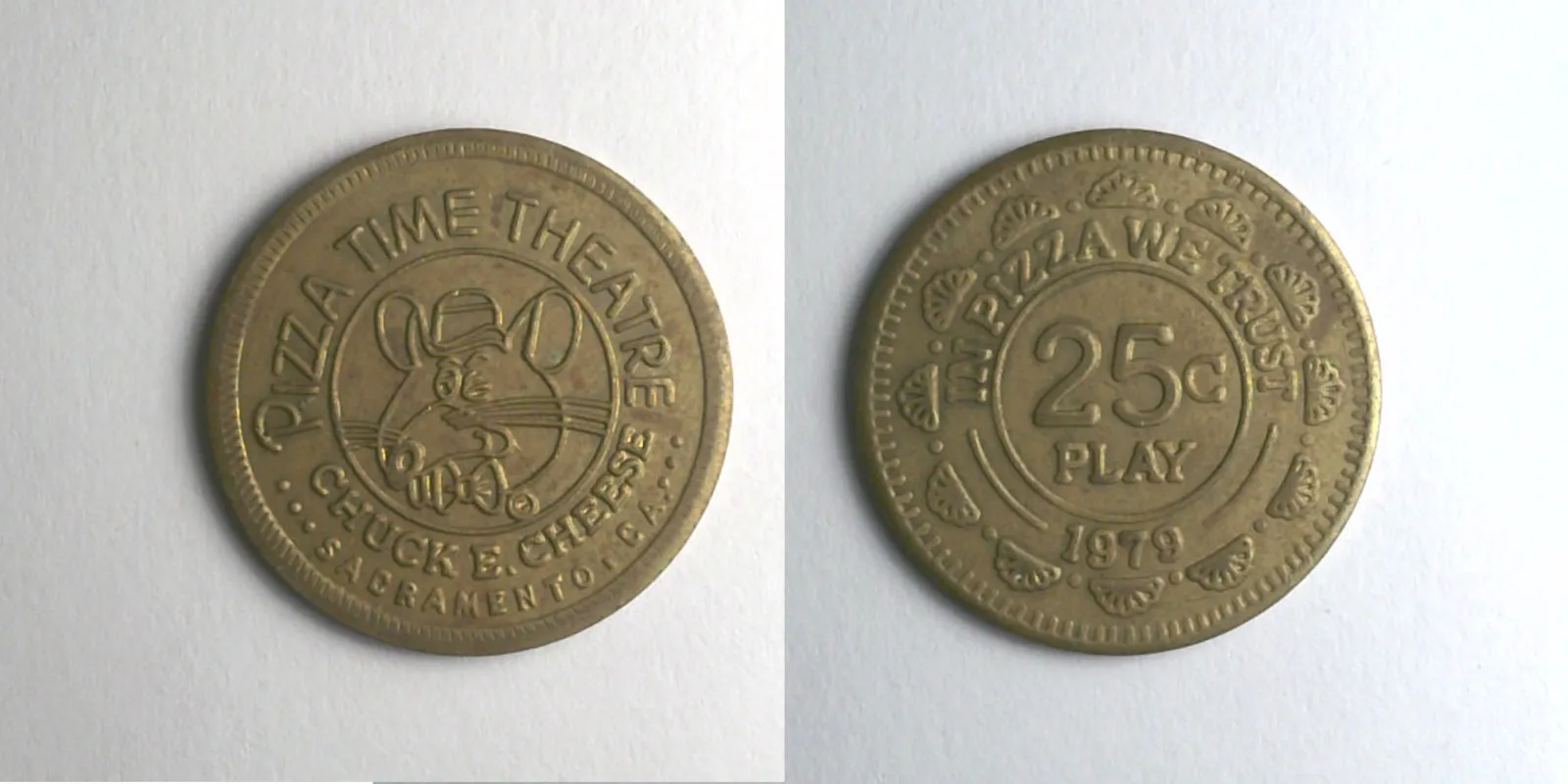
1979 Sacramento Chuck E Cheese Token (131B)
Where to go next
- Chuck E. Cheese Tokens for the broader Type 1 era context.
- Identifying composition by sight for telling brass and nickel city tokens apart.