Control tokens are a separate world inside the Chuck E. Cheese catalog. While the regular play tokens were minted for arcade circulation, control tokens were produced for internal operational use: testing machines, calibrating coin handlers, training staff, and verifying that the venue's coin economy was working correctly without those test transactions polluting the actual revenue numbers.
For collectors, control tokens occupy a unique position: they're often rarer than the rarest regular-issue pieces because they were specifically designed to not end up in the hands of customers.
Why control tokens exist
A modern arcade venue runs on tokens. Customers buy tokens, drop them into machines, and the machines redeem them for tickets or prizes. The venue tracks token volume as a key operational metric: it tells management how busy each machine is, how the venue is performing against revenue targets, and which games need maintenance or replacement.
For all of that to work, the venue needs a way to test machines without affecting the operational counts. If a manager wants to verify that a Skee-Ball lane is properly registering plays, they need to drop tokens through the machine's reader. But if those test tokens get counted as customer plays, they distort the operational data.
Control tokens solve this. They look similar to regular play tokens (same size, same general appearance, often the same composition family), but they're visibly distinguishable to staff. After a testing session, staff remove the control tokens from the machine and they go back into the staff inventory rather than the customer-facing supply.
The forms control tokens take
The cectoken catalog identifies control tokens across several different visual approaches:
Spray-painted brass
The earliest and most common approach. Spray-painted brass control tokens are regular brass tokens with a paint coating applied to one or both sides. The paint is typically:
- A bright, easily-identifiable color (red, yellow, blue, green) that makes the token impossible to mistake for a regular piece
- Applied as a coating rather than infused into the surface (unlike anodization)
- Subject to wear and chipping over time
Spray-painted brass is low-tech but extremely effective. A red-painted control token is impossible to confuse with a regular brass play piece, even at a glance.
Unusual compositions
A second approach used less common metal compositions as the differentiator. Control tokens struck in:
- Copper when standard play was brass
- Nickel when standard play was brass
- Brass with black chromate finish for chemical-color treatment that distinguishes from clean brass
These compositions weren't just rarer; they were visibly different to staff who knew what to look for.
Painted brass with the "p" suffix
The catalog tracks specific painted-brass control variants using the pB suffix in catalog codes (e.g., M04pB-orange for the painted brass medal in orange). The "p" stands for painted and the color qualifier identifies the specific paint variant.
This naming convention shows up most often in the Chuck E. Cheese Medals catalog (the M04pB franchise convention medal series) and certain promotional pieces.
Why control tokens are rare
The whole point of control tokens was to not circulate. They were:
- Removed from machines after every test session and returned to staff inventory.
- Replenished after collections so the venue always had a known control-token count.
- Disposed of when worn since the painted versions chipped over time.
This means surviving control tokens almost always come from one of three sources:
- End-of-venue closures: when a Chuck E. Cheese location closed, the manager often took the control tokens home as keepsakes (or sold them to local collectors).
- Staff retirement gifts: longtime managers and technicians sometimes received commemorative control tokens as departure mementos.
- Accidental escape: control tokens that ended up in customer hands through equipment errors or staff oversight.
None of these are large-volume sources. The result: surviving control token populations are small, often single-digit-known examples for specific variants.
Identification
Recognizing a control token usually involves one or more of these signals:
- Painted or anodized surface that wouldn't appear on a regular play token.
- Unusual composition for the era and brand (a copper token in a brass era; a nickel token where nickel wasn't a standard play composition).
- The "p" suffix in the catalog code.
- Specific catalog notes identifying the piece as a control or testing variant.
If you have an unusual-looking Chuck E. Cheese token and you're not sure what it is, the item page on cectoken.com will identify control variants explicitly in the specifications and variety fields.
How control tokens connect across the catalog
The control-token concept extends beyond Chuck E. Cheese. Other brands in the catalog have parallel categories:
- Discovery Zone painted control tokens (DZ104pB, DZ204pB) used the same "p" suffix convention and similar operational logic. See Discovery Zone and Leaps & Bounds Tokens for more.
- Showbiz Pizza had a parallel category in its anodized nickel variants, which were partially used for control-token operational purposes. See The Showbiz Pizza Anodized Color Spectrum.
- Peter Piper Pizza had similar internal-use pieces in its catalog.
The control-token category is a cross-brand collecting target for collectors interested in the operational rather than customer-facing side of the arcade-token ecosystem.
Collecting strategy
Control tokens are a sophisticated collecting target:
Difficulty
These are not pieces you stumble onto. They require deliberate sourcing through:
- Specialty dealers who track this category specifically
- Direct contacts with former venue staff
- Estate sales where the original owner was a Chuck E. Cheese manager or technician
- Targeted searches on eBay using specific catalog codes (the "p" suffix as a search term)
Pricing
Control tokens command real premiums. Painted variants can run from $50 to several hundred dollars for the rarer pieces. Unusual-composition control variants run even higher, since the supply is genuinely limited.
Set goals
The completionist goal is the full set of cataloged control variants across the Chuck E. Cheese era. This is a multi-year project, even for active and connected collectors.
A more achievable starting goal: collect one painted control token from each era of Chuck E. Cheese (Type 1, 2, 3, 4) where painted variants exist. That gives a representative cross-section without requiring the full catalog.
Sample rare-composition pieces
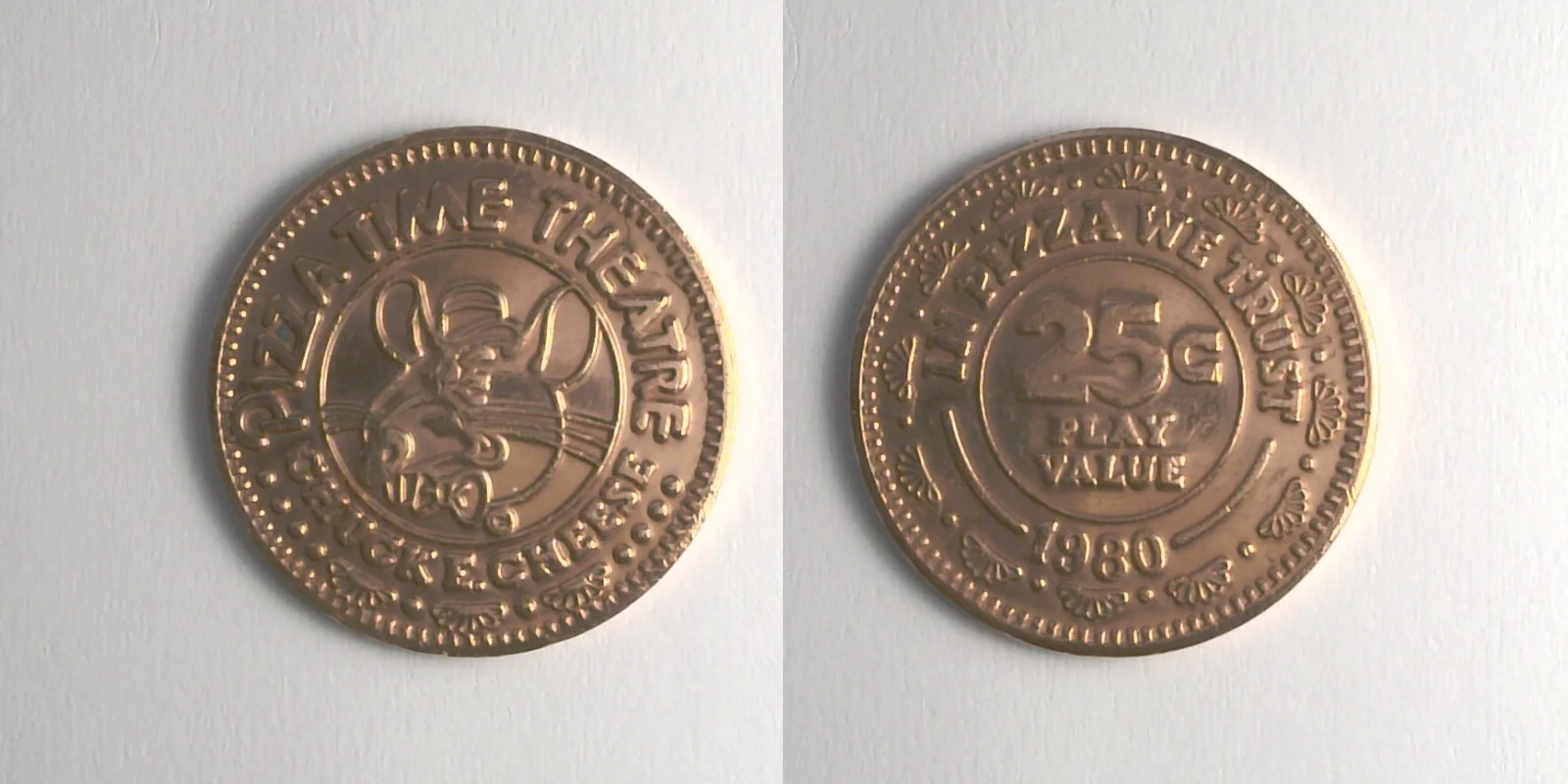
1980 Chuck E Cheese Token (105C)
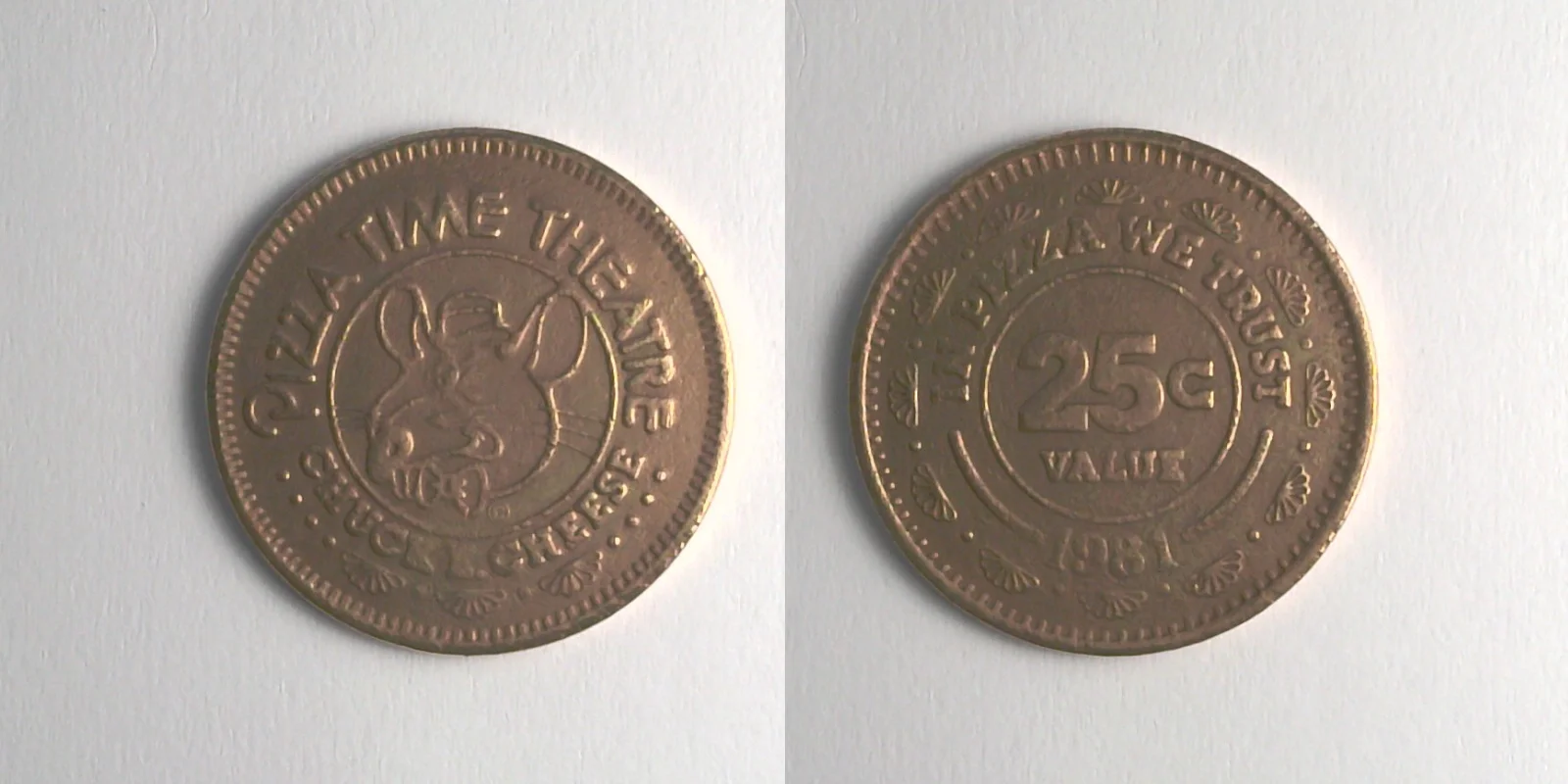
1981 Chuck E Cheese Token (106C)
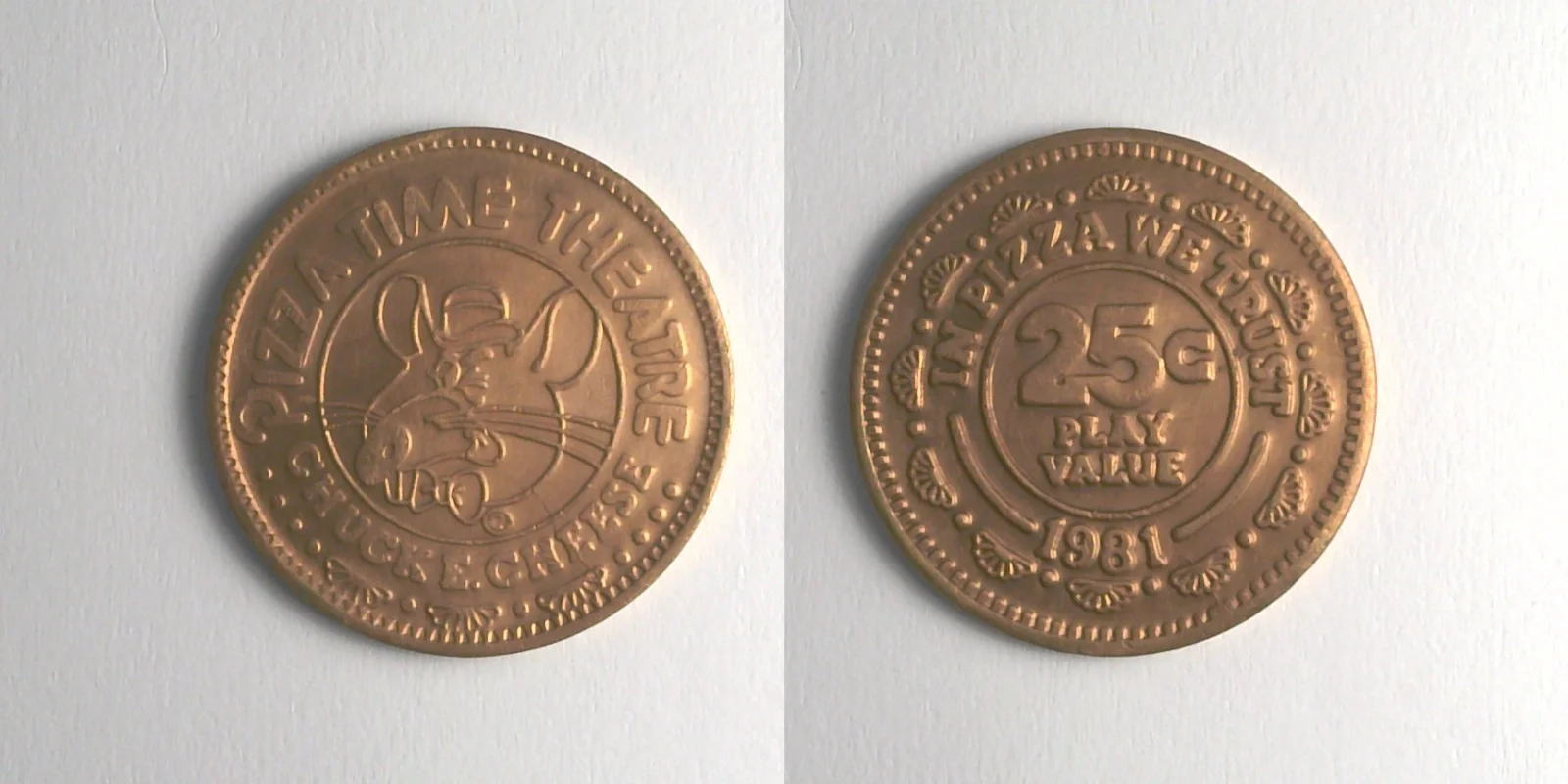
1981 Chuck E Cheese Token (108C)
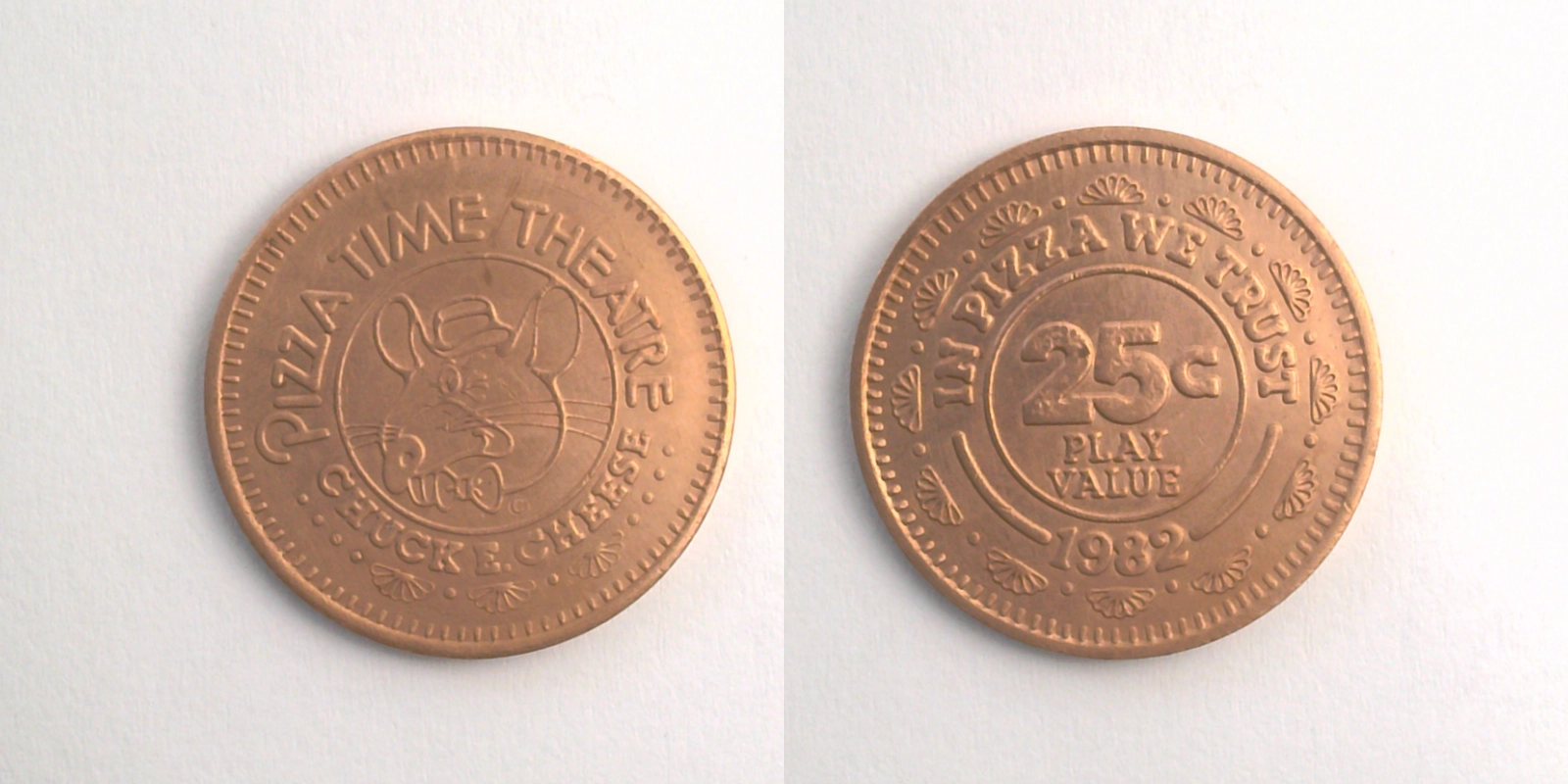
1982 Chuck E Cheese Token (113C)
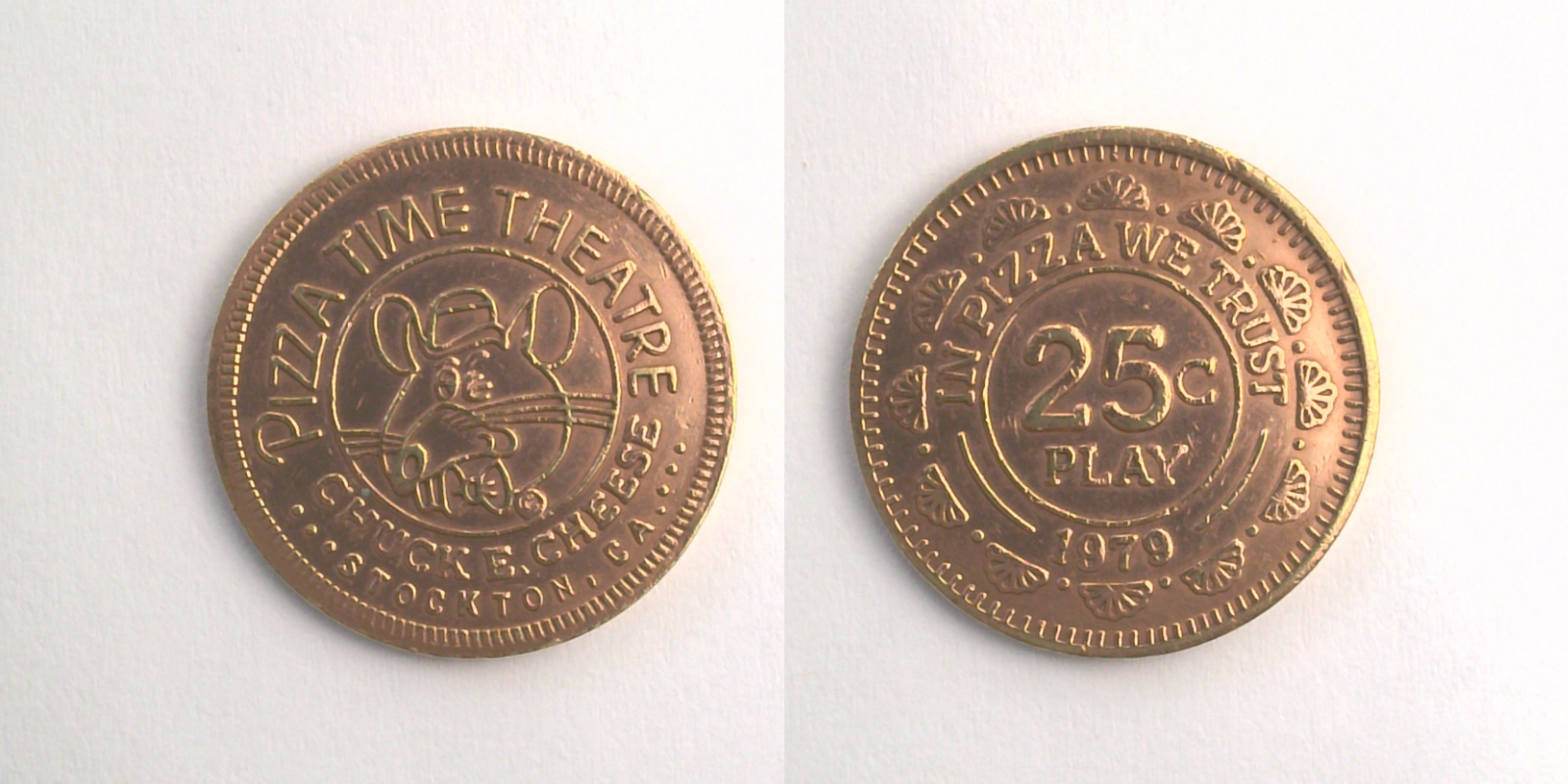
1979 Stockton Chuck E Cheese Token (135C)
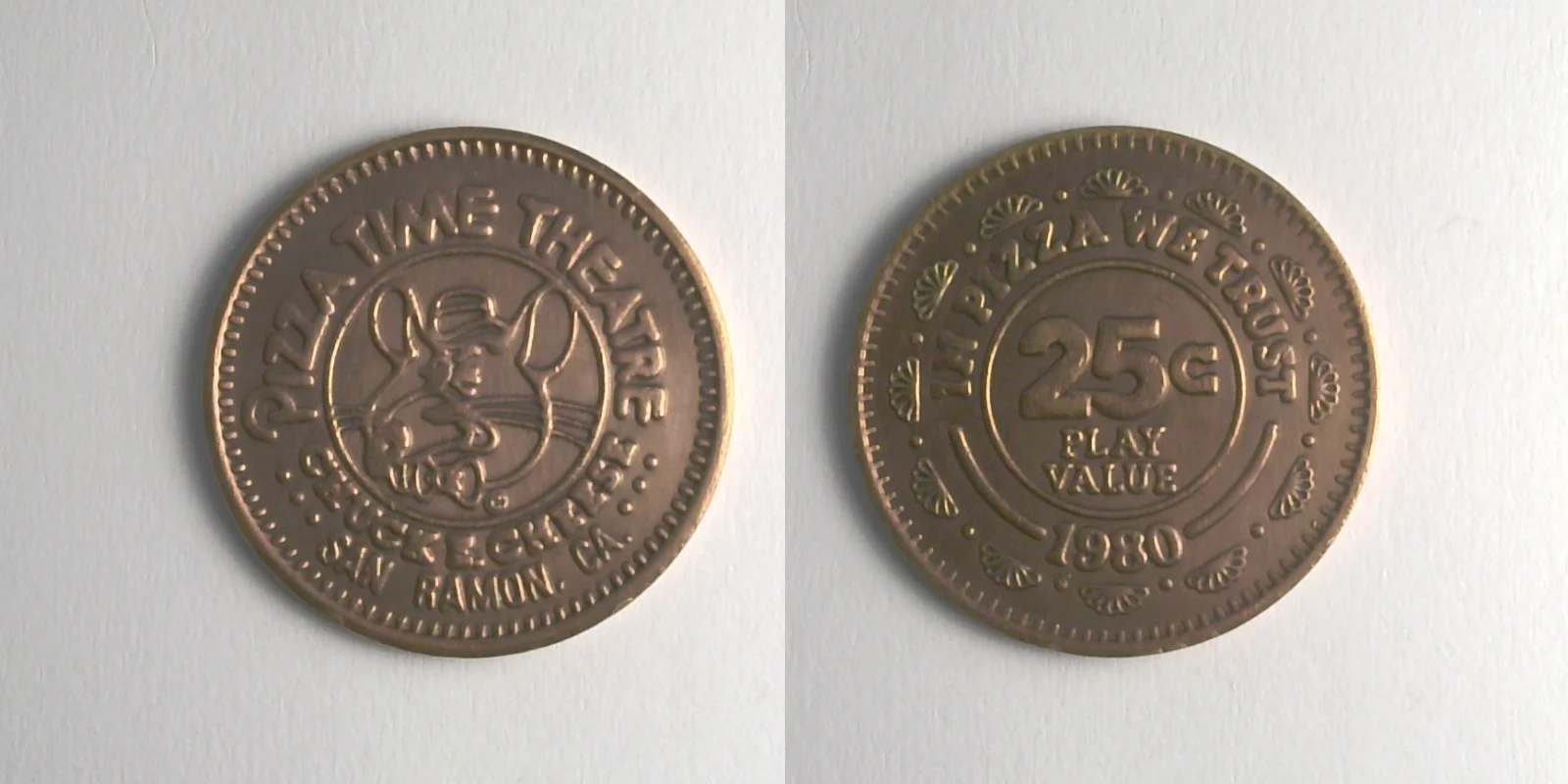
1980 San Ramon Chuck E Cheese Token (146C)
Where to go next
- Chuck E. Cheese Tokens, the broader Chuck E. Cheese overview.
- The Showbiz Pizza Anodized Color Spectrum, the parallel category in the Showbiz catalog.
- Identifying composition by sight for distinguishing control compositions from regular play pieces.