Once you're logged in, every item page picks up a collection control. This guide covers what the controls actually do, how duplicates work, and how the site computes your collection value.
Adding an item
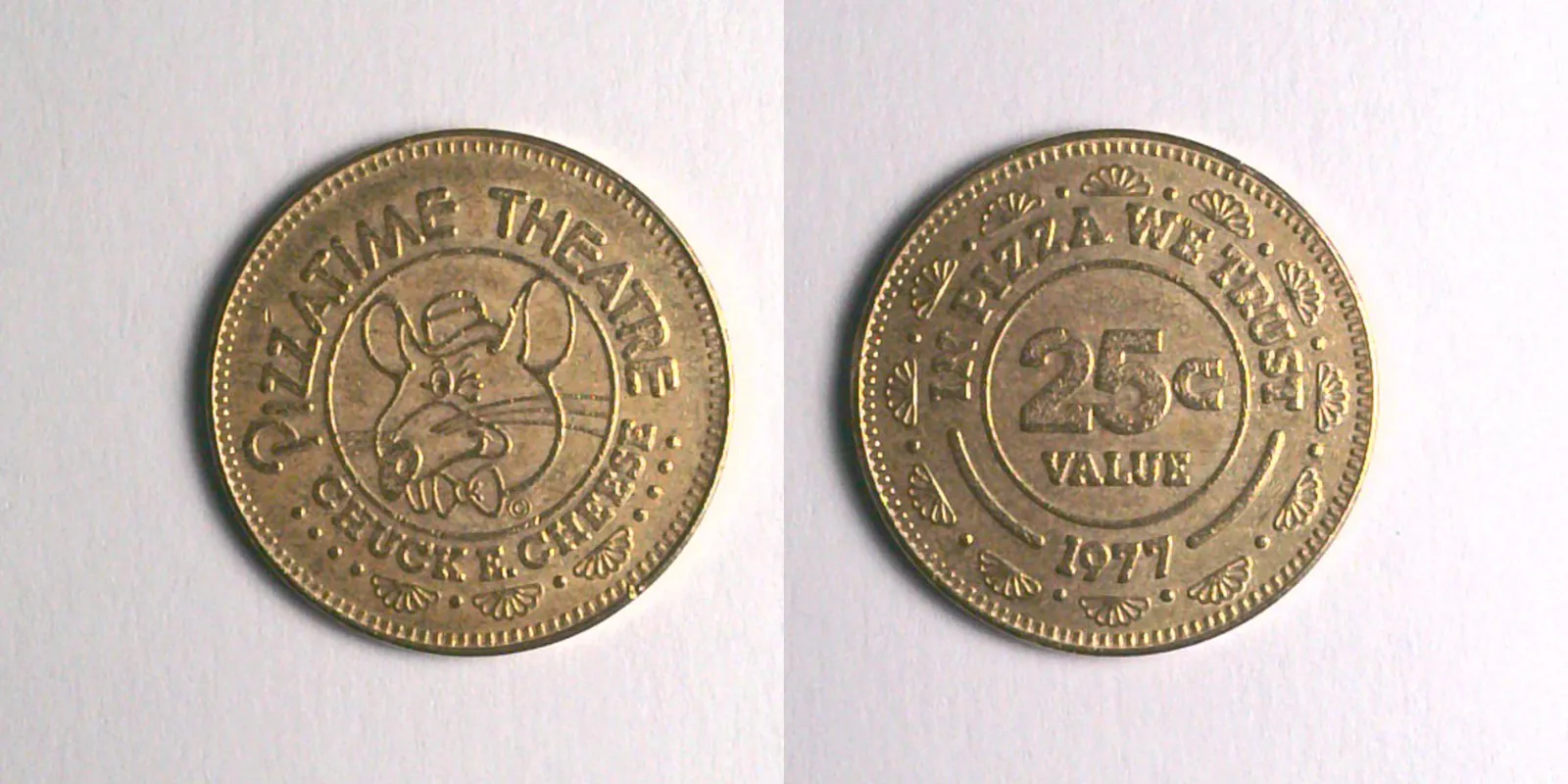
The simplest action: on any item page, click Add to collection. The site records that you own one of that token at the current moment, and the button updates to reflect the new count.
Internally, the site stores ownership in a pivot table that connects you to each item with two fields:
- Quantity: how many copies of that token you own.
- Aggregate purchase price: the total you've spent acquiring those copies (in cents). Optional, but useful for tracking your collecting investment over time.
If a token has variants you also own (different compositions, mintmarks, or catalog suffixes), each variant has its own catalog row and its own ownership record. The catalog tracks 914 distinct items today.
Working with duplicates
Click Add to collection a second time on the same item and the quantity goes to 2. The site treats every count above 1 as a duplicate, which matters in two places:
- Trade Finder filtering: you can tell the Trade Finder to show only items where you have a duplicate (quantity > 1). Those are the pieces you can realistically trade away.
- Collection value: duplicates count toward your collection's total estimated value.
If you've over-counted, the item-page controls let you decrement back down.
Collection value
Your profile shows a running collection-value estimate. The calculation is simple in concept and the site offers two flavors:
- Sum of fair values: for each owned item, multiply its
fair_value(the site's pricing estimate, derived from recent sales) by your quantity, then total across your collection. - Decayed value: the same calculation but with a per-brand geometric decay applied for duplicates. The first copy of a token is worth full fair value; subsequent copies are worth progressively less, reflecting the practical reality that the market for any given token can saturate.
The decayed value is the more honest number if you're holding heavy duplicate positions. Fair-value sum is the more flattering one.
Tracking purchase prices
If you record what you paid for a piece (as the aggregate purchase price across your duplicates), the site can show you a per-item gain or loss against the current fair-value estimate. This is optional. Most collectors don't bother, and the feature exists for the ones who do.
Your public profile
Your profile at /u/your-username is where your collection lives publicly. Other collectors looking for trade partners will land there. The page includes:
- A search box and sort controls (by catalog code, vintage, rarity, or name).
- A collection-value figure at the top.
- A paginated list of every item you own, with quantities and rarity badges.
- Tabs for your wishlist and messages.
Where to go next
- The Trade Finder tool explains how the site uses your collection data to surface trade matchups.
- Reading an item page covers what every field on the item view means.