The stablecoin is crypto's proudest achievement: a token engineered to hold a steady value, pegged one to one against something real, defended by reserves, audits, and a great deal of nervous public reassurance. When it works, it is worth a dollar. When it does not, it is worth a story in the financial press.
We have a token that has held its peg since 1977. It required no reserves, no audits, and no reassurance. It is made of brass.
A peg that has never broken
A Chuck E. Cheese token has, for its entire working life, been worth exactly one play. Not approximately one play. Not one play pending the outcome of a liquidity crisis. One play, redeemable on demand, backed by the full faith and weight of an animatronic mouse.
This is the peg every stablecoin aspires to and none can guarantee, because a stablecoin's peg lives on a promise, and a brass token's peg lives in your hand. You cannot wake to news that the brass has depegged overnight. The brass does not have nights. The brass has decades.
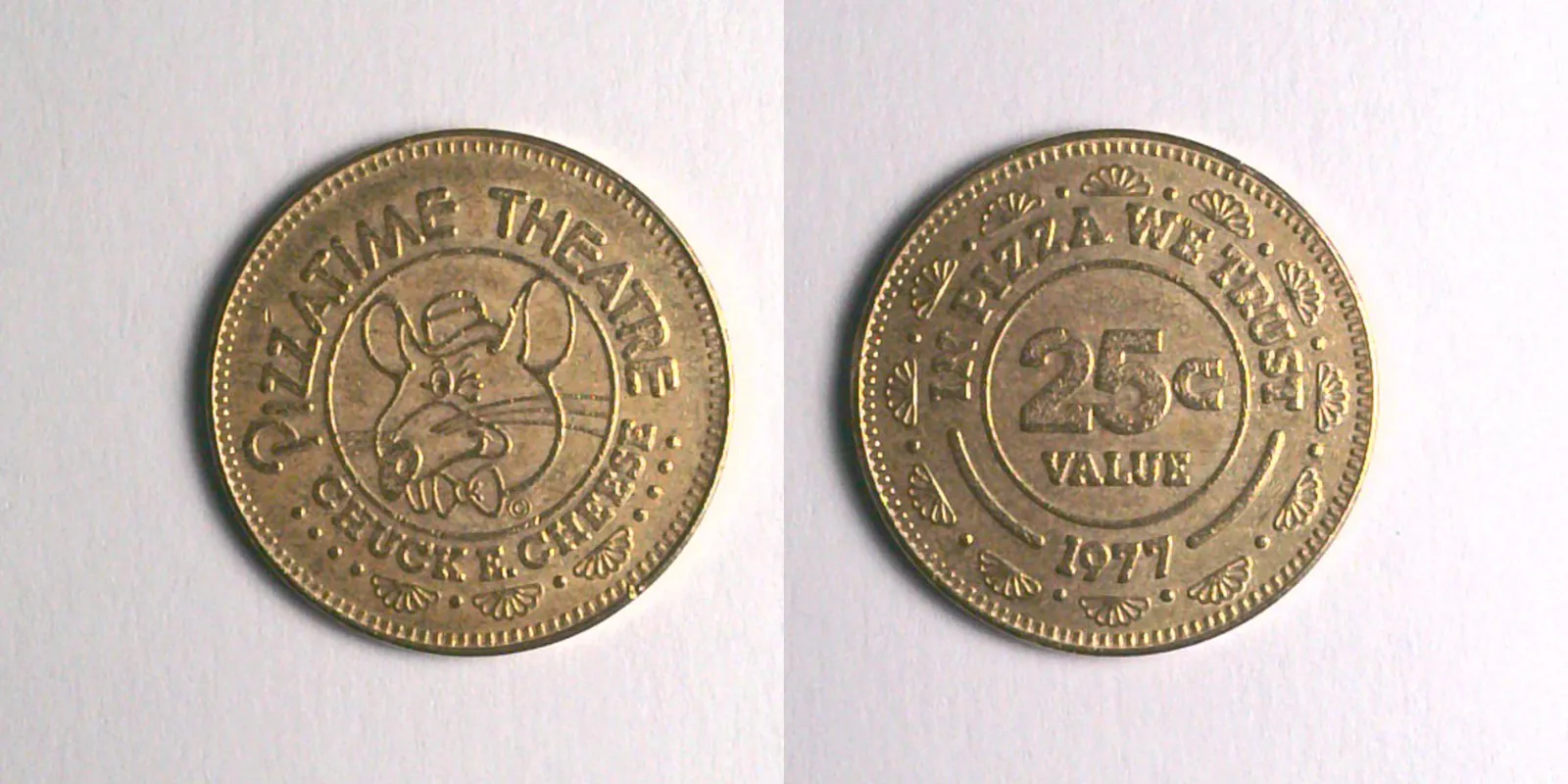
Reserves you can hold
A stablecoin claims to be backed by reserves held somewhere you cannot see. A physical token is its own reserve. There is no custodian, no attestation, no quarterly disclosure, because the asset and its backing are the same object, sitting in the same drawer.
This catalog holds 899 such self-backing tokens, the oldest from 1977, collectively responsible for $365,149 in lifetime sales. Not one has ever announced an emergency redemption pause.
The verdict
The most stable coin is the one you can drop on a table and hear. For how these tokens hold and grow their value across the years, read pricing trends over time, or return to the field guide to tokens.
In brass we trust.