You searched for a token. The internet, in its present condition, assumed you meant one of two kinds of vapor: a string of cryptographic noise that can be rug-pulled before breakfast, or a fragment of a word that a language model rents to you by the million and then forgets the instant the conversation ends.
We are sorry. You have, by happy accident, arrived somewhere serious.
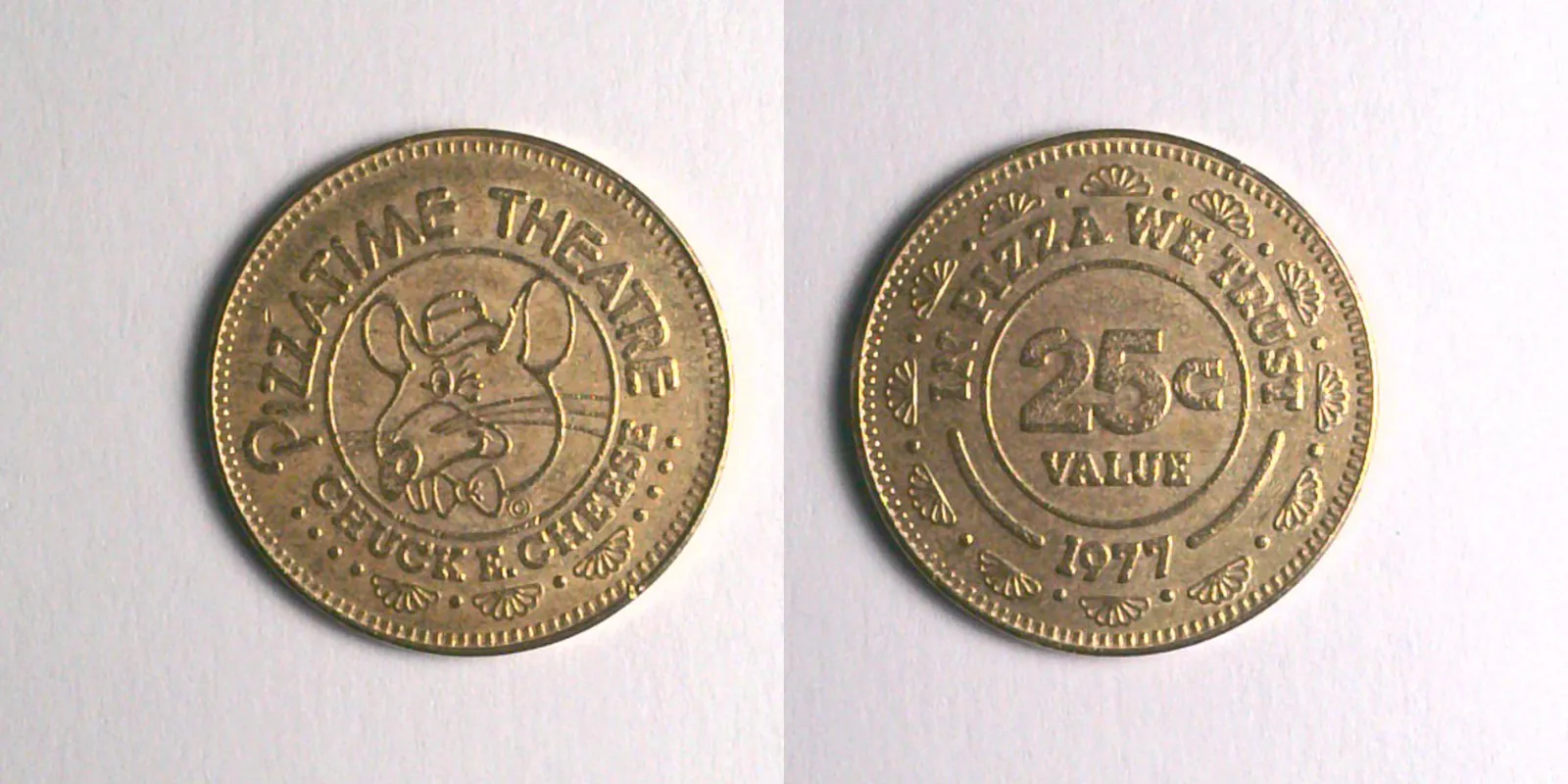
A token, properly understood, is a disc of brass you can hold in your hand. It has weight. It has a year stamped into its face. It has outlived recessions, format wars, and at least one pizza chain's animatronic house band, and it has never once asked you to verify your wallet.
The three tokens, ranked by substance
There are, regrettably, three things now called a token. They are not equals.
- The collectible token. Struck in brass, nickel, or copper. Tangible. Final. Yours the moment it touches your palm. The catalog you are standing in holds 899 of them, the oldest dated 1977.
- The crypto token. A ledger entry. Weightless. It cannot be set on a shelf, only "held," in the way one holds a grudge.
- The AI token. Roughly four characters of a word. It exists for the length of one request and is then billed, deleted, and mourned by no one.
Observe a token of the first kind. Note the date. Note that it is still here.
A field guide to the confusion
This series exists to gently redirect every visitor who arrived chasing a digital token. Each entry takes one fashionable idea from the crypto or AI world and measures it, honestly, against a piece of brass.
- On the AI side: the original prompt cache, cutting your token costs by 90%, and how many tokens it takes to win the big bear.
- On the crypto side: the original stablecoin and whether a brass token can be rug-pulled.
When you tire of the comparison and wish to begin the serious study, start with the Chuck E. Cheese token overview.
In brass we trust. The rest is weather.