Tokenomics is the study of how a token's supply is created, distributed, and destroyed. Crypto projects publish elaborate documents on the subject: emission schedules, burn mechanisms, vesting cliffs, all designed to convince you that scarcity has been engineered on your behalf. We would like to offer the original tokenomics, which were not engineered but simply true.
Supply
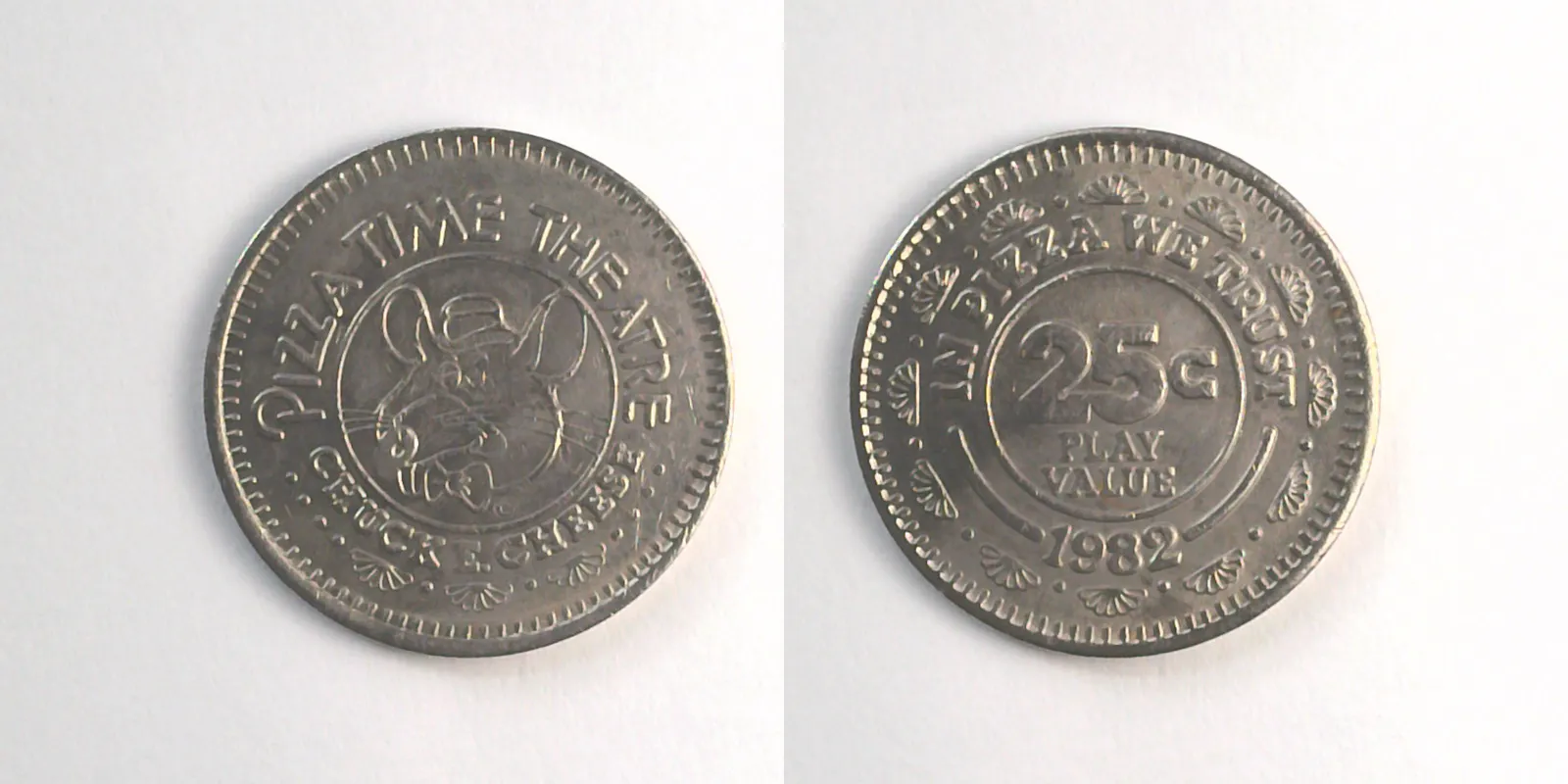
A physical token's supply was fixed the day it was struck. A mint produced a finite run, the dies were retired, and that was the end of the matter. There is no governance vote that can mint more 1982 tokens in 1982's design. The supply is closed by the simple fact that the past is closed.
The burn
Crypto burns tokens deliberately, sending them to an address no one can open, to reduce supply and flatter the price. Physical tokens burn too, but honestly, and without a press release. They are lost in couch cushions. They go down storm drains. They are swallowed by toddlers and vacuum cleaners and the gaps behind arcade machines. This is the true deflationary mechanism, and it has been running, unsupervised, for nearly fifty years.
Every token quietly removed from circulation makes the survivors rarer. This is why the catalog's 899 documented survivors matter, and why the rarest among them now reaches $2,062.60. The burn was real. The scarcity is real. No whitepaper was required.
Distribution
Crypto frets endlessly about fair distribution. Arcade tokens distributed themselves through the most democratic mechanism ever devised: a parent's wallet and a birthday party. Everyone got a handful. Everyone lost most of them. The few that remain are the ones worth cataloguing.
The verdict
Tokenomics works best when the supply was fixed by a mint and the burn by gravity. To see which survivors rose to the top, read the top rarities in the catalog, or return to the field guide to tokens.
In brass we trust.